
Hedera Hashgraph (HBAR) stands out as a high-performance, enterprise-ready platform designed for speed, security, and scalability. Since its launch in 2018, Hedera has attracted attention from Fortune 500 companies, fintech innovators, and developers aiming to build high-throughput applications beyond traditional blockchain limitations.
In this article, we explore Hedera’s core technology, its enterprise applications, ecosystem developments in 2026, and why HBAR is increasingly regarded as a serious contender for real-world, regulated digital asset applications.
What is Hedera Hashgraph?
Hedera Hashgraph is not a traditional blockchain but a distributed ledger based on the hashgraph consensus algorithm, which allows for asynchronous Byzantine Fault Tolerance (aBFT). This means Hedera can process thousands of transactions per second (TPS) with finality in seconds, while remaining secure and decentralized.
The network uses a governance model backed by the Hedera Governing Council, which includes leading organizations such as Google, IBM, Boeing, and Standard Bank, ensuring enterprise-grade oversight and compliance.
Key components include:
-
HBAR token: Native cryptocurrency used for transaction fees, network security, and decentralized applications.
-
Consensus Service (HCS): Enables real-time, verifiable event ordering for enterprise applications.
-
Token Service (HTS): Allows creation and management of fungible and non-fungible tokens (NFTs) efficiently.
-
Smart Contract Service (Hedera Smart Contracts): For complex programmable logic, compatible with Solidity, enabling DeFi, games, and enterprise apps.
Unlike Ethereum or Solana, Hedera’s architecture prioritizes governance, security, and energy efficiency, which makes it ideal for regulated enterprise adoption.
How Hedera Hashgraph Works
Hedera’s performance is powered by hashgraph consensus, a graph-based protocol that differs from blockchains in several key ways:
-
Gossip-about-Gossip Protocol: Nodes share information about transactions and the history of communication, allowing the network to reach consensus efficiently and transparently.
-
Virtual Voting: Each node can calculate how other nodes would vote based on received messages, eliminating the need for energy-intensive mining.
-
Asynchronous Byzantine Fault Tolerance (aBFT): Guarantees that the system can reach consensus even if some nodes act maliciously, making Hedera extremely secure.
This unique combination enables Hedera to achieve high throughput, low latency, and predictable fees, ideal for enterprise-grade applications.
HBAR: The Native Token
The HBAR token is central to Hedera’s ecosystem:
-
Transaction fees: Users pay HBAR for sending payments, minting tokens, or executing smart contracts.
-
Staking & security: HBAR is used to secure the network through staking, helping maintain consensus integrity.
-
Incentivization: Developers and enterprises are encouraged to deploy applications by utilizing HBAR for microtransactions and utility services.
HBAR’s supply is fixed at 50 billion, with a portion released periodically for network operations, staking, and ecosystem growth. This controlled supply aims to maintain value stability over time.
Enterprise Use Cases
Hedera’s unique properties make it suitable for multiple real-world applications:
1. Enterprise Payments & Cross-Border Transactions
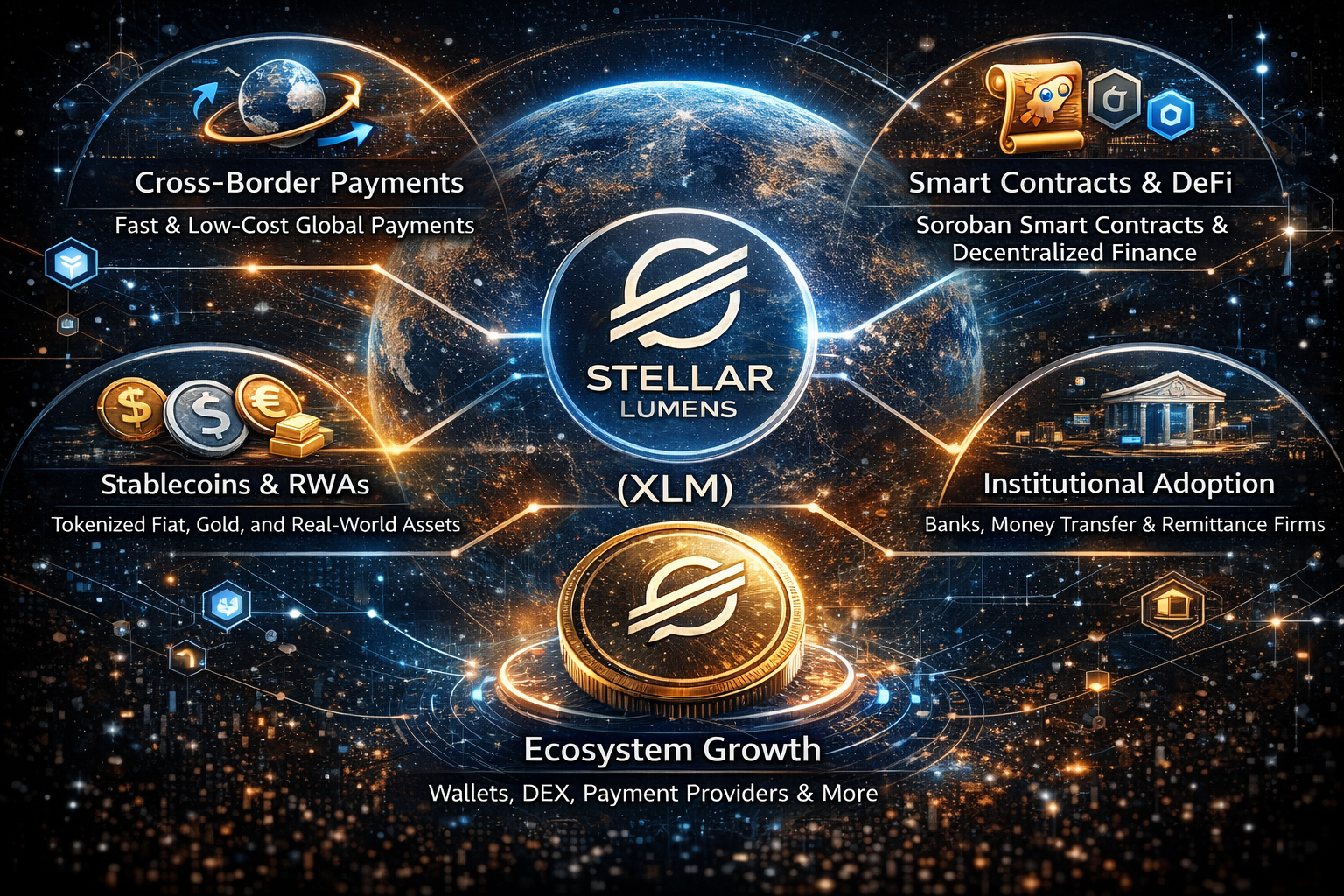
Hedera enables instant, low-cost cross-border payments, competing with Ripple (XRP) and Stellar (XLM). Several financial institutions are testing Hedera for:
-
Cross-border settlements
-
Inter-bank transfers
-
Payment processing for businesses
The low energy footprint and high throughput make Hedera a compelling alternative to traditional SWIFT payments or other slower blockchain networks.
2. Tokenization & Asset Management
Hedera Token Service (HTS) allows enterprises to issue fungible or non-fungible tokens efficiently:
-
Stablecoins backed by fiat or other assets
-
Tokenized commodities (gold, real estate)
-
Corporate loyalty points or reward programs
This is particularly appealing to institutions that want programmable assets without compromising compliance.
3. Supply Chain & Provenance
Hedera’s consensus service can timestamp events immutably, making it ideal for:
-
Tracking supply chain steps
-
Verifying authenticity of goods
-
Recording environmental impact or carbon credits
Companies like Avery Dennison and Boeing have explored Hedera for supply chain monitoring and product verification, demonstrating its practical utility.
4. Decentralized Finance & Smart Contracts
Hedera Smart Contracts, compatible with Solidity, allow for complex DeFi applications while maintaining enterprise security standards:
-
Decentralized lending and borrowing platforms
-
Automated market makers (AMMs)
-
NFT marketplaces for enterprise or brand use
The low transaction cost ensures that DeFi applications are economically viable for users.
Hedera Ecosystem
Hedera’s ecosystem has grown significantly in 2026, including:
Developer Tools
-
Hedera SDKs for Java, JavaScript, and Go
-
Integration with popular frameworks like Truffle and Hardhat for smart contract development
-
Tools for token issuance, NFT minting, and transaction analytics
Institutional Adoption
-
Google Cloud supports Hedera nodes for enterprise-grade scalability
-
Standard Bank is experimenting with HBAR for cross-border settlements
-
Partnerships with fintech companies for tokenized payments and microtransactions
Community & Governance
Hedera’s Governing Council includes 29 organizations from diverse sectors (finance, tech, academia). Each member has equal voting power, and council decisions are rotated every two years, ensuring decentralization within enterprise constraints.
Key Advantages of Hedera Hashgraph
Hedera offers several advantages over traditional blockchains:
-
Speed & Scalability: Thousands of transactions per second with finality in seconds.
-
Low Transaction Costs: Ideal for microtransactions and high-volume enterprise applications.
-
Energy Efficiency: Consumes far less energy than proof-of-work blockchains, aligning with ESG goals.
-
Enterprise Governance: Governing council ensures compliance, transparency, and stability.
-
Security & Compliance: aBFT ensures network integrity even with malicious actors.
-
Interoperability & Tokenization: Supports cross-border payments, digital assets, and programmable contracts.
Challenges & Considerations
Despite its strengths, Hedera faces some challenges:
-
Perceived Centralization: Some critics argue that the Governing Council model is more centralized compared to fully decentralized blockchains.
-
Smart Contract Ecosystem Maturity: Hedera’s Solidity-based contracts are newer compared to Ethereum, limiting some developer adoption.
-
Competition: Other enterprise blockchains like Corda, Solana, Stellar, and Polygon compete in payments and tokenization.
However, Hedera’s unique combination of performance, security, and governance continues to attract enterprises.
Future Outlook (2026-2027)
Looking forward, Hedera is focusing on:
-
Expanding DeFi Applications: With Soroban-style contract upgrades, Hedera aims to host more sophisticated DeFi projects.
-
Stablecoin & Asset Tokenization: Integration with major financial institutions to issue regulated tokenized assets.
-
Global Payments Expansion: Collaboration with banks and fintechs for cross-border settlements.
-
Carbon-Negative Network: Hedera maintains a carbon-negative footprint, appealing to ESG-conscious enterprises.
-
Increased Developer Adoption: Improved SDKs, developer incentives, and hackathons to grow the ecosystem.
These initiatives position Hedera as a leading enterprise blockchain in 2026 and beyond.
Conclusion
Hedera Hashgraph (HBAR) is much more than a cryptocurrency; it is a full-fledged enterprise blockchain platform. Its high-speed, energy-efficient, secure, and regulated infrastructure makes it ideal for real-world financial applications, tokenized assets, supply chain management, and DeFi.
For enterprises, developers, and investors looking for a blockchain with performance, compliance, and governance, Hedera offers a compelling choice. With continuous ecosystem growth, smart contract expansion, and enterprise adoption, Hedera is well-positioned to play a central role in the next generation of blockchain innovation.