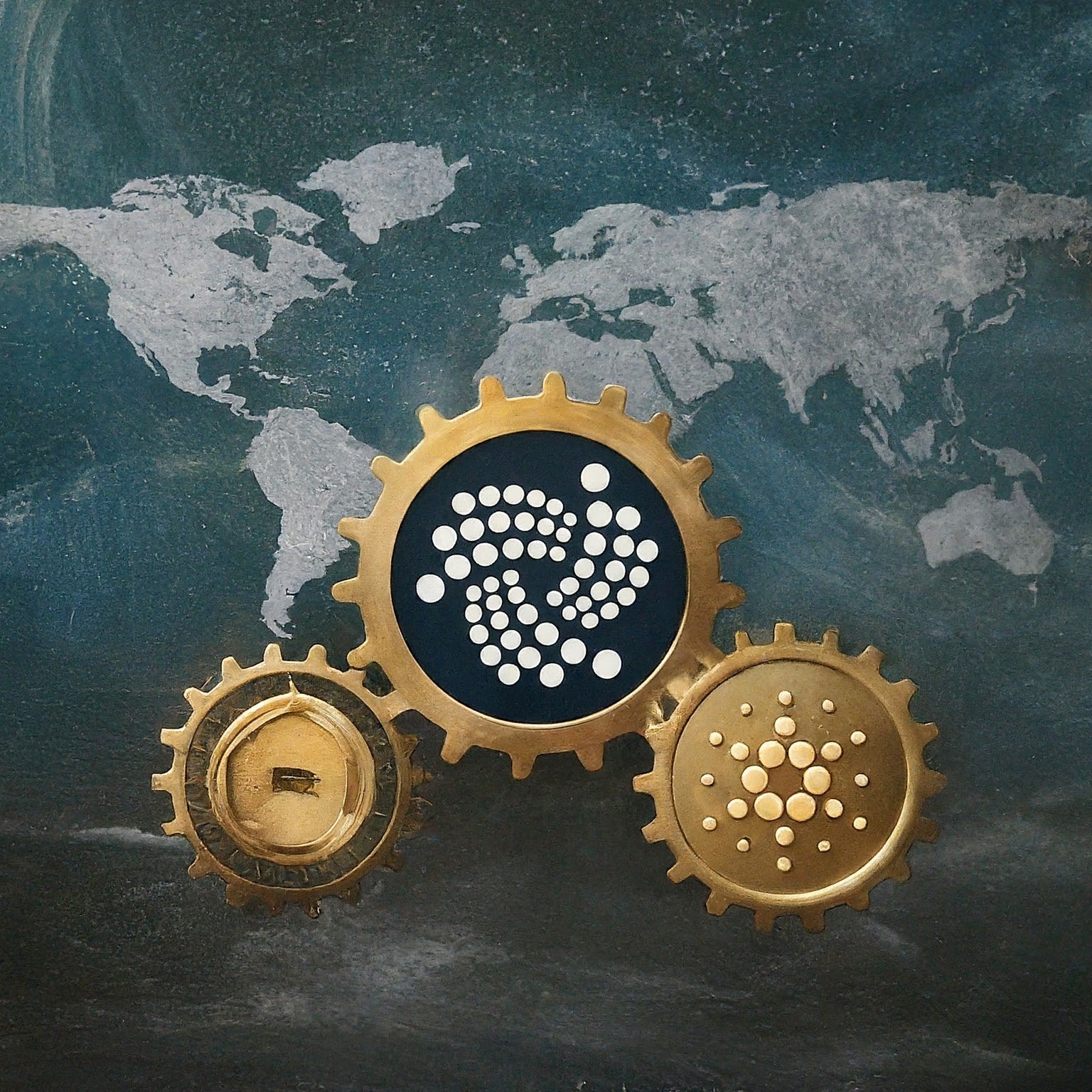
The cryptocurrency ecosystem is increasingly dominated by powerful smart contract platforms.
Among the most influential are:
-
Ethereum
-
Solana
-
IOTA
Each of these networks takes a different approach to scalability, decentralization, and real-world adoption.
Understanding these differences can help investors and developers evaluate which technology may dominate long-term.
Ethereum: The Smart Contract Pioneer
Ethereum remains the largest programmable blockchain ecosystem.
It introduced the concept of smart contracts, enabling decentralized applications ranging from DeFi to NFTs.
Strengths include:
-
Largest developer ecosystem
-
Strong security and decentralization
-
Mature DeFi infrastructure
However, Ethereum also faces challenges including high transaction fees and network congestion.
Layer-2 scaling solutions such as rollups are attempting to address these limitations.
Solana: High-Speed Performance
Solana focuses on extreme transaction throughput and low fees.
Its architecture uses a hybrid system combining proof-of-stake with a unique timing mechanism known as Proof of History.
Advantages include:
-
Very high transaction speeds
-
Low transaction costs
-
Growing developer ecosystem
However, Solana has faced criticism over network outages and concerns about validator centralization.
IOTA: A Different Approach
Unlike Ethereum and Solana, IOTA does not use a traditional blockchain structure.
Instead, it relies on the Tangle, which allows transactions to scale as network activity increases.
Key advantages include:
-
No transaction fees
-
High scalability potential
-
Architecture optimized for IoT and machine economies
However, IOTA is still undergoing major upgrades such as IOTA 2.0, meaning its full potential has yet to be realized.
Different Networks, Different Roles
Rather than competing directly, these networks may ultimately serve different purposes within the Web3 ecosystem.
-
Ethereum may remain dominant for decentralized finance and applications.
-
Solana may focus on high-speed consumer applications and gaming.
-
IOTA may become infrastructure for machine-to-machine transactions and IoT networks.
In this sense, the future of crypto may not be a winner-takes-all scenario but a multi-network ecosystem where different technologies power different industries.
Final Thoughts
Each of these platforms represents a unique vision for the future of decentralized technology.
Ethereum leads in ecosystem maturity, Solana in transaction performance, and IOTA in infrastructure innovation.
The long-term winner may ultimately depend on which sectors of the digital economy grow the fastest.
If the machine economy becomes reality, IOTA could emerge as one of the most important underlying technologies powering billions of connected devices.