The demand for high-performance graphics, AI computation, and 3D rendering is skyrocketing, yet centralized cloud GPU services remain expensive and often inaccessible. Enter Render Token (RNDR)—a blockchain-based project that aims to decentralize GPU rendering and create a global marketplace for digital compute power.
By allowing anyone to contribute unused GPU resources and earn RNDR tokens, Render is attempting to disrupt traditional rendering pipelines, enabling artists, developers, and AI projects to access affordable compute power.
In this article, we explore what Render Token is, how it works, its adoption potential, and its price prediction from 2026–2030, offering investors an in-depth view of this low-cap, high-potential project.
What Is Render Token (RNDR)?
Render Token (RNDR) is the native utility token of the Render Network, a decentralized GPU compute network.
The network connects digital creators—from 3D artists to AI developers—with GPU providers who offer their idle computing power. RNDR tokens are used to:
Pay for rendering jobs
Incentivize GPU providers
Fuel the decentralized rendering marketplace
Unlike centralized cloud services such as AWS, Google Cloud, or NVIDIA Omniverse, Render allows global participation and leverages unused GPU capacity. This not only reduces costs but also democratizes access to high-performance computing.
How Render Works
The Render Network operates on a decentralized blockchain system that coordinates GPU rendering tasks:
Task Submission: Artists or developers submit rendering jobs through the network.
GPU Matching: Nodes with available GPU power pick up jobs based on performance and availability.
Proof-of-Render: Completed work is verified by the network using cryptographic proofs.
RNDR Payment: GPU providers are compensated in RNDR tokens, creating an incentive for participation.
This model optimizes global compute resources while keeping transactions transparent and secure.
Why Render Token Is Gaining Attention
Several factors make RNDR appealing for investors:
1. Explosive Demand for GPU Power
The growth of 3D content, gaming, virtual reality, and AI is fueling unprecedented demand for GPUs. Render taps into this demand by creating a global decentralized GPU marketplace.
2. Cost-Effective Rendering
By leveraging unused GPUs worldwide, Render can offer cheaper rendering solutions than traditional cloud providers, attracting freelance artists, studios, and AI developers alike.
3. Strong Partnerships
Render has integrated with platforms like OctaneRender and is exploring collaborations with AI and NFT projects, broadening its use cases and token utility.
4. Decentralized Web3 Trend
RNDR benefits from the broader Web3 movement, which emphasizes decentralized marketplaces and resource sharing.
RNDR Price Drivers
Investors considering RNDR should monitor several factors:
Adoption rate of the Render Network
Number of active GPU nodes and jobs completed
Partnerships with AI, NFT, and 3D software companies
Market sentiment toward decentralized infrastructure
Overall crypto market cycles
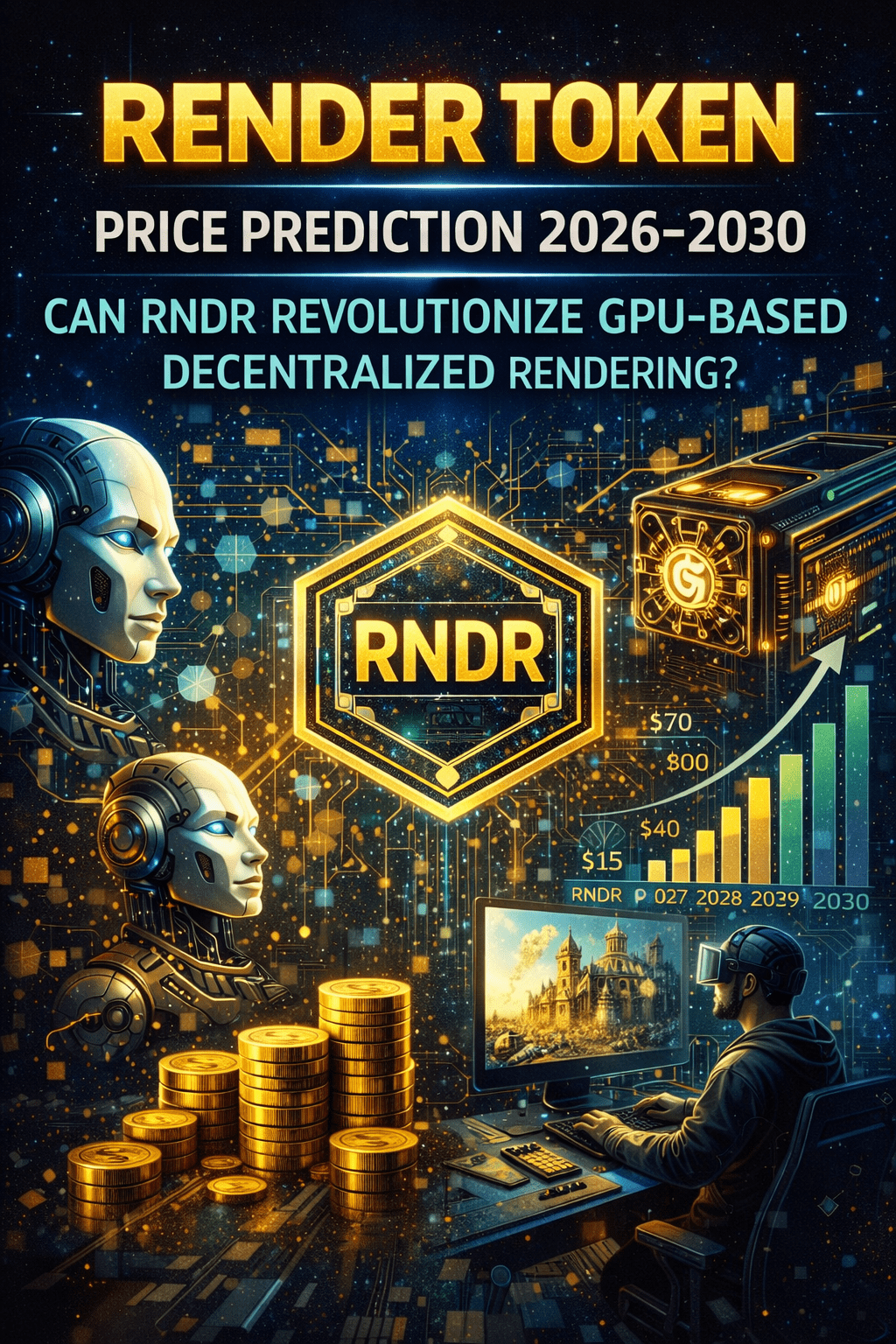
Render Token (RNDR) Price Prediction 2026–2030
While crypto price predictions are speculative, we can consider three scenarios: conservative, moderate, and bullish.
RNDR Price Prediction 2026
Conservative: $3–$6
Moderate growth: $6–$12
Bullish: $12–$20
By 2026, RNDR adoption could accelerate if the network gains traction among digital artists and AI projects.
RNDR Price Prediction 2027
Conservative: $5–$10
Moderate growth: $12–$25
Bullish: $20–$40
Continued growth in decentralized GPU adoption and stronger partnerships could propel RNDR into higher market caps.
RNDR Price Prediction 2028
Conservative: $8–$15
Moderate growth: $18–$35
Bullish: $35–$60
The network may start competing seriously with traditional GPU cloud providers if adoption scales globally.
RNDR Price Prediction 2029
Conservative: $10–$20
Moderate growth: $25–$50
Bullish: $50–$85
RNDR could become a go-to token for decentralized rendering and AI compute, driving its value further.
RNDR Price Prediction 2030
Conservative: $15–$30
Moderate growth: $40–$70
Bullish: $70–$120
By 2030, Render Token could become one of the backbone currencies for decentralized GPU computation, particularly for Web3 projects and AI developers.
Risks to Consider
Technological Challenges – Ensuring reliable GPU performance and network security is complex.
Competition – Centralized cloud providers and other decentralized GPU projects may reduce RNDR adoption.
Market Volatility – Like all cryptocurrencies, RNDR is subject to sharp price fluctuations.
Regulatory Risks – Global regulations on crypto networks may impact RNDR use.
Final Thoughts
Render Token (RNDR) combines two of the most powerful trends of the decade: decentralized infrastructure and GPU computing. Its ability to democratize access to high-performance rendering and AI computation positions it as a unique, high-potential altcoin.
While risks remain, the network’s growing adoption and strong utility make RNDR a low-cap crypto with potentially high upside over the next five years.
If the decentralized GPU marketplace thrives, RNDR could become an essential token for artists, developers, and AI innovators alike.