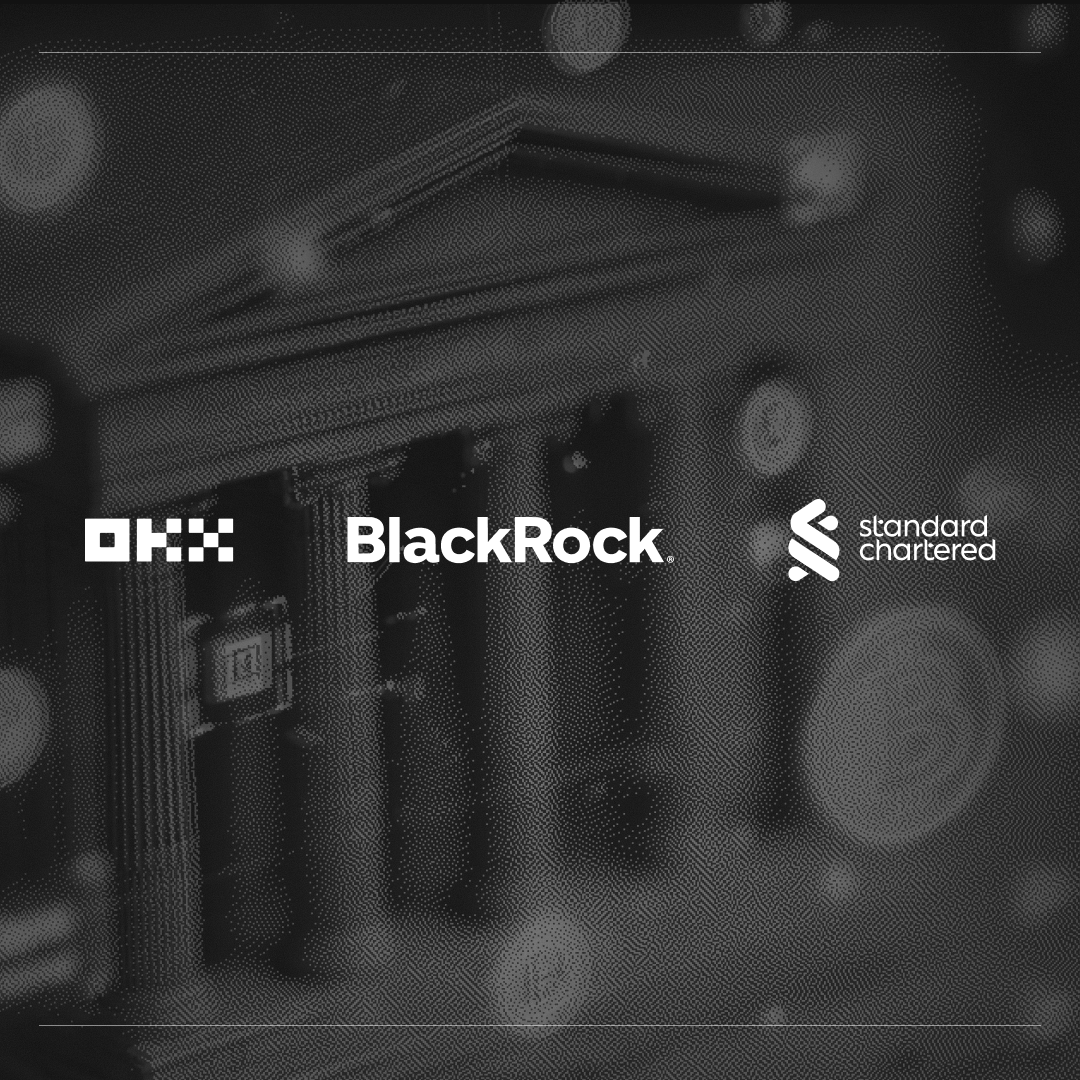
OKX, BlackRock, and Standard Chartered have introduced a joint institutional framework that enables tokenized U.S. Treasury-backed money market funds to be used as trading collateral. The structure allows investors to post these assets while continuing to earn yield, removing the traditional trade-off between liquidity and returns. Assets are held off-exchange in regulated custody at a global systemically important bank, reducing counterparty exposure. This setup integrates tokenized financial instruments directly into active trading environments.
The framework is built around BlackRock BUIDL Fund, which provides exposure to U.S. Treasury-backed instruments in tokenized form. By combining this with Standard Chartered’s custody infrastructure and OKX’s trading platform, the model converts idle margin into a productive asset. Institutions can now deploy collateral that generates yield while supporting leveraged trading strategies. This shifts capital usage from passive allocation to active balance sheet efficiency.
Your collateral shouldn’t sit idle.
BlackRock’s BUIDL is now live as yield-bearing collateral on OKX — safeguarded in Tier 1 custody with Standard Chartered.
Together, the world’s largest asset manager, a G-SIB, and global digital market infrastructure set a new blueprint for… pic.twitter.com/GvesinW4co
— OKX (@okx) April 28, 2026
Capital Efficiency and Institutional Structure
The primary impact of the framework is improved capital efficiency for institutional participants. Instead of holding cash as non-yielding collateral, firms can allocate Treasury-backed assets that continue generating returns. This reduces opportunity cost and enhances portfolio performance without increasing risk exposure. The model aligns with traditional finance practices where capital optimization is a core objective.
The structure also addresses a major barrier to institutional adoption, which is counterparty risk associated with exchanges. By keeping assets in regulated bank custody, the framework separates trading activity from asset storage. This reduces reliance on exchange-held collateral and introduces a more secure operational model. The involvement of a global systemically important bank reinforces compliance and regulatory alignment.
Tokenization at Scale and Market Impact
This initiative moves tokenized real-world assets from passive investment products into core trading infrastructure. Tokenization is no longer limited to holding digital representations of assets but is now integrated into margin and liquidity systems. This expands the functional role of blockchain-based financial instruments within institutional workflows. It represents a transition from experimentation to operational deployment at scale.
The collaboration also highlights convergence between traditional finance and crypto-native platforms. A major asset manager, a global bank, and a leading exchange are operating within a unified framework in a live market environment. This signals increasing institutional confidence in blockchain-based financial systems. The long-term implication is a more interconnected financial system where tokenized assets function as standard collateral across markets.
About The Author