

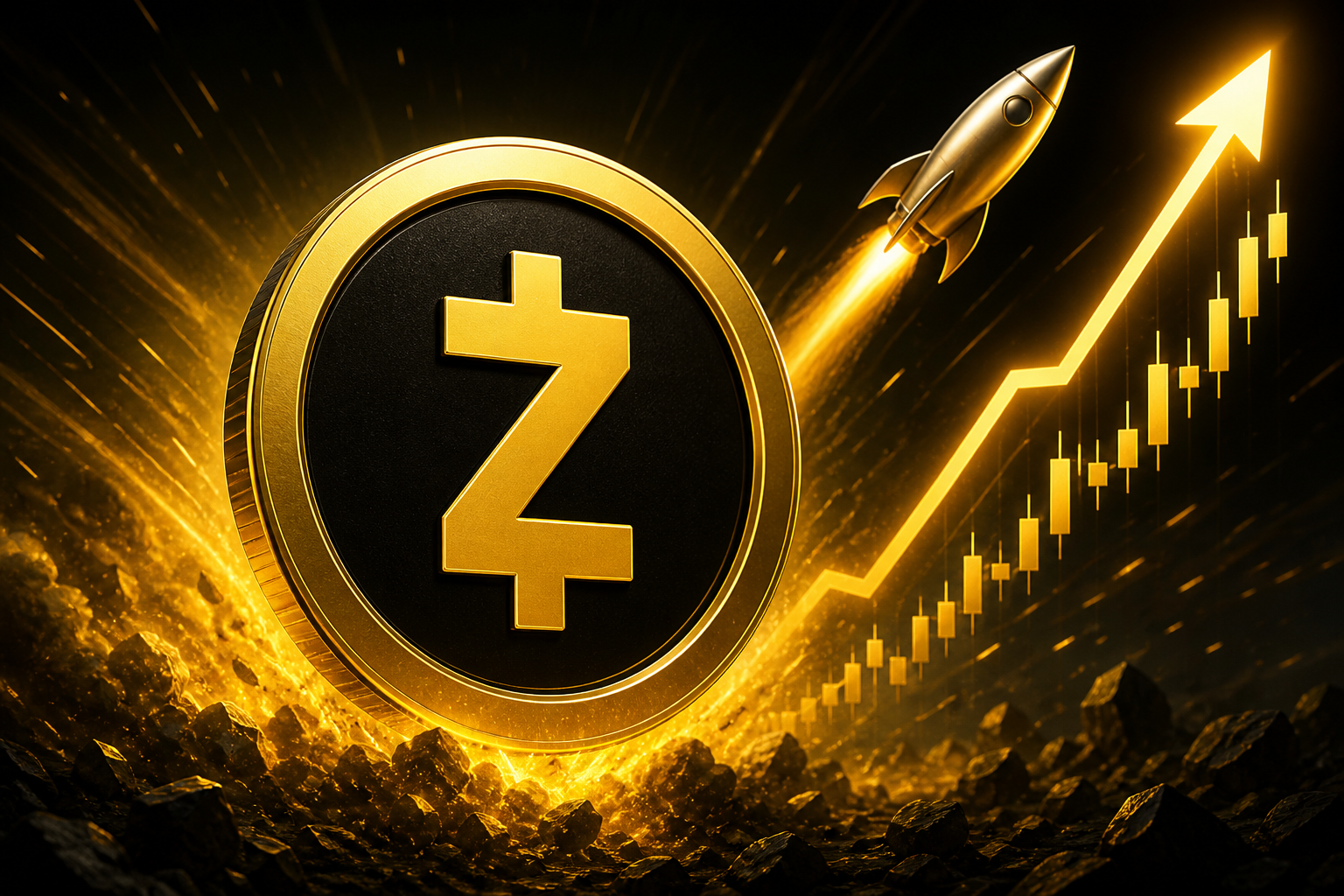
Zcash is rapidly re-entering the spotlight after posting another major rally that has forced traders and analysts to reconsider the long-term role of privacy-focused cryptocurrencies within an increasingly institutionalized digital asset market.
After spending years drifting toward irrelevance following its historic 2017 cycle peak, Zcash has suddenly become one of the most discussed assets among crypto traders searching for asymmetric opportunities tied to privacy, financial sovereignty, and the growing tension between blockchain transparency and personal financial freedom.
The renewed attention comes after ZEC surged more than 160% over the past month, placing the asset near recent highs and reigniting debate around whether the market is beginning to price in a much larger structural narrative. While many cryptocurrencies experience isolated speculative pumps during bullish market conditions, traders increasingly argue that Zcash’s resurgence reflects something deeper: a convergence between growing demand for financial privacy and the changing identity of Bitcoin itself.
Related: Zcash (ZEC) Up 75% as Investors Flock to Privacy-Focused Crypto Assets
For years, Bitcoin represented the rebellious, anti-establishment side of crypto culture. However, the rise of spot ETFs, institutional treasury allocations, sovereign holdings, and Wall Street integration has dramatically changed how many investors perceive the asset. Today, institutions collectively control enormous amounts of Bitcoin through ETFs, corporate treasury strategies, and regulated custody systems. While many see this as validation of Bitcoin’s success, others believe it has fundamentally altered the original cypherpunk ethos that once defined the cryptocurrency movement.
This shift is becoming one of the strongest narratives supporting Zcash. As Bitcoin becomes increasingly integrated into traditional finance, some traders believe the market is searching for a new digital asset capable of representing the privacy-focused and anti-surveillance principles that early crypto adopters originally embraced. Zcash, with its longstanding emphasis on cryptographic privacy and optional shielded transactions, is increasingly being viewed as a possible candidate for that role.
Unlike Bitcoin or even Ethereum, Zcash offers advanced privacy functionality through zk-SNARK cryptography capable of obscuring sender information, receiver information, transaction amounts, and wallet balances. Supporters argue that this level of privacy has become increasingly relevant in a world where governments, corporations, AI systems, and blockchain analytics firms continue expanding their ability to monitor financial activity. As financial surveillance technology grows more sophisticated, demand for privacy infrastructure may grow alongside it.
The Institutionalization of Bitcoin Is Creating a New Opportunity for Zcash
One of the most important parts of the emerging Zcash thesis revolves around the idea that Bitcoin’s success may unintentionally be creating market space for privacy-focused alternatives. Bitcoin has become increasingly attractive to institutions precisely because of its transparency, auditability, and regulatory clarity. Spot ETF products now hold massive amounts of BTC, corporate treasury firms continue accumulating, and governments increasingly monitor blockchain activity using advanced surveillance tools.
Ironically, some analysts believe this institutional embrace weakens Bitcoin’s original appeal as censorship-resistant “freedom money.” Blockchain intelligence firms and regulators can often track Bitcoin flows more easily than traditional banking activity, making the network less attractive for users seeking meaningful financial privacy. Former TRM Labs executive discussions surrounding blockchain surveillance have only intensified these concerns within privacy-focused crypto communities.
Related: Zcash Eyes $700 as Privacy and Quantum Narrative Drives Massive ZEC Rally
At the same time, global political and economic trends are also feeding the broader privacy narrative. Discussions around wealth taxes, unrealized capital gains taxation, stricter financial reporting requirements, and expanding government oversight have all fueled renewed interest in privacy-preserving financial systems. Examples ranging from proposed tax policies in parts of Europe and the United States to increasing scrutiny of high-net-worth individuals have strengthened arguments that demand for financial privacy tools may continue growing in the years ahead.
This environment has helped Zcash stand out because its branding differs significantly from other privacy-focused cryptocurrencies like Monero. While Monero is widely respected for its privacy guarantees, it has struggled with exchange delistings, liquidity issues, and regulatory hostility due to its mandatory privacy model. Zcash instead operates using a hybrid structure where users can choose between transparent and shielded transactions. Supporters argue this makes Zcash far more compatible with institutional compliance systems, regulated custody solutions, and eventually ETF products.
That distinction is increasingly important. Regulated custodians can hold transparent ZEC balances while still enabling optional privacy functionality for users who want it. This “compliant privacy” model has led some investors to speculate that Zcash could eventually follow a partial version of Bitcoin’s institutional adoption path, especially if privacy becomes a larger market theme. The possibility of future institutional investment vehicles tied to ZEC has become part of the broader bullish narrative surrounding the asset.
Quantum Computing, Privacy, and Supply Dynamics Add Fuel to the ZEC Narrative
Another major factor driving excitement around Zcash involves growing concerns about quantum computing and long-term blockchain security. Some crypto analysts believe sufficiently advanced quantum systems could eventually threaten exposed public-key cryptography used by Bitcoin and other blockchains. Because shielded Zcash addresses prevent public keys from being exposed onchain in the same way as traditional transparent wallets, supporters argue the network may hold structural advantages in a future quantum-threat environment.
Although Zcash is not fully quantum-resistant today, developers have increasingly emphasized future post-quantum upgrade paths and ongoing work around cryptographic resilience. This has created a powerful speculative narrative where Zcash is positioned as both a privacy-focused asset and a potentially more adaptable long-term cryptographic system compared to older blockchain architectures.
Supply dynamics are also contributing to the growing interest. Large portions of the ZEC supply appear relatively inactive, with substantial amounts held in long-term storage and shielded pools. Traders argue that years of poor market performance effectively exhausted speculative interest and reduced weak-hand supply across the market. In contrast to assets with heavily distributed retail ownership, Zcash’s current market structure may now be positioned for sharper upside volatility if broader demand accelerates.
Related: Zcash Is Building Momentum Fast—Is This Just the Beginning of ZEC?
The mythology surrounding Zcash’s origins has also added to the asset’s narrative power. The project emerged from advanced cryptographic research and became famous for its secretive “trusted setup” ceremony involving isolated hardware, destroyed cryptographic fragments, and anonymous participants. Years later, it was revealed that Edward Snowden had secretly participated in the ceremony under the pseudonym “John Dobbertin,” reinforcing Zcash’s reputation within privacy and cypherpunk circles.
Now, with crypto markets once again searching for fresh narratives beyond traditional Layer 1 speculation, Zcash is increasingly being reframed as more than just another privacy coin. Supporters see it as a potential convergence of multiple themes at once: financial privacy, anti-surveillance technology, institutional compatibility, post-quantum security narratives, and asymmetric market opportunity.
Whether ZEC ultimately fulfills those expectations remains uncertain. However, after years of being overlooked, the asset is once again becoming one of the most discussed contrarian plays in crypto markets — and many traders believe the narrative surrounding privacy may only be getting started.
About The Author