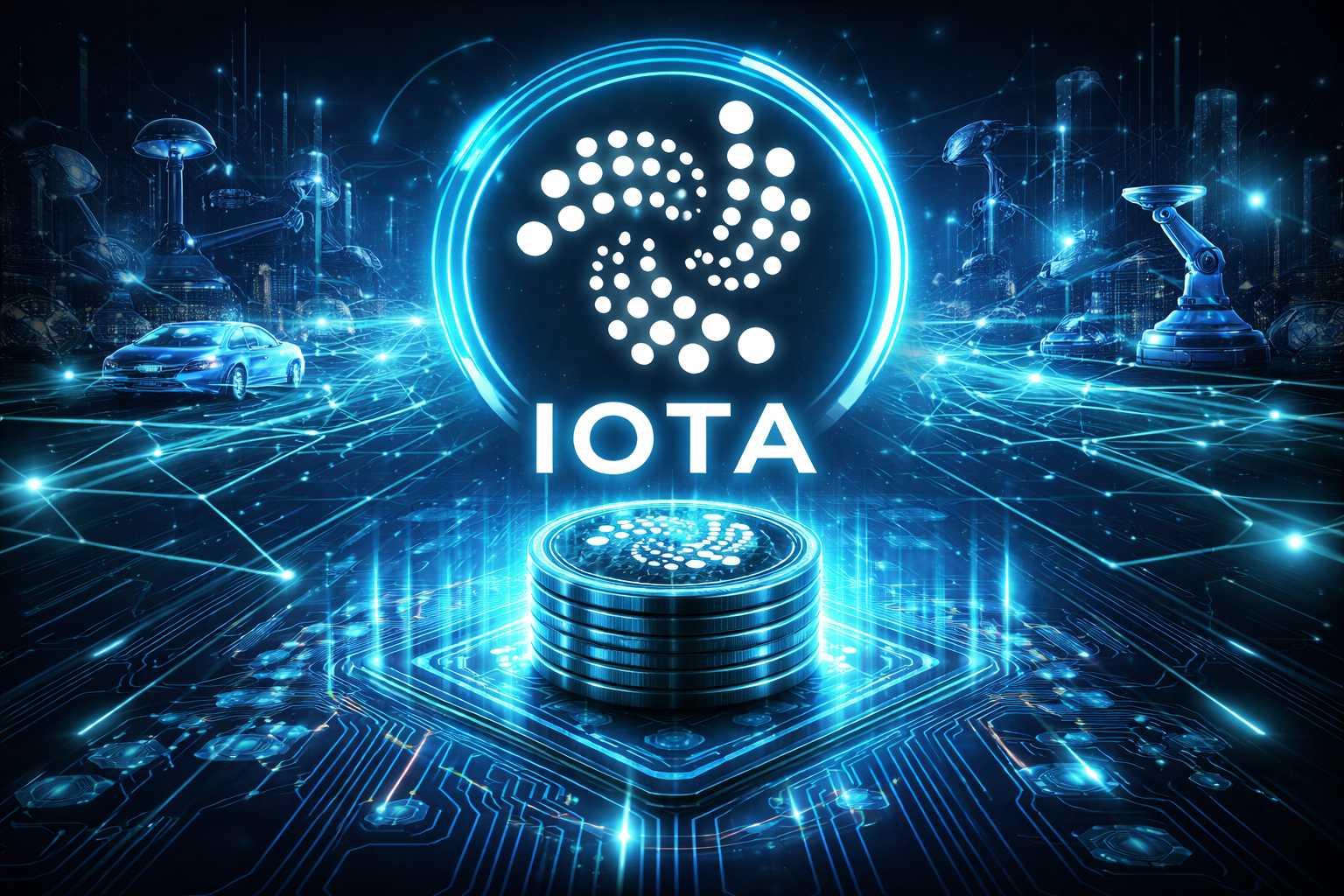
One of the most ambitious attempts to solve these problems is IOTA, particularly through its upcoming upgrade known as IOTA 2.0 (Coordicide).
Rather than simply improving blockchain efficiency, IOTA 2.0 aims to completely remove centralized coordination mechanisms and achieve scalable decentralization through a Directed Acyclic Graph (DAG) architecture.
If successful, this upgrade could redefine how distributed ledger infrastructure operates.
The Problem With Traditional Blockchain Scaling
Most blockchains process transactions in sequential blocks, which creates structural limitations.
As more users join a network, competition for block space increases. This results in:
-
Higher transaction fees
-
Slower confirmation times
-
Network congestion
Layer-2 solutions attempt to solve these problems, but they often introduce additional complexity.
IOTA approaches the problem differently by abandoning blocks altogether.
Instead of miners validating transactions, IOTA uses the Tangle, a network structure where each transaction confirms two previous ones.
This creates a system where network performance improves as activity increases.
Why Removing the Coordinator Matters
One of the biggest criticisms of early IOTA architecture was the presence of a centralized security mechanism called the Coordinator.
The Coordinator acted as a temporary safeguard to prevent network attacks during the project’s early stages.
However, critics argued that this structure conflicted with the core principle of decentralization.
IOTA 2.0 aims to remove the Coordinator entirely through Coordicide.
The upgrade introduces new mechanisms including:
-
Mana-based reputation systems
-
Decentralized consensus protocols
-
Adaptive congestion control
-
Sybil attack protection
Together, these systems allow the network to function securely without relying on a central authority.
The Infrastructure Play
While many crypto projects focus on financial use cases, IOTA is positioning itself as a base layer for digital infrastructure.
Potential use cases include:
-
Smart cities
-
Autonomous vehicle networks
-
Industrial automation
-
Machine-to-machine payments
-
Decentralized data marketplaces
Because transactions can occur without fees, the network is particularly suited for high-frequency microtransactions generated by connected devices.
This is something traditional blockchains struggle to support economically.
What Success Could Mean for the Industry
If IOTA 2.0 achieves its goals, it could demonstrate that DAG-based distributed ledgers can operate at scale without sacrificing decentralization.
This would represent a major shift in the crypto industry, which has historically relied on block-based architectures.
For developers and enterprises exploring Web3 infrastructure, IOTA could become an attractive alternative to traditional blockchain platforms.
How IOTA Could Power the Internet of Things Economy
The next phase of the digital revolution may not be driven by humans—it may be driven by machines.
The Internet of Things (IoT) is expected to connect tens of billions of devices, ranging from smart appliances to autonomous vehicles.
These devices generate enormous amounts of data and may eventually need to exchange resources, services, and payments with each other.
This emerging ecosystem is often called the machine economy.
One of the blockchain projects most closely aligned with this vision is IOTA.
Understanding the Machine Economy
In a machine economy, devices operate autonomously and interact with other devices.
Examples include:
-
Electric vehicles paying charging stations automatically
-
Smart meters purchasing electricity dynamically
-
Autonomous delivery drones paying airspace fees
-
Environmental sensors selling climate data
These scenarios require a payment system capable of processing millions of tiny transactions instantly and without fees.
Traditional financial systems—and even many cryptocurrencies—are not designed for this scale.
IOTA’s architecture was created specifically for these types of machine interactions.
Why Microtransactions Matter
Imagine a smart sensor selling weather data for fractions of a cent per request.
If each transaction required even a small fee, the business model would collapse.
This is why fee-less transactions are essential for the machine economy.
IOTA’s Tangle allows transactions to occur without miners or validators charging fees, making it one of the few networks capable of supporting microtransactions economically.
Data as the New Commodity
One of the most promising IoT applications involves data marketplaces.
Devices generate valuable datasets that could be sold or shared with researchers, corporations, and governments.
Examples include:
-
Traffic data from vehicles
-
Environmental readings from sensors
-
Manufacturing performance metrics
-
Agricultural monitoring data
Using distributed ledger technology, these datasets can be verified, tracked, and monetized securely.
This is an area where the IOTA Foundation has focused significant research.
Smart Cities and Autonomous Infrastructure
Another potential use case is smart city infrastructure.
Cities could use IOTA-powered systems to manage:
-
Traffic optimization
-
Public transportation payments
-
Energy distribution
-
Environmental monitoring
Because the network can process high volumes of transactions efficiently, it could support massive urban data systems.
The Road Ahead
The IoT industry is still in its early stages, and large-scale machine economies have yet to fully emerge.
However, if billions of devices eventually begin interacting economically, networks like IOTA could play a foundational role.
Its architecture was designed for precisely this future.
About The Author