

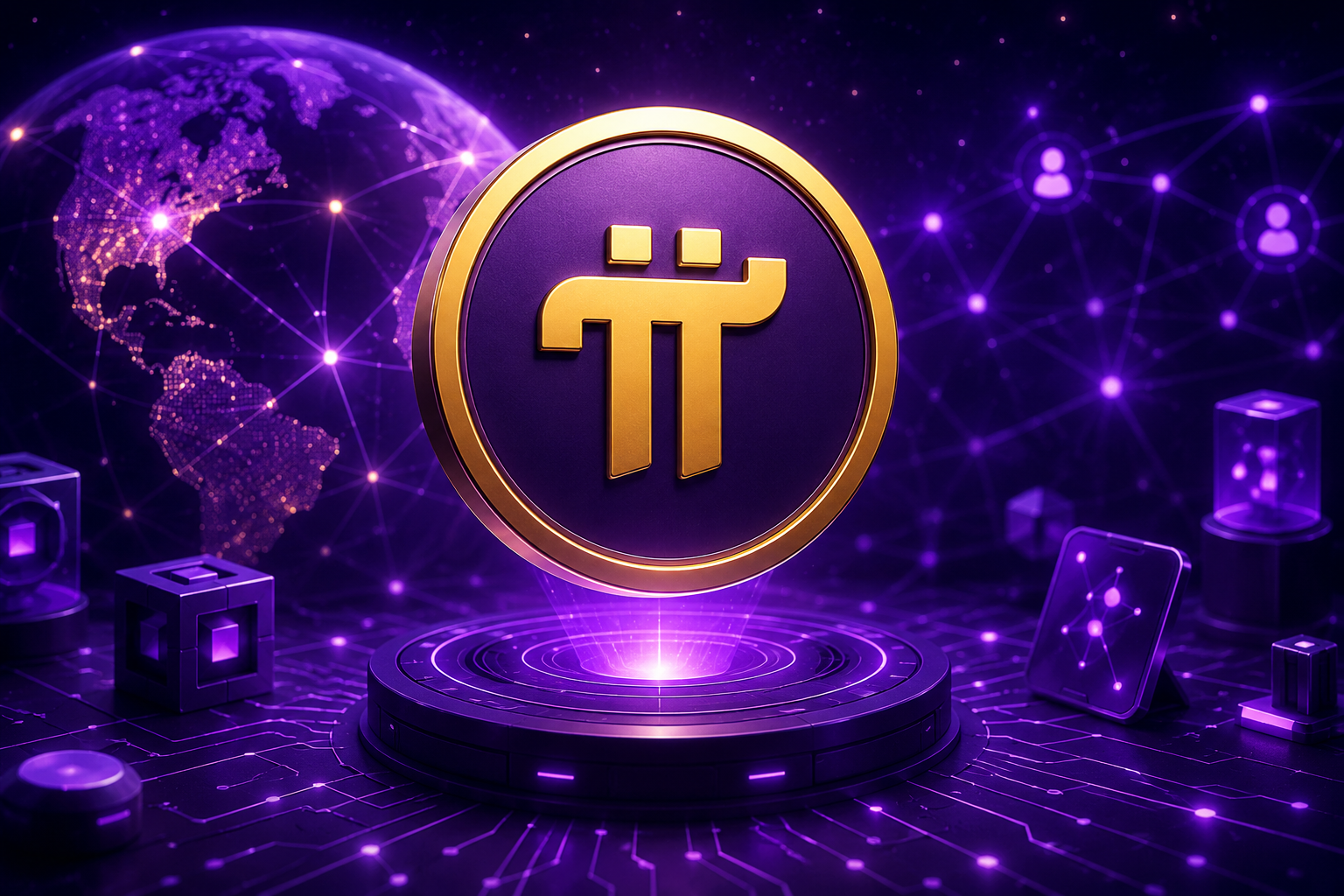
Pi Network is positioning its annual “Pi2Day” event as a coordinated ecosystem activation moment, encouraging users—referred to as “Pioneers”—to participate in app development campaigns, testnet experiments, and community engagement initiatives.
According to the announcement from the Pi Core Team, the period leading into June 28 is intended to spotlight new product directions and ecosystem priorities. This year’s initiatives include a “vibe coder campaign,” designed to attract AI-assisted developers building applications for Pi’s ecosystem, alongside structured feedback programs tied to ecosystem growth.
The “vibe coder” initiative encourages participants to promote Pi’s developer tools and application layer, particularly through Pi App Studio, which is positioned as a no-code or low-code environment for building applications. The campaign also integrates incentive mechanics such as raffles for merchandise rewards, while encouraging developers to share externally built AI applications that can connect to Pi’s ecosystem infrastructure.
A key narrative in the campaign is scalability: Pi Network claims its ecosystem provides access to tens of millions of users, alongside built-in identity, payments, and advertising infrastructure. However, these figures and capabilities remain primarily based on internal reporting and ecosystem design goals rather than independently verified transactional metrics on a fully open mainnet blockchain.
Testnet token SLICE and the controlled experimentation model
Alongside developer outreach, Pi Network is also introducing a second testnet token called “SLICE” through Pi Launchpad. The token is explicitly framed as a test asset designed for experimentation and user feedback, and it is stated that SLICE will not transition to mainnet.
The Launchpad system allows users to simulate participation in token launches using “Test-Pi,” a non-transferable testing currency. Participants are guided through a structured process that includes reviewing project details, interacting with associated applications, and committing test balances to simulate real launch conditions.
Related: Pi Network Launches Ecosystem Directory Staking to Boost App Visibility
According to the announcement, engagement with connected applications—such as “Slice of Pi”—may influence simulated reward outcomes, allowing the system to collect behavioral data and refine its token distribution model before any potential mainnet deployment.
This approach reflects Pi Network’s broader strategy of incremental rollout: testing economic mechanisms in controlled environments before exposing them to live market conditions. While this reduces risk for users, it also means that no real financial settlement or open-market valuation is currently occurring within these test systems.
Broader context and ongoing questions
Pi Network remains one of the most widely discussed mobile-first crypto projects, largely due to its large user onboarding claims and long development timeline. However, it has also faced persistent scrutiny from analysts and the broader crypto community regarding:
- The lack of fully open mainnet economic activity in the early years of the project
- Limited external verification of user and transaction metrics
- Unclear timelines for full decentralization and exchange integration
Despite this, Pi continues to expand its ecosystem narrative through structured engagement campaigns, developer tooling, and staged testing environments like SLICE.
Related: Is Pi Network Building a Sovereign Finance OS?
In effect, Pi2Day functions less as a technical protocol upgrade and more as a coordinated ecosystem participation event, aimed at reinforcing user engagement while iterating on application and token distribution systems.
Whether these experiments translate into a fully open and liquid blockchain economy remains an open question, and one that will likely define Pi Network’s trajectory in the broader Web3 landscape.
About The Author