

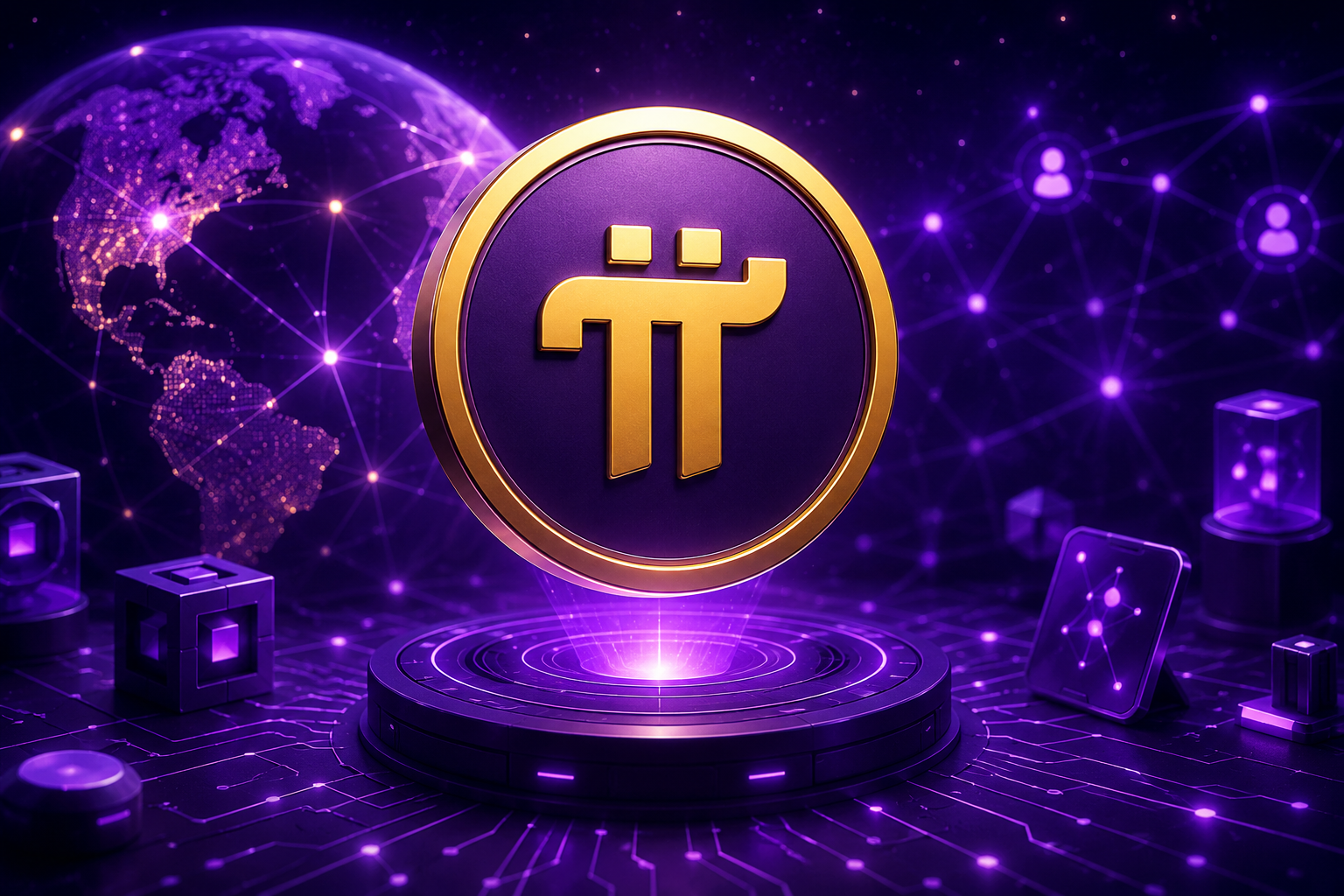
The Pi Network is one of the most widely discussed and controversial crypto projects of the last several years. Unlike traditional blockchains that launched with open, permissionless networks, Pi Network built its ecosystem around a mobile-first “mining” model and a staged rollout strategy.
Its core idea is simple in concept but complex in execution: enable users to earn digital currency through mobile participation, then gradually transition that user base into a functional blockchain ecosystem with apps, payments, and real-world utility.
However, Pi Network remains unique in crypto because its development path, network openness, and token liquidity structure differ significantly from most established blockchain ecosystems.
1. What Is Pi Network and How Does It Work?
Pi Network is a mobile-first digital currency ecosystem designed to allow users—called “Pioneers”—to accumulate Pi through daily engagement in a mobile application.
Unlike proof-of-work or proof-of-stake systems, Pi does not rely on traditional on-chain mining. Instead, it uses a social trust-based participation model, where users validate activity and contribute to network growth through engagement.
The project’s native asset, Pi, is intended to function as the medium of exchange within its ecosystem once fully launched on mainnet infrastructure.
Key components:
- Mobile app-based “mining” system
- Identity verification (KYC-style onboarding)
- Ecosystem apps and utilities (Pi Browser, Pi apps)
- Gradual transition from enclosed network to open mainnet
- Developer ecosystem initiatives
Unlike fully open networks, Pi has historically operated in phases, where parts of the ecosystem remain restricted or “enclosed” until further decentralization milestones are reached.
2. The Enclosed Network and Mainnet Transition
One of the defining characteristics of Pi Network is its phased rollout model.
In earlier stages, Pi operated in an “enclosed mainnet,” meaning:
- Transactions were restricted within the ecosystem
- External exchange connectivity was limited or unavailable
- The network focused on app development and identity verification
This approach was intended to prevent speculative trading before utility development.
However, it also created a major debate in the crypto community:
- Supporters argue it builds a stronger foundation for real utility
- Critics argue it delays liquidity and real market price discovery
The transition toward an open mainnet remains one of the most important milestones for the ecosystem’s long-term viability.
3. Ecosystem Development and Utility Expansion
A major focus of Pi Network is building internal utility before full market exposure.
Key ecosystem components include:
Pi Browser
A dedicated environment where users can access decentralized applications built for the Pi ecosystem.
Pi App ecosystem
Developers are encouraged to build apps ranging from marketplaces to games and services that use Pi as a unit of exchange.
Identity and KYC system
A large emphasis is placed on identity verification to reduce bot activity and create a “real human” network base.
Developer tools and incubation programs
Pi has introduced initiatives such as app development platforms and ecosystem challenges designed to increase application supply.
The long-term goal is to create a self-contained digital economy where Pi is used for goods, services, and digital interactions.
4. Token Model and Economic Structure
The tokenomics of Pi differ from most publicly traded cryptocurrencies because market price discovery has historically been limited or delayed.
Key structural characteristics:
- Large user base accumulation before full liquidity
- Controlled release phases
- Emphasis on utility over speculation (in theory)
- Ecosystem-based distribution model
However, the lack of fully open market trading in early phases has led to uncertainty around:
- True circulating supply
- Real market valuation
- Liquidity depth and demand
This makes Pi’s economic model fundamentally different from most Layer-1 networks, where tokens are immediately tradable on open markets.
5. Ecosystem Vision: From Users to Builders
The long-term narrative of Pi Network is not just about token distribution—it is about transforming a large user base into an active digital economy.
The ecosystem aims to:
- Convert users into developers and merchants
- Encourage internal commerce using Pi
- Build a closed-loop economy that eventually connects to external markets
- Expand real-world adoption through app-based utilities
If successful, this would position Pi more as a platform economy rather than just a blockchain network.
6. Challenges and Criticism
Despite its scale and community size, Pi Network faces several structural challenges:
1. Liquidity and price discovery
Without full open-market trading, it is difficult to determine fair valuation or market demand.
2. Decentralization concerns
Critics argue that the system remains partially centralized in terms of validation, governance, and rollout control.
3. Utility gap risk
Large user bases do not automatically translate into economic activity if real applications remain limited.
4. Time-to-market pressure
Crypto ecosystems evolve quickly, and long development cycles risk losing developer and user momentum.
5. Competitive landscape
Pi competes indirectly with fully open ecosystems like Ethereum, Solana, and other app-layer blockchains that already support robust DeFi and developer ecosystems.
7. Future Outlook
The future of Pi Network depends on whether it can transition from a large social onboarding experiment into a functioning open digital economy.
Key factors that will determine its trajectory include:
- Successful open mainnet transition
- Real-world utility adoption within apps
- Developer ecosystem growth
- Exchange liquidity integration (if and when applicable)
- Sustained user engagement beyond mining incentives
If Pi achieves meaningful internal commerce and developer traction, it could evolve into a large-scale consumer crypto platform. If not, it risks remaining a closed ecosystem with limited external economic impact.
Related: What Is Pi2Day? Pi Network Launchpad and SLICE Token Testnet Guide
Conclusion
Pi Network represents one of the most ambitious attempts to combine social onboarding, mobile participation, and blockchain-based economic design at scale. Unlike traditional cryptocurrencies, its evolution depends less on early market trading and more on whether a functional internal economy can emerge from its massive user base.
Whether it succeeds or not will ultimately depend on one core question: can user participation be converted into real, sustained economic utility?
About The Author