

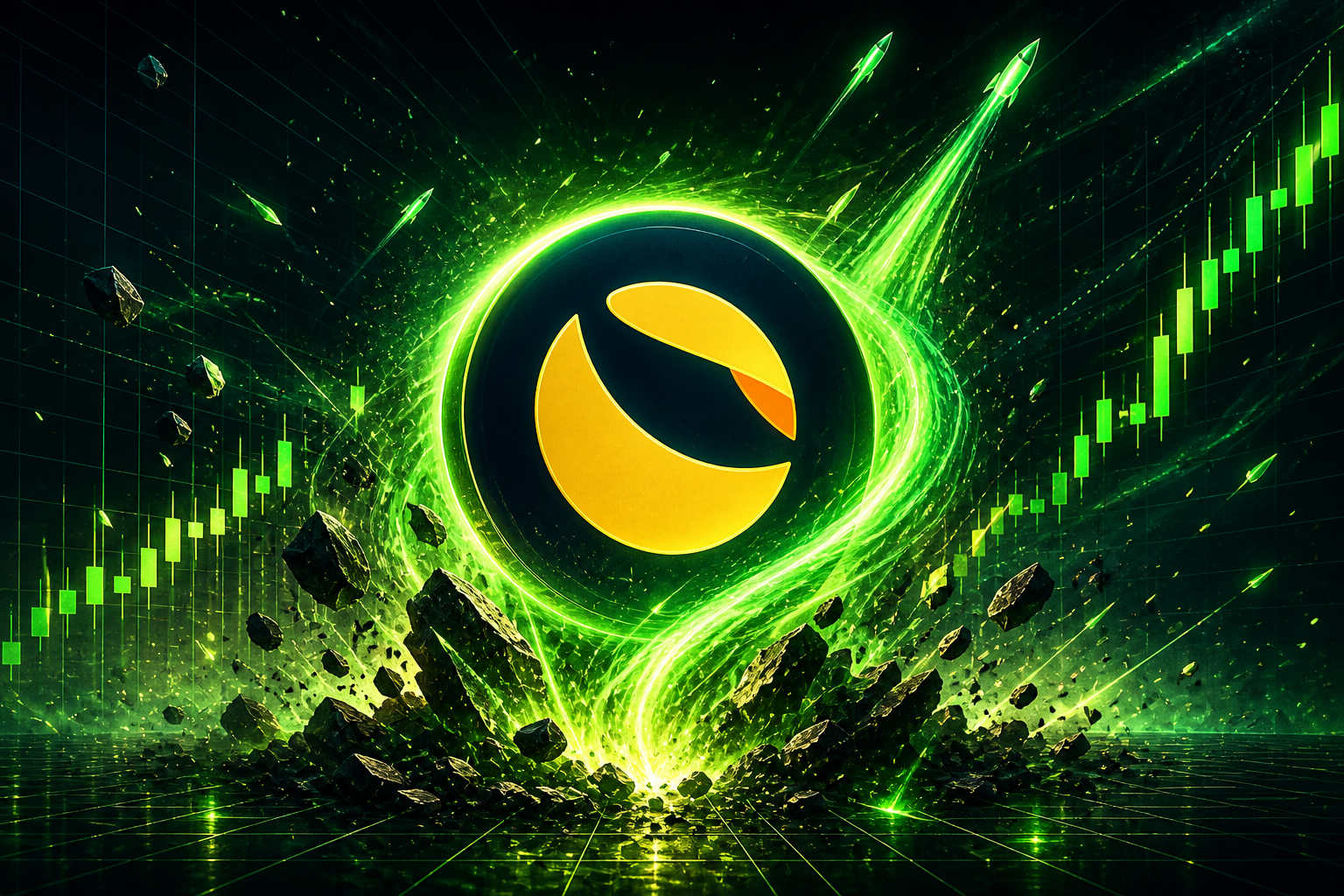
More than four years after the dramatic collapse of Terra Luna and the birth of Terra Classic (LUNC), one of the ecosystem’s longest-serving contributors has delivered a candid reflection on what went wrong after the crisis—and why he believes the blockchain’s biggest obstacle today is no longer technology, but the community itself.
In a lengthy statement shared with the Terra Classic community, the contributor outlined his role in many of the network’s major recovery initiatives, from the burn tax campaign to exchange coordination and governance proposals. While acknowledging that no recovery plan could ever guarantee success, he argued that Terra Classic once had a realistic roadmap centered on rebuilding utility, restoring trust, and creating sustainable economic activity. According to him, that vision gradually faded as developer fatigue, community infighting, and constant accusations made meaningful progress increasingly difficult.
Burns Were Only the Beginning, Not the Entire Recovery Plan
Following the collapse of the Terra ecosystem in 2022, Terra Classic was left with one of the largest token supplies in the cryptocurrency industry after hyperinflation dramatically expanded the circulating supply of LUNC.
The contributor explained that the burn tax proposal, which later became one of the community’s defining initiatives, was never intended to solve the entire problem. Instead, it was designed to begin reducing excess supply while giving the fractured community a shared objective during one of its most uncertain periods.
He described contacting multiple cryptocurrency exchanges, including MEXC, to encourage participation in burn programs. He also recalled taking part in a widely followed discussion involving Binance founder Changpeng Zhao (CZ), which ultimately contributed to Binance launching its own LUNC burn initiative.
Related: Binance Continues LUNC Burn Program with 90 Billion Reduced
However, he stressed that token burns alone could never restore the ecosystem. Without new applications, economic activity, and renewed demand, reducing supply would only address one piece of a much larger puzzle.
Behind the scenes, he says much of his work focused on technical coordination with major exchanges including Binance, Kraken, KuCoin, Trust Wallet, and LBank. That included documentation, upgrade support, and communication designed to help ensure Terra Classic remained listed and operational on key platforms.
According to his account, he also participated in discussions when Kraken considered delisting Terra Classic and when Binance reviewed continued support for USTC. Those efforts, while largely invisible to the broader community, were aimed at preserving access to the network during periods of uncertainty.
A Roadmap That Never Fully Materialized
The contributor argues that Terra Classic’s long-term recovery depended on several interconnected initiatives rather than a single breakthrough.
Central to that vision was Market Module 2 (MM2), a redesigned version of Terra’s original market mechanism intended to restore controlled economic functionality without repeating the flaws that contributed to the original collapse. Rather than simply reviving the old system, MM2 was meant to introduce stronger safeguards, improved risk controls, and a more sustainable economic framework.
He also highlighted a proposed USTC staking system that had already received governance approval and was designed to encourage participation instead of relying solely on hopes of a future repeg. Combined with additional ecosystem products, staking mechanisms, and transaction-based fee generation, the roadmap envisioned creating a cycle where increased utility would attract more users, generate more fees, support additional burns, and ultimately strengthen the network’s long-term economics.
According to the contributor, many of these ideas stalled not because they lacked technical merit, but because developers became discouraged by persistent criticism, misinformation, and personal attacks. Several ecosystem projects—including Juris, Selenium, TerraSwap, and Tritium—either failed to gain traction or lost momentum as contributors gradually left the ecosystem.
He also emphasized the often-overlooked work involved in maintaining blockchain security, thanking numerous developers and validators for coordinating vulnerability responses and protecting the chain from potential exploits over the past several years.
Related: Is LUNC a Good Investment?
Perhaps the strongest message from his statement concerns what he calls the myth of a “secret rescue plan.” He rejected long-standing speculation that Binance or other major industry players possess a hidden strategy capable of restoring Terra Classic’s value overnight.
Instead, he argued that exchanges cannot create utility, rebuild governance, or manufacture sustainable demand. Those responsibilities, he said, belong to the community itself.
While announcing that he will reduce his day-to-day involvement with Terra Classic to focus more on his family, education, cybersecurity, artificial intelligence, and future projects, he confirmed he will continue operating his validators and supporting initiatives he believes benefit the ecosystem.
His closing message is likely to resonate across the Terra Classic community. Recovery, he argues, was never going to come from rumors, influencers, or a single miracle event. It required builders, transparent governance, sustainable economic products, and a community willing to support long-term development rather than divide over it.
Whether Terra Classic can still follow that roadmap remains uncertain. But his reflection serves as a reminder that rebuilding a blockchain ecosystem requires far more than reducing token supply—it requires the collective willingness to keep building long after the headlines have faded.
About The Author