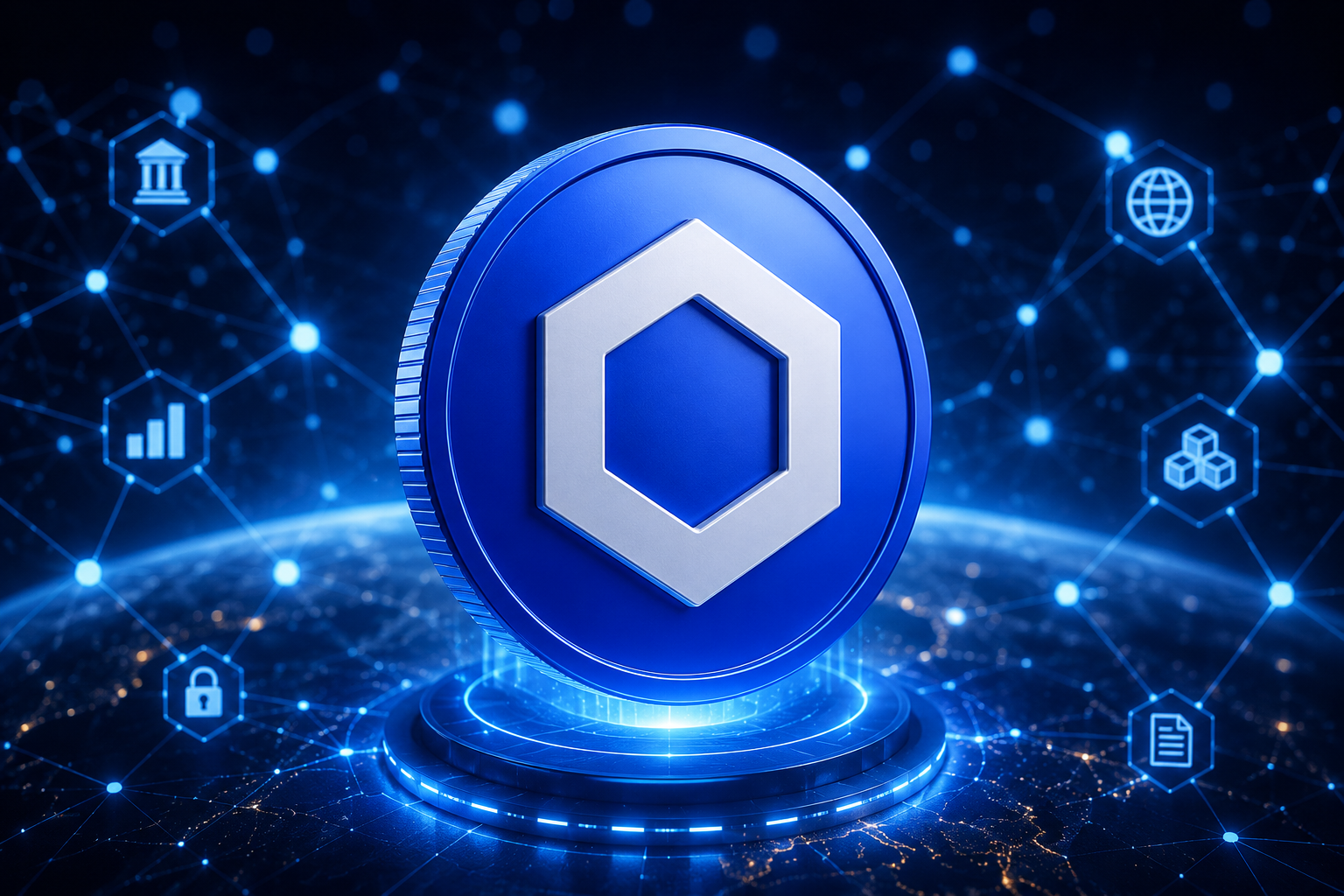
AI tokens, modular blockchains, and speculative meme coins—Chainlink occupies a unique and often misunderstood position. It is not a Layer 1 competing for users, nor a retail-driven ecosystem chasing hype cycles. Instead, it operates as critical infrastructure: the connective tissue between blockchains and the real world.
As 2026 unfolds, investors are asking a more nuanced question: Is Chainlink a good investment in 2026, or has its role already been priced in?
The answer lies in understanding what Chainlink actually does—and why its importance may be growing rather than fading.
What Is Chainlink and Why Does It Matter?
Chainlink is a decentralized oracle network that enables smart contracts to interact with real-world data. In simple terms, it allows blockchains to access information outside their native environment—prices, weather data, identity verification, and more.
Without oracles, smart contracts are limited. With them, they become useful.
Chainlink provides:
- Price feeds for DeFi protocols
- Proof of reserves for asset-backed tokens
- Cross-chain communication between blockchains
- Off-chain computation for complex data processing
This positions Chainlink not as a competitor—but as a foundational layer across the entire crypto ecosystem.
The 2026 Narrative: From Oracle Provider to Financial Infrastructure
Chainlink’s evolution in recent years has been significant. What began as a price feed provider has expanded into a broader vision: powering the next generation of global financial infrastructure.
At the center of this transformation is the Cross-Chain Interoperability Protocol (CCIP), which enables:
- Secure communication between blockchains
- Token transfers across networks
- Integration between traditional finance (TradFi) and decentralized finance (DeFi)
In 2026, this is no longer theoretical.
Chainlink has been actively working with:
- Banks
- Asset managers
- Payment networks
to explore tokenized assets and cross-chain settlement systems.
This shift matters because the next wave of crypto adoption is expected to come not from retail traders—but from institutions tokenizing real-world assets.
Real-World Adoption: The Institutional Angle
Chainlink’s strongest investment case lies in its deep integration across both crypto-native and traditional systems.
Key areas of adoption include:
1. DeFi Dominance
Chainlink remains the default oracle provider for much of decentralized finance. Major protocols rely on its price feeds to function securely.
2. Tokenized Assets (RWA)
As financial institutions experiment with tokenized:
- Bonds
- Equities
- Commodities
Chainlink’s infrastructure is increasingly used to:
- Verify off-chain data
- Enable secure settlement
- Ensure transparency
3. Banking and Payments Integration
Through CCIP, Chainlink is bridging:
- Public blockchains
- Private enterprise systems
This creates a pathway for traditional finance to interact with blockchain networks without fully migrating to them.
Technology Stack: Why Chainlink Keeps Expanding
Chainlink’s strength lies in its modular and expanding product suite:
1. Data Feeds
Reliable, decentralized price data powering DeFi markets.
2. CCIP (Cross-Chain Interoperability Protocol)
A standardized framework for cross-chain messaging and asset transfers.
3. Chainlink Functions
Allows developers to connect smart contracts to APIs and external systems.
4. Proof of Reserve
Verifies that assets backing tokens actually exist.
Together, these tools position Chainlink as a multi-layer infrastructure provider, not just an oracle network.
Market Performance: A Paradox of Importance vs Price
Despite its widespread adoption, Chainlink’s price action has often lagged behind more narrative-driven assets.
This creates a paradox:
- High utility and integration
- Moderate market excitement
The reason is structural.
Chainlink’s value accrues indirectly:
- It powers other ecosystems rather than dominating one
- It benefits from overall crypto growth rather than driving hype cycles
As a result, its price movements tend to be:
- Slower
- More correlated with broader market trends
- Less explosive than emerging narratives
The Bull Case: Why Chainlink Could Be a Strong Investment in 2026
1. Picks-and-Shovels Strategy
Chainlink is not betting on a single blockchain—it supports many. This “picks-and-shovels” approach allows it to benefit from industry-wide growth.
2. Institutional Adoption Tailwinds
As tokenization accelerates, Chainlink is positioned as a critical infrastructure layer for:
- Data verification
- Cross-chain settlement
- Secure communication
3. Network Effects
The more protocols and institutions use Chainlink, the stronger its ecosystem becomes. This creates a defensive moat against competitors.
4. Expanding Use Cases
From DeFi to real-world assets, Chainlink continues to expand its role across multiple sectors.
The Bear Case: Risks Investors Should Consider
1. Value Capture Debate
A key concern is whether Chainlink’s utility translates into token value.
- Does increased usage directly drive LINK demand?
- Or does the network grow without significant price appreciation?
This remains an open question for investors.
2. Competition
Other oracle solutions and in-house data systems could emerge, particularly as large institutions build their own infrastructure.
3. Complexity
Chainlink’s technology stack is sophisticated, which can:
- Slow adoption among smaller developers
- Create barriers to understanding for retail investors
4. Market Narrative Risk
In a market driven by hype cycles, infrastructure projects often struggle to attract sustained attention.
Investment Outlook: Who Should Consider Chainlink?
Chainlink is not a typical high-volatility altcoin play.
It may appeal to:
Long-Term Investors
Those who believe in:
- Tokenized finance
- Cross-chain ecosystems
- Institutional blockchain adoption
Infrastructure-Focused Investors
Those seeking exposure to:
- Core Web3 infrastructure
- Data and interoperability layers
Risk-Aware Investors
Chainlink offers a more measured risk profile compared to:
- Meme coins
- Highly speculative tokens
Final Verdict: Is Chainlink a Good Investment in 2026?
Chainlink represents a fundamentally different type of crypto investment.
It is not a bet on:
- A single blockchain ecosystem
- Retail-driven hype cycles
- Short-term speculative gains
Instead, it is a bet on the infrastructure that connects everything.
If you believe that:
- Financial assets will become tokenized
- Blockchains will need reliable real-world data
- Cross-chain communication will define the next phase of Web3
Then Chainlink could be one of the most strategically positioned assets in the market.
If you are looking for:
- Rapid, narrative-driven gains
- Viral trends
- Short-term momentum
Chainlink may feel underwhelming.
Bottom Line
In 2026, Chainlink is no longer just an oracle provider.
It is evolving into a universal infrastructure layer for decentralized and traditional finance alike.
And in markets—just as in history—the systems that quietly connect everything often become the most valuable over time.
About The Author