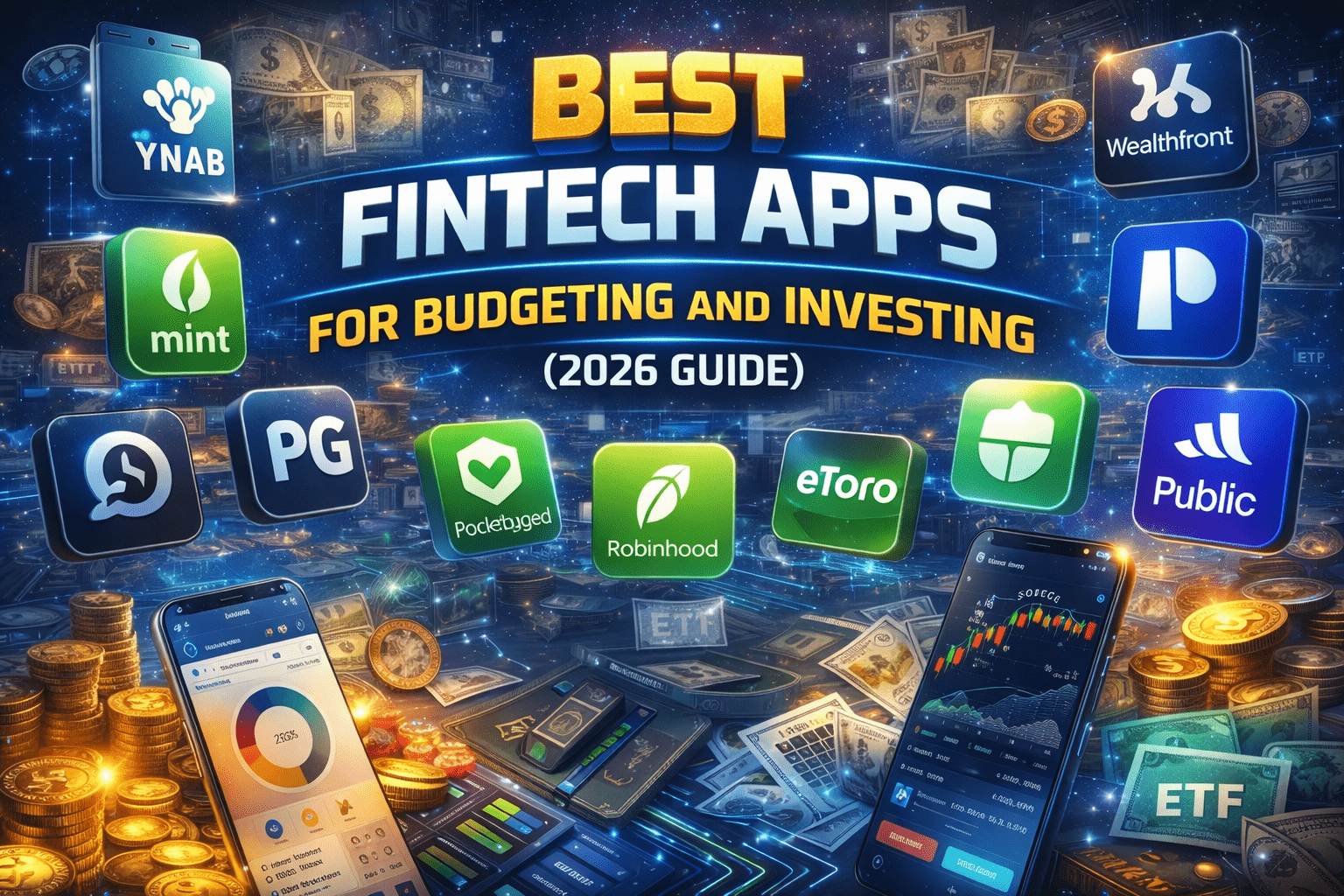
Managing money has never been more complex—or more accessible. With the rise of fintech, individuals now have access to powerful tools that were once reserved for financial advisors, banks, and institutional investors.
In 2026, the best fintech apps don’t just track spending—they automate savings, optimize investments, and provide real-time financial insights. Whether you’re looking to build wealth, manage daily expenses, or start investing with small amounts, the right apps can dramatically improve your financial outcomes.
This guide breaks down the best fintech apps for budgeting and investing, based on usability, features, innovation, and long-term value.
Why Fintech Apps Matter More Than Ever
Traditional banking systems often lack flexibility, transparency, and personalization. Fintech apps are filling that gap by offering:
- Real-time financial tracking
- Automated budgeting and savings
- Low-cost or commission-free investing
- Data-driven insights and recommendations
The result is a shift toward self-managed finance, where users have full control over their money.
Best Budgeting Apps in 2026
1. YNAB (You Need A Budget)
Best for: Hands-on budgeting and financial discipline
YNAB uses a proactive approach, encouraging users to assign every dollar a job. It’s ideal for people serious about breaking the paycheck-to-paycheck cycle.
Key features:
- Zero-based budgeting system
- Real-time expense tracking
- Goal setting and progress monitoring
Why it stands out:
It doesn’t just track money—it changes financial behavior.
2. Mint
Best for: All-in-one financial overview
Mint remains one of the most popular budgeting apps, offering a comprehensive snapshot of your finances in one place.
Key features:
- Bank account syncing
- Bill tracking and alerts
- Credit score monitoring
Why it stands out:
A simple, beginner-friendly way to see your entire financial picture.
3. PocketGuard
Best for: Preventing overspending
PocketGuard simplifies budgeting by showing how much disposable income you actually have after expenses.
Key features:
- “In My Pocket” spending tracker
- Bill negotiation tools
- Subscription tracking
Why it stands out:
Helps users avoid overspending without complex budgeting systems.
4. Goodbudget
Best for: Envelope-style budgeting
Goodbudget digitizes the traditional envelope budgeting method.
Key features:
- Expense categorization
- Shared household budgeting
- Financial planning tools
Why it stands out:
Great for couples or families managing shared finances.
Best Investing Apps in 2026
5. Robinhood
Best for: Commission-free trading
Robinhood revolutionized investing by removing trading fees and simplifying the process.
Key features:
- Stocks, ETFs, and crypto trading
- Real-time market data
- Beginner-friendly interface
Why it stands out:
Lower barriers to entry for new investors.
6. eToro
Best for: Social and copy trading
eToro allows users to follow and copy the trades of experienced investors.
Key features:
- Copy trading
- Multi-asset investing
- Social investing community
Why it stands out:
Blends investing with social insights and strategy sharing.
7. Acorns
Best for: Passive investing
Acorns invests spare change from everyday purchases into diversified portfolios.
Key features:
- Round-up investments
- Automated portfolio management
- Retirement accounts
Why it stands out:
Makes investing effortless and automatic.
8. Wealthfront
Best for: Automated wealth management
Wealthfront uses algorithms to manage investments based on your goals and risk tolerance.
Key features:
- Automated portfolio rebalancing
- Tax-loss harvesting
- Financial planning tools
Why it stands out:
Offers a hands-off investing experience with sophisticated strategies.
9. Public
Best for: Community-driven investing
Public combines investing with a social platform where users share insights and ideas.
Key features:
- Fractional shares
- Social feed
- Educational content
Why it stands out:
Encourages learning and transparency in investing.
10. Stash
Best for: Beginner investors
Stash helps users start investing with small amounts while providing educational resources.
Key features:
- Personalized investment guidance
- Fractional investing
- Banking features
Why it stands out:
Designed to teach while you invest.
Key Trends in Fintech Apps (2026)
1. Automation Is Everything
Budgeting and investing are increasingly automated, reducing human error and effort.
2. AI-Powered Insights
Apps now use AI to provide personalized financial recommendations.
3. Accessibility
Fractional investing and micro-savings have lowered barriers to entry.
4. All-in-One Platforms
The line between budgeting and investing apps is disappearing.
How to Choose the Right Fintech App
Before choosing an app, consider:
- Your goal: Budgeting, investing, or both
- Ease of use: Simple vs advanced features
- Fees: Hidden costs can reduce returns
- Security: Strong encryption and regulation
- Automation level: Hands-on vs passive
Final Thoughts
Fintech apps are redefining personal finance. What once required financial advisors and complex tools can now be done from a smartphone in minutes.
The best approach isn’t to rely on just one app—but to build a system:
- Use a budgeting app to control spending
- Pair it with an investing app to grow wealth
In 2026, financial success is less about how much you earn—and more about how effectively you manage and deploy your money.
About The Author