One of crypto’s most persistent structural flaws is surprisingly simple: most apps help networks make money… while the apps themselves get almost nothing back
Builders launch products.
Users transact.
Volume grows.
Fees are generated.
And then, on most blockchains, the economic value goes somewhere else — usually to validators, miners, stakers, or the base layer itself.
That is the problem Canton Network says it wants to fix.
In its latest builder-focused push, Canton is making a very direct pitch to developers, tokenized asset issuers, and onchain financial applications: if your app drives real transactions on Canton, your app should earn real revenue
That is a much bigger claim than it might first sound.
Because if it works, it could reshape one of the weakest parts of blockchain economics: how builders actually get paid
And in a market increasingly obsessed with tokenization, institutional finance, and real utility, that is exactly the kind of narrative worth paying attention to.
On most networks, building an app earns you nothing from the transactions it drives.@CantonNetwork is built differently.
Every transaction your app drives on Canton generates real revenue:
→ 62% of all Canton Coin rewards are mintable by featured apps based on real network… pic.twitter.com/REVQzC7tzv
— Canton Foundation (@CantonFdn) March 29, 2026
What Canton Is Actually Offering Builders
Canton’s core message is simple: apps that generate real transaction activity on the network can mint rewards tied to that activity
According to Canton’s March 10 explainer, 62% of all Canton Coin rewards are mintable by featured applications based on the real transaction flow they drive or are used in, and those rewards are tied to actual fee-paying usage rather than generic emissions. The same piece says builders can earn rewards based on their share of network traffic, with a maximum reward cap of $1.50 per transaction.
That means Canton is not trying to position app incentives as:
- short-term liquidity mining,
- artificial token subsidies,
- or a temporary growth hack.
Instead, it is trying to frame app monetization as something much more sustainable: continuous revenue from real usage
That is a much stronger design goal than most chains currently offer.
Because on many networks, the app that creates the activity doesn’t meaningfully participate in the economics of the network it helps grow.
Canton is trying to change that.
Why This Is a Big Deal for Crypto Builders
This matters because one of the hardest problems in Web3 has never been “can you launch an app?”
It has been: can you build a durable business onchain?
A lot of crypto products can attract users temporarily.
Far fewer can produce stable, recurring economics for the teams building them.
That’s because most Layer 1s and Layer 2s are structurally designed so that:
- the base layer wins,
- the validators win,
- and the app layer fights for scraps.
That may be fine if your only goal is speculation.
But it becomes a serious problem if you’re trying to attract:
- serious fintech builders,
- tokenized asset issuers,
- payments infrastructure teams,
- capital markets applications,
- or long-term enterprise use cases.
And that is exactly the segment Canton is targeting.
So from a builder standpoint, the pitch is extremely clear: on Canton, utility is supposed to pay the people creating it
That is not a small change.
That is a very different economic philosophy.
Canton’s Model Is Trying to Turn Apps Into Revenue-Producing Assets
The most interesting part of Canton’s design is not just that apps can earn rewards.
It’s how those rewards are framed.
Canton says activities like:
- distribution,
- settlement,
- trading,
- and asset movement
should not just be operational flows.
They should be: revenue-generating events for the app or asset issuer behind them
That is especially relevant in tokenized finance.
Because if you are issuing:
- tokenized securities,
- stable-value instruments,
- private market assets,
- treasury-linked products,
- or institutional financial workflows,
then every transfer, settlement, or transaction can become part of your business model.
That is a much more compelling proposition than launching assets into an ecosystem where every useful transaction enriches everyone except the entity creating the product.
And that’s why this matters beyond crypto-native apps.
It matters for real-world asset (RWA) infrastructure too.
Why Canton’s Builder Economics Are Different From Normal Token Incentives
A lot of crypto ecosystems say they “reward builders.”
Usually that means one of three things:
- grants
- temporary incentives
- or emissions detached from real usage
Canton is trying to separate itself from that model.
Its own materials repeatedly emphasize that app rewards are linked to:
- real fees,
- real transaction activity,
- and real usage-driven economics
rather than purely speculative token distribution. Canton’s FAQ also describes Canton Coin (CC) as a utility token designed to reward “real network usage over speculation,” with a burn-and-mint equilibrium model where fees are burned and new coins are minted based on productive participation.
That distinction matters a lot.
Because there is a major difference between: “We’re paying you because we need users” and “You’re earning because your app is actually useful”
The first one creates dependency.
The second one creates a business model.
And if Canton can make that second model work at scale, it could become one of the more interesting app-economics experiments in the market.
The Burn-Mint Equilibrium Angle Makes This More Than a Marketing Gimmick
One reason this narrative is more interesting than a generic “build on us” campaign is that it ties directly into Canton’s broader tokenomic structure.
Canton uses what it calls a burn-mint equilibrium (BME) framework, where transaction fees paid for usage are burned, while rewards are minted to participants who create measurable utility on the network. Canton says the system is designed to become increasingly self-balancing as activity grows, with fee burn offsetting emissions over time.
That matters because it gives the builder rewards story a stronger foundation.
Instead of saying:
“Here are some tokens because we want growth”
Canton is trying to say: “Here is an economic system where app activity directly participates in network value creation.”
That is a much more serious design claim.
And frankly, it’s one of the more intelligent tokenomic narratives in the space right now — assuming real usage keeps showing up.
The 62% Allocation Could Be One of Canton’s Strongest Growth Hooks
The headline number that will probably get the most attention is this: 62% of all Canton Coin rewards are allocated to featured apps
That is a very aggressive builder-first posture.
According to Canton, that allocation increased in mid-January 2026 after the total mintable reward supply halved, while the share going to application builders increased for the next 3.5 years. The network also says this shift is part of a broader move toward a more utility-driven phase of the ecosystem.
If you compare that to many other ecosystems, the contrast becomes obvious.
On most chains:
- builders get grants,
- maybe some ecosystem support,
- and then they are largely on their own.
Canton is effectively trying to say: “No, the app layer should own a major part of the reward engine.”
That is strategically very smart.
Because if you want to attract the kinds of applications that can onboard:
- institutions,
- stablecoin rails,
- tokenized assets,
- and real financial workflows,
then you need more than ideology.
You need economic reasons to build there.
And this is one of the clearest such reasons Canton has offered so far.
The “Up to 170% of Traffic Fees” Claim Is Bold — But Important
Another major hook in Canton’s pitch is the claim that app providers can earn up to 170% of their application-generated traffic fees back as rewards.
That number comes with conditions.
Canton’s own explanation says the maximum assumes:
- the $1.50 per-transaction reward cap is reached,
- the builder receives 20% of the traffic fee for paying it,
- and the builder passes the traffic cost through to the end user as part of its own pricing model.
So no, it is not a universal guarantee.
But it is still a powerful framing.
Because what Canton is really saying is this: builders can potentially turn network costs into a monetizable loop instead of a pure expense
That is a huge difference in app economics.
Normally, transaction fees are just friction.
Canton wants them to become part of the business model.
And if you are a developer or issuer trying to think long term, that is a much more investable proposition than “hope your token goes up.”
Why This Could Matter a Lot for Tokenized Finance and RWAs
This story becomes especially important once you zoom out from generic app-building and look at where Canton is actually trying to compete.
Canton is not chasing meme coin throughput.
It is trying to become infrastructure for:
- tokenized finance,
- regulated markets,
- privacy-enabled transactions,
- stablecoin workflows,
- and institutional capital movement
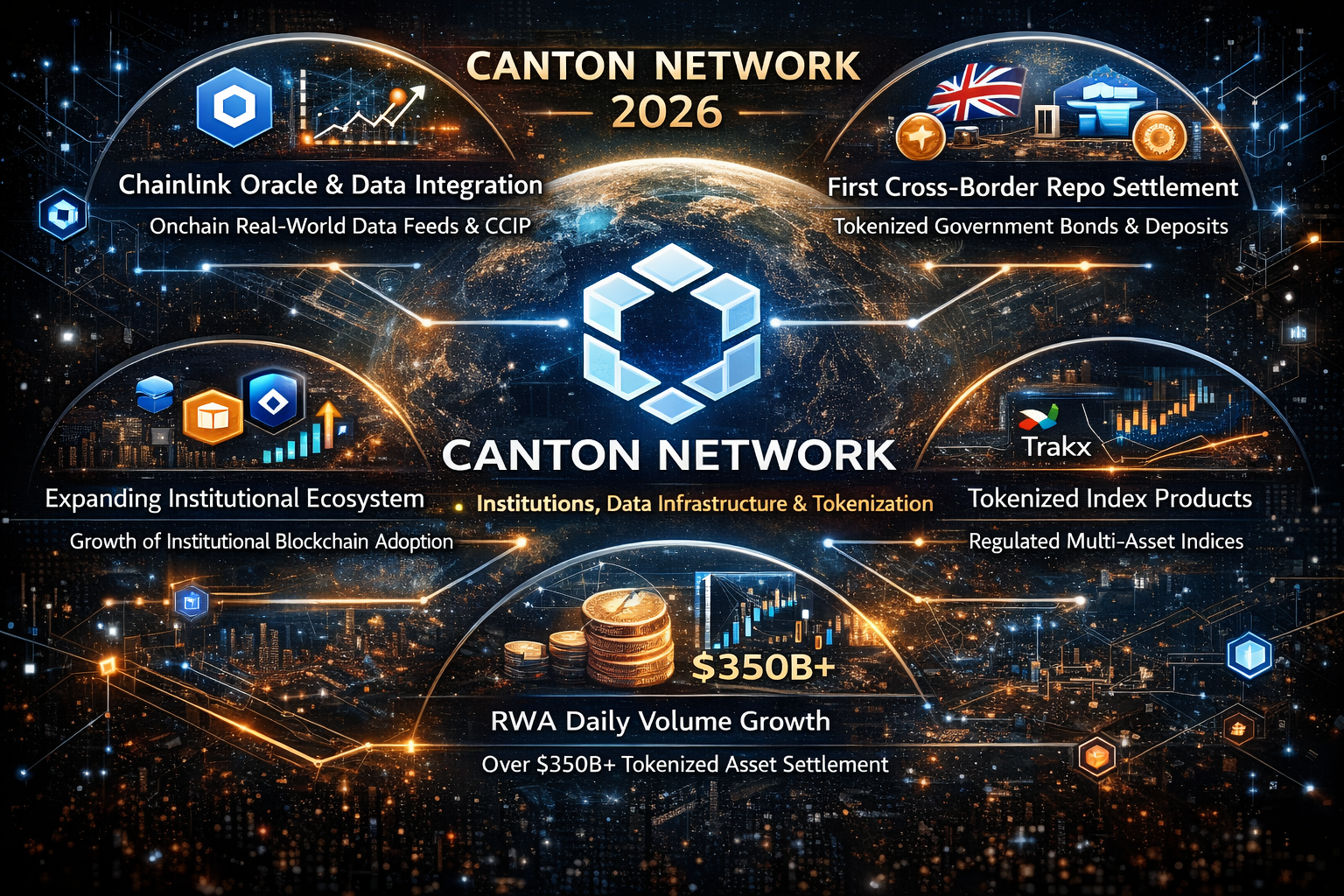
Its own public materials emphasize use cases tied to financial markets, collateral mobility, private payments, and tokenized real-world assets, while recent Canton announcements have highlighted institutional milestones including private payroll, repo/collateral workflows, and native issuance plans involving major financial players.
That means the monetization model is not just for random dApps.
It is being positioned for products where:
- transaction flows are meaningful,
- users are high-value,
- and infrastructure economics matter a lot.
That is a much more serious lane than generic “Web3 social” or speculative DeFi clones.
And if Canton succeeds there, the builder reward system could become a real competitive advantage.
This Is Really a Bet on Utility Over Hype
The deeper story here is that Canton is making a very explicit bet: real transaction utility should matter more than token hype
That sounds obvious.
But in crypto, it really isn’t.
Most ecosystems still reward:
- attention,
- speculation,
- and narrative momentum
more than durable application usage.
Canton is trying to reverse that by tying value creation more directly to:
- fees,
- throughput,
- and productive participation
That does not mean speculation disappears.
This is still crypto.
But it does mean the network is at least attempting to align its economics around something more defensible than pure market mood.
And if that alignment holds, it gives Canton a stronger foundation than many networks that still rely on emissions theatre.
What This Means for Canton Coin (CC)
From a token perspective, this builder model is also important for Canton Coin (CC).
Why?
Because it gives the token a more concrete economic role than simply being:
- a gas asset,
- a governance token,
- or a speculative unit.
Canton Coin is increasingly being framed as:
- a fee-burn asset,
- a rewards distribution asset,
- and a utility-linked coordination asset for network participants. Canton’s materials explicitly position CC as a token whose value and supply dynamics are meant to reflect real adoption, with fees burned and rewards minted to validators, apps, and other service providers who enable activity.
That is much stronger than a lot of token utility narratives in the market.
The challenge, of course, is execution.
Because none of this matters if transaction activity doesn’t scale.
But if it does, then CC could become one of the more interesting examples of a token tied to application-level utility, not just infrastructure speculation.
What Builders, Investors, and the Market Should Watch Next
If you’re following Canton, here’s what actually matters from here:
Key things to watch
- Whether more builders launch apps specifically to monetize transaction flow
- Whether featured apps begin publishing meaningful revenue or usage metrics
- How quickly Canton approaches deeper burn-mint equilibrium
- Whether institutional financial products choose Canton over competing tokenization rails
- How sustainable the reward economics remain as transaction volume rises
- Whether app-layer monetization becomes one of Canton’s strongest adoption loops
Because the long-term question is not: “Does Canton have clever tokenomics?”
The real question is: “Can Canton become one of the first major blockchains where apps genuinely make money from usage at scale?”
That is a much more important question.
And one the broader market should be paying more attention to.
Final Take
Canton Network’s latest builder monetization push matters because it attacks one of crypto’s oldest structural problems: apps often create value without sharing in the economics they generate
By tying rewards to real transaction activity, allocating 62% of Canton Coin rewards to apps, capping payouts at $1.50 per transaction, and claiming potential returns of up to 170% of application-generated traffic fees, Canton is trying to create something much more sustainable than standard ecosystem incentives.
If that model works, Canton won’t just be another Layer 1 talking about adoption.
It could become one of the clearest examples of a blockchain where: building useful apps is directly monetizable by design
And in a market increasingly shifting toward tokenization, institutional infrastructure, and real utility, that is exactly the kind of model that deserves attention.