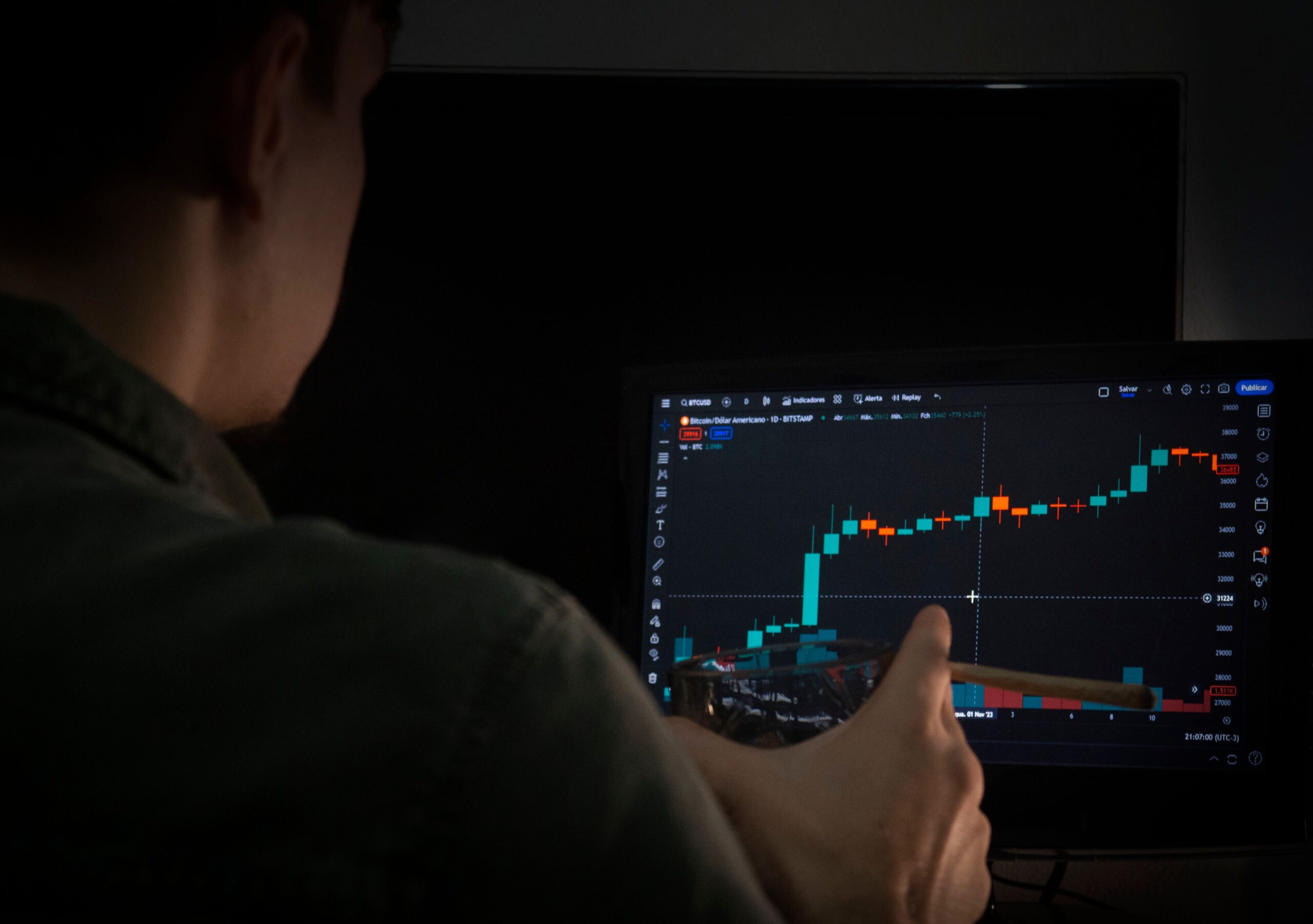

Crypto markets in March 2026 are being driven by three variables: geopolitical risk, institutional capital flows, and regulatory uncertainty. Together, they are defining price direction far more than retail sentiment or on-chain narratives.
Bitcoin is holding near $70,000 after gaining roughly 10% over the past month. Ethereum is tracking slightly behind, while select altcoins are beginning to show relative strength. The move is not isolated—it coincides with rising oil prices, increased volatility in equities, and sustained inflows into spot Bitcoin exchange-traded funds (ETFs).
This is not a typical crypto cycle. The market is behaving more like a macro-sensitive asset class than a speculative tech trade.
Geopolitical Risk Is Supporting Crypto Prices
The recent escalation involving Iran has pushed investors toward defensive positioning across global markets. Oil has moved higher, equities have shown signs of stress, and traditional safe havens such as gold have seen inflows.
Bitcoin has followed a similar pattern.
Historically, crypto sold off during geopolitical shocks, often behaving like a high-beta risk asset. That relationship is weakening. Over the past four weeks, Bitcoin has held firm despite volatility in broader markets, suggesting that a portion of capital is now treating it as a hedge against instability.
The correlation is not perfect. Bitcoin remains volatile and still reacts to liquidity conditions. But the data shows a shift: drawdowns during recent geopolitical headlines have been shallow and short-lived, while recoveries have been fast.
That pattern is consistent with accumulation rather than speculative trading.
ETF Inflows Are Providing Structural Support
The most measurable driver of the current market is institutional demand via spot Bitcoin ETFs.
March inflows have exceeded $1 billion. This is not retail-driven volume. ETF flows tend to reflect longer-term positioning by asset managers, family offices, and institutional allocators.
Unlike previous cycles, where capital entered through exchanges and derivatives, ETF flows are more stable. They reduce the likelihood of sharp liquidations and create a consistent bid under the market.
This is visible in price behavior:
- Bitcoin volatility has compressed relative to prior bull phases
- Corrections are being bought faster
- Key levels, particularly around $65K–$70K, are holding
This does not eliminate downside risk, but it changes the structure of the market. Price is now influenced by allocation decisions, not just speculation.
Regulation Is Capping Upside
While inflows are supportive, regulatory uncertainty is limiting how far the market can move.
In the United States, there is still no clear classification framework for digital assets. Ongoing legislative efforts have stalled, leaving institutions without a definitive compliance path.
This has two direct effects:
- Capital hesitates at scale
Large funds are unlikely to significantly increase exposure without legal clarity. - Valuation multiples stay constrained
Even with strong demand, uncertainty reduces how aggressively investors are willing to price assets.
Recent analyst revisions reflect this. Several institutions have lowered medium-term price expectations for Bitcoin and Ethereum, not because of weak fundamentals, but because of policy risk.
In practical terms, regulation is acting as a ceiling, even as inflows provide a floor.
Bitcoin Is in a Compression Range
Bitcoin’s current range—roughly $65,000 to $72,000—is structurally important.
This range reflects equilibrium between three forces:
- Buy-side pressure from ETF inflows
- Macro uncertainty (rates, inflation, geopolitics)
- Profit-taking after recent gains
Markets typically do not stay in compression for long. The longer the range holds, the more significant the eventual breakout.
There are three near-term catalysts:
- U.S. inflation data (CPI) → affects rate expectations
- Federal Reserve policy signals → impacts liquidity
- Geopolitical developments → drives risk sentiment
A break above $72K would likely trigger momentum-driven buying. A drop below $65K would indicate that macro pressure is outweighing inflows.
For now, neither side has control.
Macro Is Now the Primary Driver
Crypto is no longer trading in isolation.
Price action is increasingly aligned with:
- Real yields
- U.S. dollar strength
- Liquidity expectations
- Energy prices
When yields rise, crypto typically weakens. When rate cuts are priced in, crypto strengthens. This relationship has become more consistent over the past 12 months.
This is a structural shift. Crypto is being integrated into the same framework used for equities, commodities, and fixed income.
For traders, that means crypto analysis now requires macro positioning, not just technicals or on-chain data.
Altcoins Are Starting to Diverge
While Bitcoin remains range-bound, early signs of rotation are emerging in altcoins.
This is typical behavior. When Bitcoin stabilizes, capital often moves into higher-risk assets in search of returns.
The difference in 2026 is selectivity.
Capital is not flowing broadly into all altcoins. Instead, it is concentrating in specific sectors:
- AI-linked tokens (compute, data marketplaces)
- Infrastructure plays (modular blockchains, interoperability)
- DePIN projects (real-world infrastructure networks)
At the same time, many legacy altcoins are underperforming. This suggests the market is becoming more efficiency-driven, with less tolerance for weak fundamentals.
Liquidity is also thinner than in previous cycles, which increases volatility. Moves in both directions are sharper, and reversals are common.
Underlying Risks Remain
Despite the relatively stable price action, there are clear risks in the system.
- Security incidents continue
Exploits and protocol vulnerabilities are still frequent, particularly in DeFi. - Operational pressure on projects
Some teams are cutting costs, including layoffs, indicating funding constraints. - Regulatory enforcement risk
Smaller tokens are more exposed to classification and compliance issues.
These factors are not currently driving the market, but they represent latent downside risk.
Bottom Line
Crypto markets in March 2026 are being shaped by external forces more than internal narratives.
- Geopolitical risk is supporting demand
- ETF inflows are stabilizing price
- Regulation is limiting upside
- Macro conditions are driving direction
Bitcoin’s current range reflects a market waiting for confirmation—either from policy, macro data, or global events.
The next move is unlikely to come from within crypto itself.
It will come from outside.