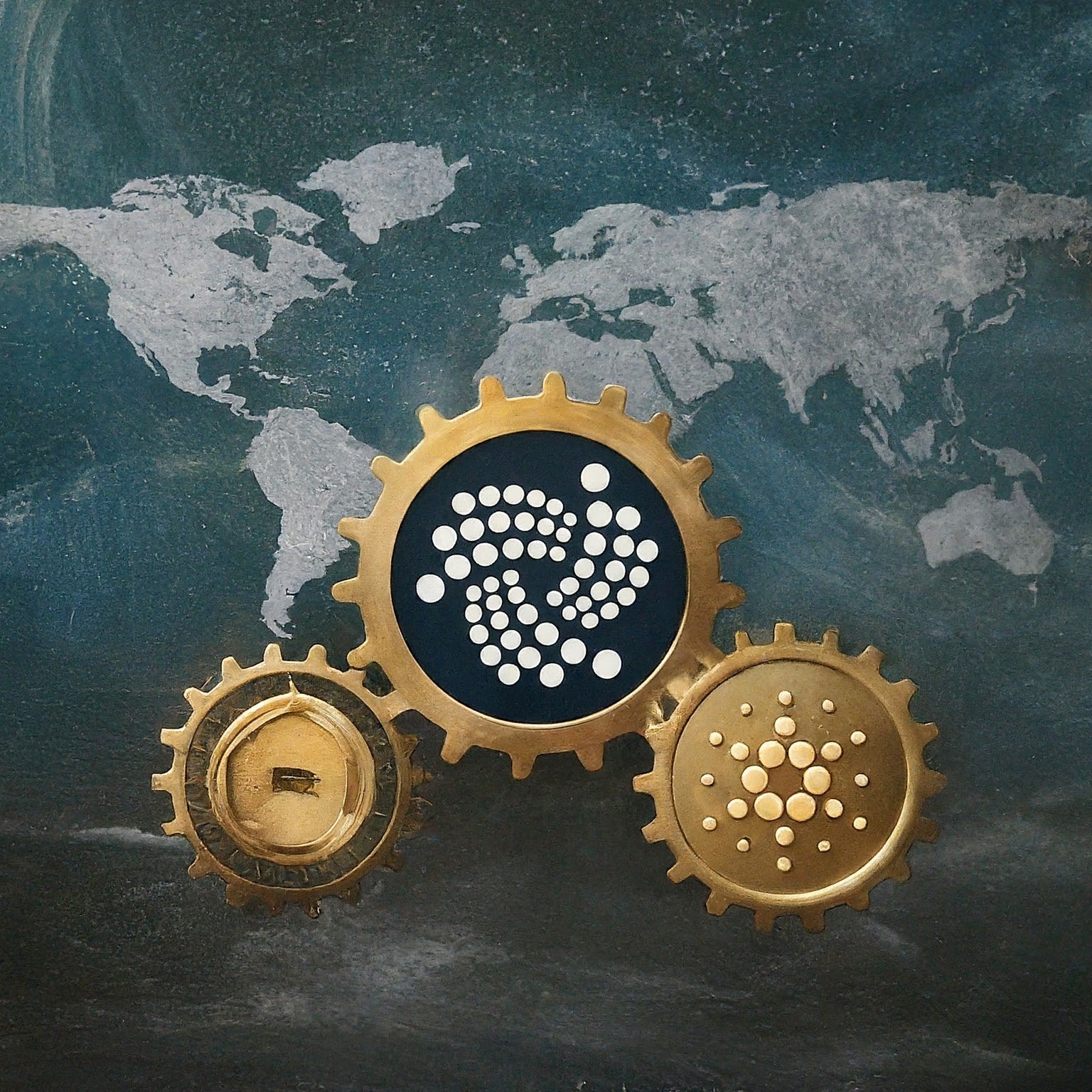
Franklin Templeton is making it increasingly clear that the future of tokenized finance may not belong to a single blockchain. In a recent message from Franklin Templeton Digital Assets, Head of Digital Assets Roger Bayston emphasized that tokenizing across multiple chains allows institutions to tap into the distinct features, utility, and communities of what he described as “digital nation states” such as Solana, Ripple’s XRPL, BNB Chain, Canton Network, and Stellar. The comment reflects a broader shift in how major financial institutions are beginning to think about blockchain infrastructure: not as a winner-takes-all race, but as a multi-chain environment where different networks may serve different strategic purposes.
Roger Bayston, Head of Digital Assets, shares how tokenizing on multiple chains lets you tap into the unique features, utility and community that “digital nation states” like @Solana, @Ripple’s XRPL, @BNBChain, @CantonNetwork, @StellarOrg offer.
(via @thinkingcrypto) pic.twitter.com/2ymZl5Bwgu
— Franklin Templeton Digital Assets (@FTDA_US) April 3, 2026
That framing is especially important coming from Franklin Templeton, one of the most active traditional asset managers in blockchain-based finance. The firm has spent several years experimenting with tokenized funds, blockchain-enabled transfer systems and digital asset investment products, and it has increasingly embraced the idea that interoperability and network specialization may be more useful than maximalism. In January, Franklin Templeton said it was prioritizing interoperability and flexibility to open more ways for clients to access and deploy regulated funds across blockchain-enabled platforms, reinforcing the idea that institutional tokenization will likely expand across multiple ecosystems rather than consolidate onto a single chain.
Bayston’s “digital nation states” description captures something that is becoming harder for the market to ignore. Each major blockchain is developing its own identity, infrastructure strengths, and user base. Solana has increasingly positioned itself around speed, consumer applications, and tokenized asset scale. XRPL continues to emphasize payments, settlement, and institutional financial infrastructure. BNB Chain remains strong in retail-driven activity and broad DeFi access. Canton Network has focused on permissioned financial market infrastructure, while Stellar has built a long-running reputation around payments, stablecoins, and asset issuance. For institutions entering tokenization, those differences matter because the right blockchain may depend less on brand and more on the specific product, compliance model, and user experience being targeted.
Read More: Ripple Unveils Privacy Blueprint for Tokenized Assets on the XRP Ledger
Franklin Templeton has already demonstrated this multi-chain philosophy in practice. Its blockchain-integrated technology stack has supported the Franklin OnChain U.S. Government Money Fund, which the firm says was the first U.S.-registered mutual fund to use a public blockchain for transaction processing and ownership records. The fund has notably operated on Stellar, showing that Franklin Templeton is not just discussing blockchain utility in theory but actively deploying financial products into live blockchain environments. The firm has also expanded its broader digital asset presence through products and initiatives tied to networks such as Solana and XRP, further reinforcing its view that different ecosystems can each play a role in the evolution of digital finance.
The larger takeaway is that institutional tokenization is maturing beyond the early question of whether blockchain will matter at all. That debate is fading. The new question is which blockchain infrastructure is best suited for which financial use case. Franklin Templeton’s latest comments suggest that sophisticated players are no longer choosing sides in a tribal sense. Instead, they are beginning to map each network according to utility, community, settlement design, regulatory fit, and product opportunity.
Ultimately, Franklin Templeton’s multi-chain stance is a strong signal for the broader market. If one of the world’s largest asset managers believes tokenization should span multiple blockchain “nation states,” then the next phase of digital finance may be less about one chain replacing the rest and more about a competitive but interconnected ecosystem of specialized networks. In that environment, the winners may be the blockchains that can prove not just technical capability, but real institutional usefulness.