Cryptocurrency markets have entered an unusually subdued phase, and beneath the surface of flat price action, a more complex narrative is beginning to take shape. While macroeconomic uncertainty and liquidity cycles continue to play a role, a quieter but increasingly relevant factor is emerging: the long-term threat posed by quantum computing.
Earlier this month, fresh warnings tied to research associated with Google reignited discussion around the vulnerability of modern cryptographic systems. The implications were not immediate, nor did they trigger a sharp sell-off. Instead, the market response has been more subtle—arguably more telling. Prices across major digital assets have remained largely range-bound, suggesting that investors are neither dismissing the risk nor reacting with urgency. Rather, they appear to be slowly incorporating it into long-term expectations.
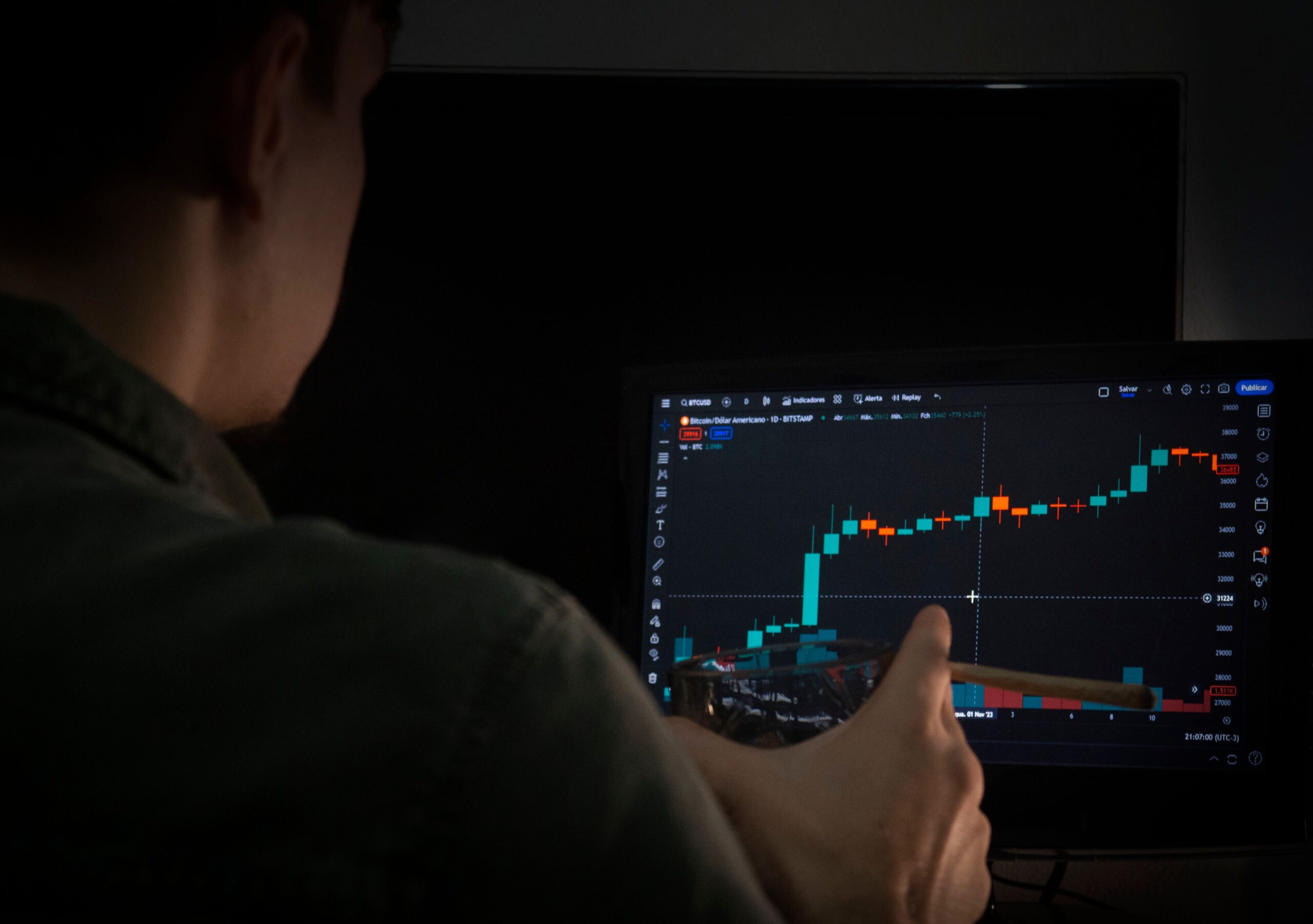
Assets like Bitcoin and Ethereum continue to trade within relatively tight ranges compared to previous cycles of heightened volatility. This stagnation has puzzled some traders expecting directional momentum, but for institutional observers, it may signal a transitional phase. The market is absorbing a structural risk that does not yet demand immediate repricing but cannot be ignored.
At the center of this conversation is the potential for quantum computers to exploit vulnerabilities in widely used cryptographic systems, particularly those based on elliptic curve signatures. Through advances tied to concepts like Shor’s Algorithm, sufficiently powerful quantum machines could theoretically derive private keys from public addresses. While such capabilities remain years away, the mere plausibility introduces a new category of systemic risk—one that operates on a longer time horizon than typical market catalysts.
This is where the current market behavior becomes significant. Rather than reacting sharply, capital appears to be adjusting gradually. Investors are not exiting crypto en masse; instead, they are beginning to differentiate between assets based on their ability—or inability—to withstand a post-quantum environment. This differentiation is still early and imperfect, but it is becoming more visible in how certain narratives are gaining traction while others fade.
A small but growing segment of the market is now focused on so-called quantum-resistant cryptocurrencies. These projects either implement post-quantum cryptographic techniques today or are designed to integrate them in the future. While still niche, they represent a form of optionality in a market increasingly sensitive to long-term security assumptions.
Among the most direct expressions of this theme is Quantum Resistant Ledger, a project built entirely around hash-based cryptography that avoids traditional elliptic curve methods altogether. Its architecture is designed specifically to withstand quantum attacks, positioning it as a pure-play hedge against the risk. Despite this, its price action has remained relatively muted, reflecting both the early stage of the narrative and the broader market’s cautious stance.
Similarly, IOTA has re-entered discussions due to its use of alternative signature schemes and its non-blockchain architecture. While not fully quantum-proof in its current form, its early focus on quantum-resistant methods has made it a recurring name in conversations around future-proof infrastructure. Yet, like much of the market, its price has not yet reflected a decisive shift in sentiment.
Other projects, including Cardano and Nervos Network, are taking a different approach. Rather than implementing post-quantum cryptography immediately, they emphasize upgradeability—designing systems that can evolve as new standards emerge. This strategy aligns with a broader industry view that the quantum threat is real but distant, requiring flexibility rather than immediate overhaul.
The result is a market that appears to be in a holding pattern. Prices are not collapsing, but they are also not accelerating in the way previous narrative-driven cycles have produced. Instead, there is a sense of cautious positioning. Investors are beginning to ask longer-term questions about cryptographic resilience, even as short-term trading activity remains focused on more familiar drivers.
This dynamic mirrors earlier phases in crypto’s evolution. Before the rise of decentralized finance, for example, early signals of capital rotation appeared long before the narrative reached mainstream attention. The same was true for AI-related tokens, where initial accumulation occurred during periods of relatively flat market performance. In both cases, the absence of immediate price action masked the early stages of a larger trend.
Quantum resistance may be following a similar trajectory. The difference, however, lies in the nature of the catalyst. Unlike DeFi or AI, which introduced new functionality, quantum-resistant crypto is fundamentally about preserving what already exists. It is a defensive narrative rather than an expansionary one, and that may explain the market’s more measured response.
For institutional investors, this creates a different kind of opportunity. Instead of chasing momentum, the focus shifts to identifying which projects are structurally prepared for a future that may still be years away. This involves evaluating not just tokenomics or adoption metrics, but the underlying cryptographic design—an area that has historically received less attention in mainstream crypto analysis.
At the same time, risks remain significant. The timeline for practical quantum computing is uncertain, and the field of post-quantum cryptography is still evolving. Standards may change, and early implementations could become obsolete. There is also the possibility that the market overestimates the immediacy of the threat, leading to mispriced assets in both directions.
Still, the current phase of flat pricing may itself be the signal. Rather than indicating a lack of interest, it may reflect a period of recalibration as investors incorporate a new layer of complexity into their models. The quantum threat does not demand immediate action, but it does require long-term consideration—and markets are beginning to respond accordingly.
If this trend continues, the implications could extend far beyond niche projects. Major blockchains may face increasing pressure to articulate clear strategies for quantum resilience, while new entrants could differentiate themselves based on security alone. Over time, what is now a peripheral concern could become a central pillar of crypto valuation.
For now, the shift remains subtle. Prices are steady, volatility is contained, and the broader market narrative has yet to fully pivot. But beneath that surface stability, a deeper transition may already be underway—one that reflects not panic, but preparation.
In crypto, the most important changes often begin quietly.