

Ripple is continuing its push into enterprise finance with another notable development, as Ripple Treasury has officially joined the SWIFT partner ecosystem. The move expands Ripple Treasury’s positioning within the global cross-border payments and treasury infrastructure market, placing it closer to the systems and standards that many of the world’s largest financial institutions already rely on. While the announcement has generated attention because of Ripple’s long-standing relationship to international payments innovation, the bigger story is what this means for enterprise treasury adoption and Ripple’s effort to become more deeply embedded in traditional financial workflows.
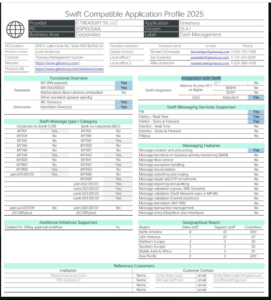
SWIFT remains one of the most important pieces of global financial infrastructure, serving as the messaging backbone for international bank-to-bank communication and cross-border transaction coordination. Its partner programs are designed to help institutions identify software providers and solutions that can integrate with SWIFT environments and support treasury, payments, and trade finance functions. Ripple Treasury’s inclusion in that ecosystem suggests that its platform is becoming more relevant to finance teams that want digital-era treasury tools without abandoning the connectivity and operational standards already used across global banking. SWIFT’s partner framework includes programs for treasury and cash management applications, as well as broader platform and interoperability initiatives.
This matters because Ripple Treasury is no longer being positioned simply as a treasury management tool with digital asset capabilities. It is increasingly being developed as a bridge between traditional corporate finance infrastructure and blockchain-enabled liquidity management. Ripple recently launched native digital asset functionality inside Ripple Treasury, allowing CFOs and treasury teams to view, hold and manage both fiat and digital balances within a single system. That product direction makes the SWIFT ecosystem especially relevant, since many enterprise customers still depend on established banking rails and treasury messaging standards even as they begin exploring stablecoins, digital assets, and new settlement models.
By aligning more closely with SWIFT-compatible environments, Ripple Treasury may become more attractive to large corporates and multinational treasury teams that need flexibility rather than disruption. Many finance departments are not looking to replace their entire infrastructure overnight. Instead, they want systems that can connect traditional banking, treasury workflows and newer digital asset capabilities in a way that feels practical and low-risk. That is the opportunity Ripple appears to be targeting. Rather than asking finance teams to choose between legacy rails and blockchain rails, Ripple Treasury is increasingly presenting itself as a platform capable of supporting both.
The timing also fits Ripple’s broader strategy. Since acquiring GTreasury and rebranding it into Ripple Treasury, the company has been moving aggressively to expand its footprint in corporate finance, liquidity management, and enterprise payments. Joining the SWIFT partner ecosystem adds another layer of credibility to that effort and may help Ripple appeal to institutions that require recognized interoperability with long-standing global finance standards before adopting new treasury technology.
Ultimately, Ripple Treasury’s presence in the SWIFT partner landscape is less about symbolism and more about market access. It signals that Ripple is continuing to position itself not just as a blockchain company, but as a serious infrastructure provider for the future of enterprise finance. As treasury teams increasingly seek platforms that can support both global banking connectivity and digital asset readiness, Ripple Treasury is clearly trying to place itself at the center of that transition.