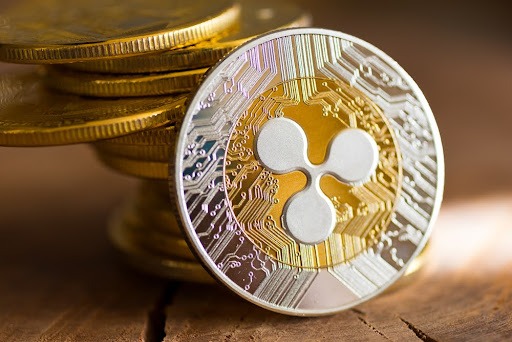
Reports indicate that Ripple’s RLUSD stablecoin is now being used within Ghana’s tax and payment systems, potentially impacting over 2.1 million micro, small, and medium-sized enterprises (MSMEs). If accurate, the move would mark one of the most significant integrations of a blockchain-based asset into a national-level economic framework.
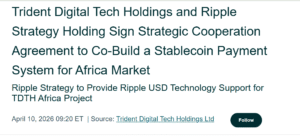
At the center of this development is RLUSD, a stablecoin issued within the broader ecosystem of XRP. Stablecoins have long been positioned as a bridge between traditional finance and blockchain networks, offering price stability while enabling faster and more efficient transactions. However, most adoption to date has been concentrated in trading, remittances, and decentralized finance. The reported use of RLUSD in a government-linked system suggests a shift toward deeper institutional integration.
Stablecoins Enter Public Infrastructure
The integration of a stablecoin into tax collection and payment systems represents a meaningful evolution in how digital assets are being utilized. For MSMEs, which often face inefficiencies in payment processing, limited access to banking services, and high transaction costs, a blockchain-based system could offer tangible benefits. Transactions can be processed more quickly, fees can be reduced, and financial records can be maintained in a more transparent and verifiable manner.
In markets like Ghana, where mobile payments and digital finance have already seen significant adoption, the introduction of blockchain-based infrastructure may be a natural progression. By leveraging a stablecoin such as RLUSD, the system can maintain a consistent unit of account while benefiting from the speed and programmability of distributed ledger technology.
For Ripple, this development aligns with its long-standing focus on cross-border payments and financial infrastructure. The company has consistently positioned itself as a bridge between traditional financial systems and blockchain networks, and the use of RLUSD in a national context would represent a notable extension of that strategy.
Related: SBI Ripple Asia Builds XRP Ledger Token Issuance Platform for Japan’s Regulated Payments Market
Implications for Adoption and Market Structure
If the reported integration proves sustainable, it could have broader implications for the stablecoin market as a whole. Stablecoins have often been viewed through the lens of trading liquidity or decentralized finance, but their potential as infrastructure for everyday economic activity is increasingly coming into focus. A successful deployment in Ghana could serve as a model for other emerging markets looking to modernize their financial systems.
For MSMEs, the benefits extend beyond efficiency. Access to a transparent and verifiable transaction history could improve credit access, enable new forms of financing, and reduce reliance on informal financial networks. Over time, this could contribute to greater financial inclusion and economic growth.
From a competitive standpoint, the move also highlights the evolving landscape of digital payments. Traditional financial institutions, fintech platforms, and blockchain-based solutions are all vying to become the dominant rails for global transactions. By embedding its stablecoin into real-world systems, Ripple is effectively positioning RLUSD as more than just a digital asset—it becomes part of the underlying infrastructure.
At the same time, challenges remain. The integration of blockchain technology into public systems requires careful consideration of regulatory frameworks, data privacy, and interoperability with existing infrastructure. Governments must balance the benefits of innovation with the need for stability and oversight. Additionally, the long-term success of such initiatives will depend on user adoption, system reliability, and continued collaboration between public and private stakeholders.
The broader takeaway is that the role of stablecoins is evolving. What began as a tool for facilitating crypto trading is gradually transforming into a foundational component of digital finance. As use cases expand into areas such as tax collection, public payments, and enterprise operations, the line between traditional and decentralized systems continues to blur.
Related: Ripple Treasury Enters SWIFT Partner Ecosystem for Global Payments
For investors and industry observers, developments like this signal a shift toward utility-driven narratives. Rather than focusing solely on price movements, attention is increasingly turning to how and where digital assets are being used in the real world. Projects that can secure meaningful integrations into economic systems may be better positioned for long-term relevance.
While further details and confirmations will be necessary to fully assess the scope of RLUSD’s role in Ghana, the direction of travel is clear. Stablecoins are moving beyond the confines of crypto markets and into the core of financial infrastructure.
If this trend continues, the implications could extend far beyond a single country. It would suggest that blockchain-based assets are not just complementary to existing systems—they are becoming integral to how those systems operate.
And in that context, the significance of this development may lie not just in its scale, but in what it represents: the gradual integration of digital assets into the everyday functioning of the global economy.