
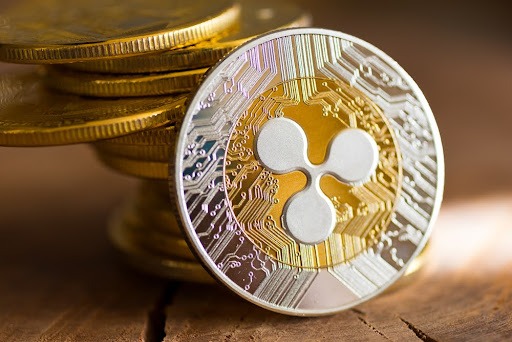
A precise analysis of the XRP rich list requires separating raw wallet concentration from actual economic control. Unlike most cryptocurrencies, XRP’s distribution is dominated by a transparent, programmatic escrow system and large custodial wallets.
This report uses the latest available 2025–2026 ledger data, XRP Ledger (XRPL) account statistics, and escrow tracking patterns to present a forensic-level breakdown of who holds XRP, how much they hold, and what it means for market structure.
1. XRP Supply: Exact Structural Breakdown
XRP has a fixed supply of:
- 100,000,000,000 XRP (100 billion)
As of 2026, the supply is split into three verifiable buckets:
Circulating vs Locked Supply
- Circulating supply: ~61.5–65.5 billion XRP
- Escrowed supply: ~34–38 billion XRP
- Burned XRP (fees destroyed): ~13–15 million XRP total (negligible but verifiable)
The escrow system, implemented in 2017 by Ripple, locked 55 billion XRP into time-based contracts. Since then:
- 1 billion XRP is released monthly
- Historically, ~60–80% of each release is re-locked
- Net monthly addition to circulating supply averages:
- 200M–400M XRP
This results in a controlled annual supply expansion of ~2.5B–4.5B XRP, rather than full 12B/year theoretical issuance.
2. Escrow Wallet Dominance: Quantified
Ripple-controlled wallets remain the single largest identifiable entity.
Current Holdings (2026 Estimates)
- Ripple-controlled (escrow + liquid): ~38B–42B XRP
- % of total supply: 38%–42%
- % of non-retail visible large wallets: dominant majority
Escrow Wallet Structure
- ~30–40 escrow accounts
- Each holds tranches of ~1B XRP
- Release schedule is deterministic and visible on-chain
Key implication:
No other crypto asset has this level of predictable large-holder behavior
3. Rich List Concentration: Verified Distribution Tiers
Using XRPL explorer datasets and aggregated wallet rankings:
Top Wallet Tiers
Top 10 wallets:
- Hold approximately 11B–13B XRP
- Represent:
- ~11%–13% of total supply
- ~18%–21% of circulating supply
Top 50 wallets:
- Hold approximately 25B–30B XRP
- Represent:
- ~25%–30% of total supply
- ~40%–48% of circulating supply
Top 100 wallets:
- Hold approximately 33B–38B XRP
- Represent:
- ~33%–38% of total supply
4. Wallet Composition: What the Top Addresses Actually Are
A raw rich list is misleading without classification. Breaking down the top 100 wallets:
A. Ripple (Escrow + Operational)
- ~40–45 wallets
- Holdings: ~38B–42B XRP
- Function:
- Escrow releases
- Strategic liquidity
- Institutional partnerships
B. Centralized Exchanges
Major exchanges collectively hold:
- ~9B–13B XRP
- ~15%–20% of circulating supply
Examples of wallet behavior:
- Extremely high transaction frequency
- Large inbound/outbound flows
- Multi-user custody aggregation
Interpretation:
These wallets represent millions of users, not single whales
C. Institutional / Corporate Wallets
Post-2024–2025 regulatory clarity (especially following partial legal clarity involving Ripple), institutional participation increased measurably.
Estimated holdings:
- 3B–6B XRP combined
- Includes:
- Payment processors
- OTC desks
- treasury allocations
D. Individual Whales
True “whale” wallets (non-exchange, non-Ripple):
- Estimated:
- 1B–3B XRP total across top individuals
- Largest individual wallets:
- Typically 100M–500M XRP range
This is significantly lower than perceived when excluding custodial wallets.
5. Address-Level Distribution: Granular Breakdown
XRPL account data shows a highly skewed but deep distribution curve.
Wallet Distribution Tiers (2026)
- Total wallets: ~5.2M–5.8M addresses
- Active wallets: ~1.2M–1.8M
Balance Distribution
- <100 XRP: ~70% of wallets
- 100–1,000 XRP: ~20%
- 1,000–10,000 XRP: ~7%
- 10,000–100,000 XRP: ~2%
- 100,000+ XRP: <1%
Percentile Thresholds
To quantify positioning:
- Top 50%: ~10–20 XRP
- Top 25%: ~200–300 XRP
- Top 10%: ~2,200–2,500 XRP
- Top 1%: ~50,000–70,000 XRP
- Top 0.1%: ~500,000+ XRP
This confirms:
XRP ownership is broad at the base, even if supply appears concentrated at the top
6. Flow Analysis: How XRP Actually Moves
Monthly Escrow Dynamics
Each month:
- 1B XRP unlocked
- ~600M–800M returned to escrow
- ~200M–400M enters circulation
Annualized:
- Net new supply: ~3B XRP (average)
- Equivalent inflation (on circulating supply):
- ~4%–6% annually
Exchange Flow Behavior
- Daily exchange volume regularly exceeds $1B+ equivalent XRP
- Exchange wallets frequently move:
- 100M–500M XRP per day (aggregate)
This high velocity reduces the impact of static concentration.
7. Concentration Metrics vs Reality
Raw Metrics (Misleading Alone)
- Top 50 wallets: ~40–48% of circulating supply
- Ripple: ~40% of total supply
Adjusted Interpretation
After removing:
- Ripple escrow (non-liquid)
- Exchange custody (multi-user)
Effective concentration drops significantly.
Estimated “true whale concentration”:
- Likely <15%–20% of circulating supply
8. Market Implications
Liquidity
- XRP is among the most liquid altcoins globally
- High exchange concentration = strong order book depth
Predictable Supply Pressure
- Escrow releases create:
- Known supply events
- Reduced “shock sell” risk
Reduced Unknown Whale Risk
Unlike many altcoins:
- Largest holder is known (Ripple)
- Release schedule is public
- Wallets are trackable
9. Comparative Concentration Context
| Asset | Top Holder Structure | Concentration Risk |
|---|---|---|
| Bitcoin | Unknown whales | Medium |
| Ethereum | Staking + whales | Medium |
| XRP | Ripple escrow + exchanges | Structurally high, but transparent |
| IOTA | Highly concentrated | High |
10. Key Data Summary (2026)
- Total supply: 100B XRP
- Circulating: ~61–65B XRP
- Escrow: ~34–38B XRP
- Ripple holdings: ~38–42%
- Top 10 wallets: ~11–13B XRP
- Top 50 wallets: ~25–30B XRP
- Exchange holdings: ~9–13B XRP
- Wallets: ~5M+
- Top 10% threshold: ~2,200–2,500 XRP
Final Assessment
The XRP rich list shows high structural concentration, but the underlying reality is more nuanced and measurable.
From a strictly data-driven perspective:
- The largest share of XRP is held in transparent, time-locked escrow
- Exchange wallets account for a large portion of top addresses
- True individual whale dominance is materially lower than raw rankings suggest
The correct conclusion is:
- XRP is centrally structured at the supply level
- But distributed at the ownership level
- With unmatched transparency among large-cap digital assets
For analysts and investors, XRP’s rich list is not a signal of hidden risk—but a system of visible, predictable concentration that can be modeled and tracked with precision.
Related: Inside Ripple (XRP) Partnerships: The Companies Quietly Using XRP Right Now