

Pi Network is approaching one of the most important moments in its history as the network prepares to activate Protocol 23, a major upgrade expected to introduce full native smart contract functionality and significantly expand the ecosystem’s capabilities.
The long-awaited update, scheduled for May 11, is widely viewed by supporters as the beginning of Pi Network’s transition from an enclosed blockchain ecosystem into a programmable Layer 1 platform capable of supporting decentralized finance applications, token launches, and broader Web3 infrastructure.
Current Price and Market Data
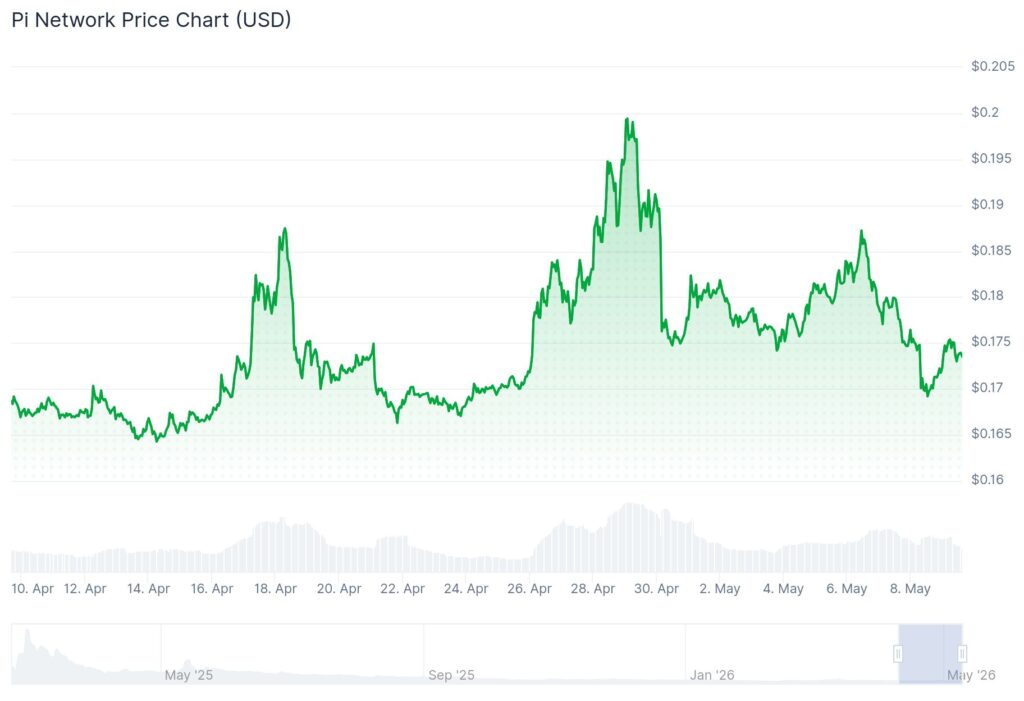
At the time of writing, PI is trading around $0.17 with a market capitalization of nearly $1.8 billion, placing it among the top 50 digital assets by market value. Daily trading volume currently sits near $21 million, reflecting relatively modest liquidity compared to other large-cap Layer 1 projects. Despite renewed attention surrounding Protocol 23, PI remains down roughly 94% from its all-time high levels, highlighting the ongoing gap between the network’s massive user base and broader market demand.
Current circulating supply stands at approximately 10.44 billion PI out of a maximum supply of 100 billion tokens, leaving investors closely focused on future unlock schedules and ecosystem growth following the smart contract activation.
Since launching in 2019, Pi Network has built one of the largest mobile-first crypto communities in the industry. According to recent research circulated by Web3 analysts, the network now claims more than 18 million KYC-verified users, referred to within the ecosystem as “Pioneers.” The project uses a variation of the Federated Byzantine Agreement model inspired by the Stellar Consensus Protocol, allowing users to participate in mining and validation activities through a low-energy mobile-based system.
Pi Network’s structure revolves around several participant roles, including Pioneers, Contributors, Ambassadors, and Nodes. Over time, the ecosystem has also expanded through the introduction of the Pi Browser, which supports a growing number of community-built decentralized applications.
Now, Protocol 23 is expected to become the project’s most consequential technical milestone since launch. The upgrade is set to introduce smart contracts, PiDex functionality, and a native utility launchpad, potentially enabling developers to build decentralized exchanges, DeFi protocols, and broader tokenized applications directly within the Pi ecosystem.
Related: Pi Network Unveils Long-Term Vision for Web3 Identity and Scalable Utility
Supporters argue that this could finally unlock real economic activity across the network after years of operating under the project’s Enclosed Mainnet phase. However, skepticism remains widespread across the broader crypto industry, particularly regarding tokenomics, liquidity, and long-term demand sustainability.
One of the biggest concerns surrounding PI is its massive supply structure. Pi Network has a maximum supply of 100 billion PI, with only around 10.4 billion currently circulating. That leaves nearly 90% of total supply still expected to enter circulation over time, creating what many analysts describe as one of the largest potential supply overhangs in the digital asset market.
Adding to those concerns, approximately 184.5 million PI tokens are scheduled to unlock throughout May 2026 as additional KYC migrations continue. At the same time, blockchain observers have pointed to large-scale accumulation activity from a whale wallet reportedly holding more than 350 million PI tokens, creating a growing debate between bullish accumulation narratives and long-term dilution risks.
The uncertainty surrounding Open Mainnet remains another major issue for investors. While Protocol 23 expands functionality within the ecosystem, Pi Network has still not announced a confirmed timeline for fully permissionless transfers and unrestricted external connectivity. According to the project, Open Mainnet deployment remains dependent on ecosystem maturity and continued KYC completion progress.
Related: Pi Network Upgrade Aims to Improve Scalability and Utility
This has created a unique market dynamic where Pi Network simultaneously possesses one of crypto’s largest user communities while still facing questions around liquidity, exchange accessibility, and sustainable token demand.
Supporters believe the scale of the community gives Pi Network a major advantage if the ecosystem successfully transitions into active onchain usage. Critics, however, argue that user verification numbers alone may not automatically translate into meaningful decentralized finance activity or long-term token value.
The coming months may therefore prove critical for determining whether Pi Network can evolve beyond a mining-based community model into a fully functioning blockchain economy capable of supporting real developer adoption and transactional utility.
About The Author