Introduction
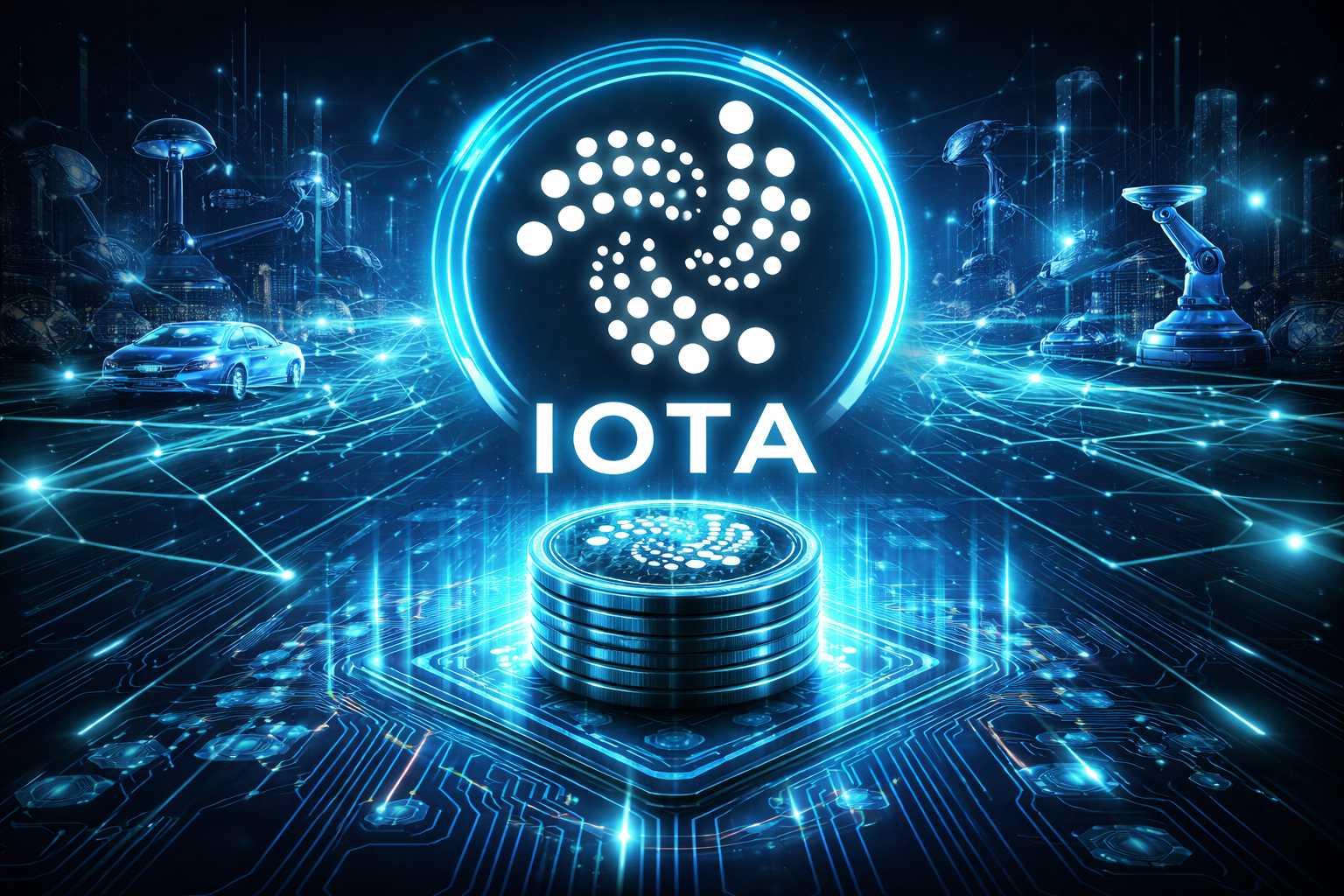
As artificial intelligence (AI) becomes ubiquitous across IoT, robotics, and distributed sensing systems, secure real‑time data exchange and monetization are increasingly important. While AI models can process massive volumes of data for predictive insights, they lack a native mechanism for trustworthy, low‑cost data payment and provenance tracking. That’s where IOTA’s Tangle — a feeless, scalable Directed Acyclic Graph (DAG) distributed ledger — becomes uniquely relevant: it can record data integrity, enable micropayments between AI agents and sensors, and power AI‑driven marketplaces without traditional transaction fees.
This article breaks down how IOTA enables real‑time AI data payments, the architecture that powers it, and concrete scenarios where machine learning and micropayments become frictionless and automated.
IOTA’s Foundation for AI Data Payments
At its core, IOTA is a distributed ledger technology designed for secure data and value transfer between devices and systems in the Internet of Things (IoT). Instead of blockchain, it uses a Tangle — a DAG where transactions confirm two earlier transactions, allowing feeless, highly parallel micropayments that are ideal for high‑frequency AI data flows.
The feeless nature means tiny data payments — even sub‑cent amounts — can occur without cost barriers. This characteristic dramatically changes how data can be exchanged: instead of giving data away for free or relying on centralized intermediaries, devices and AI agents can negotiate, verify, and settle data transactions autonomously.
The Architecture of AI‑Integrated IOTA Data Payments
In a future‑ready AI + IOTA ecosystem, the key architectural components include:
IOTA Tangle (Microtransaction Layer)
Feeless, DAG‑based ledger that records micropayments and data hashes. Network participants validate new transactions, enabling scalable transaction throughput essential for AI systems that may transact thousands of data events per second.
Off‑Chain Data Storage + On‑Chain Hash Anchoring
Because raw AI and IoT datasets are too large for on‑chain storage, the typical flow is:
-
Sensor or device pushes data off‑chain (e.g., decentralized storage, local edge databases).
-
Hash or fingerprint of the data is anchored on the Tangle for integrity verification.
-
Payments trigger upon data access or quality verification.
Smart Contract Chains / Logic Layers
While IOTA’s core layer doesn’t natively host Turing‑complete smart contracts, IOTA’s EVM integrations and SC chains allow logic that can trigger payments based on AI outcomes, accuracy thresholds, or service levels.
Example: An AI model pays a sensor only when its prediction confidence exceeds a certain quality threshold, enforced by smart contract logic.
AI Data Payments: How It Works Step‑by‑Step
Here’s a high‑level workflow of a real‑time AI micropayment for data:
-
Data Producers Publish Metadata:
Sensors or data collectors publish a metadata packet that describes data type, pricing, source, and integrity hash. -
AI Consumer Requests Data Access:
An AI agent or model sends a signed request specifying required data features and pricing agreement. -
Hash Anchoring & Verification:
Once data is delivered off‑chain, its hash is anchored to the Tangle. Verification of integrity is automated — ensuring data hasn’t been tampered with. -
Micropayment Trigger:
A smart contract or automated agent issues a microtransaction to the producer upon successful delivery and hash verification. -
Settlement and Logging:
The Tangle records settlement, creating an immutable audit trail of both data usage and payment.
Visual Suggestion:
A flow diagram with off‑chain data storage, Tangle anchor points, AI agent request/response, and micropayment triggers.
AI Model Markets & Real‑Time Payments
One of the most powerful use cases for IOTA + AI is in data/AI marketplaces where machine learning models pay for data streams in real time. These can be structured as:
1. Live AI Data Streams
Imagine an AI model that ingests traffic sensor data in real time to adjust routing predictions. Every time the model consumes a data packet, a micropayment is settled on the Tangle, compensating the sensor owner instantly.
-
Use case: Real‑time traffic optimization AI pays roadside units for fresh occupancy data every second.
2. Federated Learning with Incentivized Nodes
In federated learning, models train on multiple decentralized datasets without centralizing them. IOTA can act as a trust and micropayment layer:
-
Devices contribute locally trained model updates.
-
Quality of contribution is verified via hashes recorded on‑chain.
-
Micro‑rewards are issued automatically for valuable updates.
This approach monetizes model sharing and ensures data sovereignty without centralized intermediaries, a major advantage over traditional architectures.
Although blockchains alone can’t natively perform AI training, they can verify integrity of training contributions and settle rewards transparently.
3. Machine Oracles & Predictive Data Bounties
Machine learning models often rely on external data or oracles (normalized real‑world signals). Using IOTA, you can:
-
Publish oracle data feeds with quality guarantees.
-
Allow AI models to subscribe and pay per feed update.
-
Maintain public logs of update histories via Tangle anchors.
This mechanism establishes a trustworthy marketplace where data quality, pricing, and usage are transparent.
Developer Tooling & Practical Integration
IOTA RESTful APIs
Developers can leverage IOTA’s APIs to interact with data streams, send micropayments, and automate settlement. RESTful or MQTT bridges connect lightweight IoT devices to the Tangle for high‑frequency settlement.
Smart Contract Logic via IOTA EVM
While the core Tangle isn’t a smart contract host, IOTA EVM integrations allow developers to write Solidity or smart logic that determines when micropayments should be executed (e.g., upon AI result verification).
Data Anchoring & Integrity Checks
Embedded hash functions or Merkle trees can be used to anchor significant data chunks on the Tangle, ensuring that payments are only released when AI consumers verify data authenticity.
Security, Trust, and Data Provenance
One of IOTA’s biggest strengths in AI payment systems is immutable data integrity:
-
Anchored hashes ensure data hasn’t been altered.
-
Audit trails of data usage and payments are transparent.
-
Identity frameworks (DIDs) can authenticate devices or data sources.
This architecture is crucial for data markets with multiple buyers and sellers, ensuring pay‑per‑use models function correctly without trust assumptions placed on centralized servers.
Challenges and Limitations
While powerful, the AI + IOTA model has challenges:
-
Off‑chain storage complexity: Raw AI datasets are too large to store directly on chain, so hybrid off‑chain + on‑chain models are required.
-
Real‑time data latency: Fast micropayments are possible, but network throughput and latency still depend on node distribution and network health.
-
Adoption variance: As of 2026, fully decentralized data marketplaces are still emerging; comprehensive tooling and standards are developing.
Future Directions
In the coming years, we expect to see:
-
Standardized AI data markets built on IOTA smart contract layers.
-
Federated learning ecosystems with transparent incentive mechanisms.
-
AI governance tied to on‑chain integrity logs, promoting trust across federated models.
-
Decentralized AI agents negotiating data purchases autonomously via smart contract logic.
These advancements could unlock new business models for IoT companies, autonomous vehicles, robotics, and smart city platforms.
Conclusion
By combining IOTA’s feeless, scalable Tangle network with AI‑driven data processing workflows, it’s possible to create real‑time, trustless micropayment systems for machine learning data flows. Whether for smart cities, predictive analytics markets, federated learning incentives, or automated AI services, IOTA provides a foundation for secure, autonomous, and monetizable AI data exchange — one that is uniquely tuned for the demands of next‑generation IoT + AI ecosystems.
About The Author