
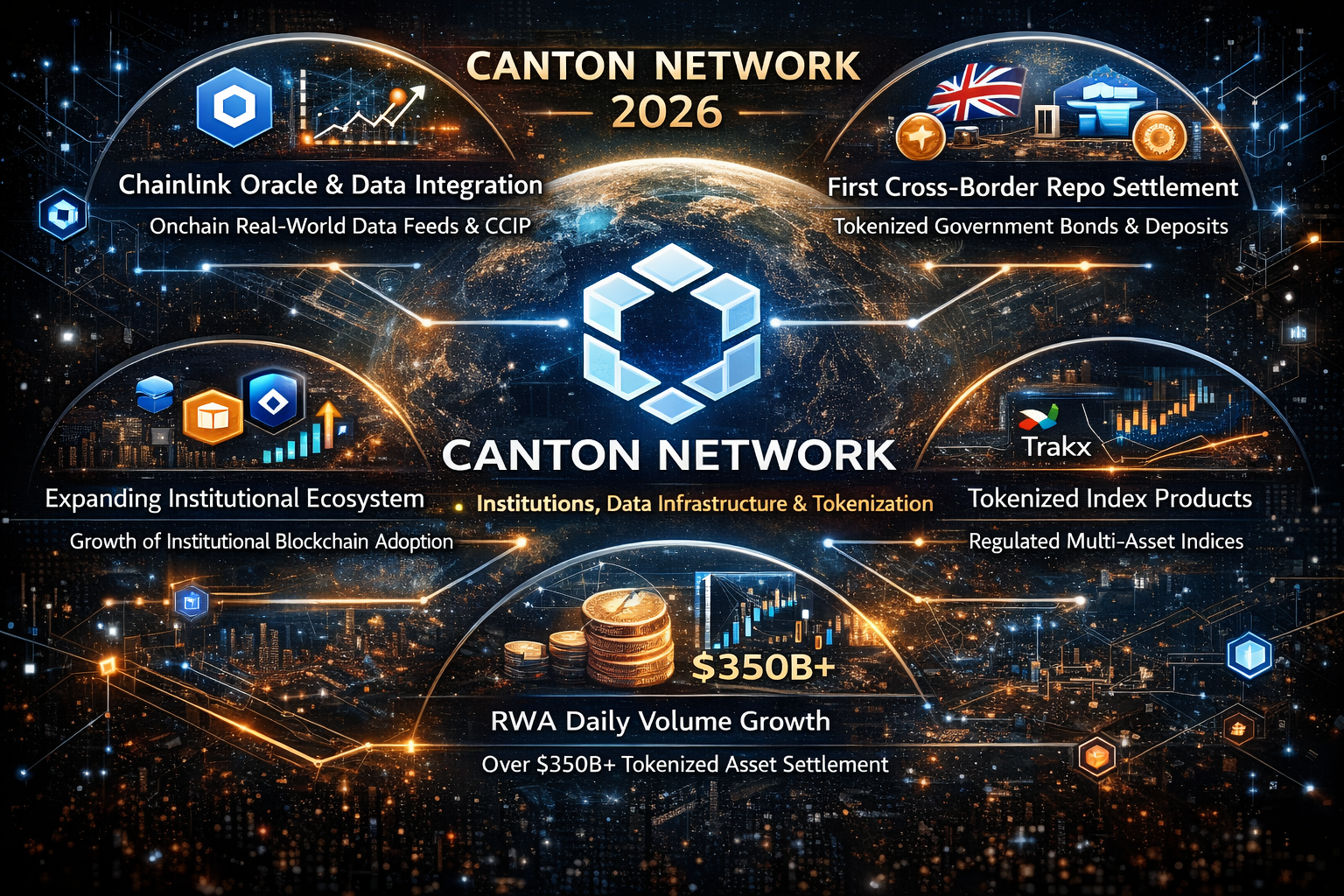
Canton Network is rapidly emerging as one of the most significant blockchain infrastructures for institutional finance. In a pair of developments that underscore growing confidence in the network, an exchange-traded fund offering direct exposure to Canton Coin has launched in the United States, while Japan is advancing a blockchain-based government bond tokenization initiative using the Canton ecosystem.
Together, these milestones highlight how tokenized finance is moving beyond experimentation and toward integration with traditional financial markets. The developments also reinforce Canton’s positioning as a privacy-focused infrastructure layer built specifically for regulated institutions.
21Shares Launches First Canton Coin ETF
Digital asset investment firm 21Shares has launched TCAN, the first U.S.-based ETF designed to provide direct exposure to Canton Coin, the native token powering the Canton Network. The launch represents a major milestone for the ecosystem, giving institutional and retail investors regulated access to the token through traditional financial markets.
The ETF introduction reflects growing investor interest in blockchain networks focused on real-world financial infrastructure rather than speculative applications alone. Unlike many public blockchains designed primarily for open decentralized ecosystems, Canton has been engineered specifically for privacy-preserving institutional transactions.
This design has made it increasingly attractive for banks, asset managers, and financial market operators exploring tokenized assets.
The availability of a dedicated ETF could significantly expand exposure to the ecosystem while increasing liquidity and visibility for the network. It also signals growing confidence that blockchain infrastructure focused on institutional use cases may become a long-term pillar of digital finance.
Japan Pushes Government Bond Tokenization on Canton
At the same time, Japan is accelerating efforts to tokenize government bonds using blockchain infrastructure connected to the Canton Network. The initiative is part of a Proof of Concept selected by Japan’s Financial Services Agency under its broader Payment Innovation Project.
Major participants include leading financial institutions such as Mizuho Financial Group, Nomura Holdings, the Japan Securities Clearing Corporation, and Digital Asset.
Related: Japan Tests Tokenized Government Bonds on Canton Network With Major Banks
The pilot focuses on enabling Japanese Government Bonds to function as digital collateral on blockchain infrastructure while supporting 24/7 trading and stablecoin settlement.
If successful, the initiative could modernize one of the world’s largest sovereign debt markets by reducing settlement friction and enabling around-the-clock market access. It also demonstrates how blockchain infrastructure is increasingly being integrated into regulated financial systems rather than operating outside them.
Why Canton Is Attracting Institutional Interest
Canton’s growing traction stems largely from its focus on privacy, compliance, and interoperability. Traditional financial institutions often require confidentiality around transactions and counterparties, making fully transparent public blockchains difficult to adopt at scale.
Canton addresses this challenge by enabling selective privacy while still maintaining synchronized operations across participants.
This approach positions the network as a bridge between traditional finance and blockchain technology. Rather than forcing institutions to compromise on regulatory or operational requirements, Canton is designed to integrate with existing financial frameworks.
This has made it particularly attractive for applications involving tokenized securities, collateral management, and interbank settlement.
The combination of privacy-preserving infrastructure and programmable asset capabilities is increasingly viewed as essential for bringing large-scale financial markets onchain. Canton’s architecture appears to be gaining momentum precisely because it focuses on these institutional needs.
Analysis: A Defining Moment for Institutional Blockchain Adoption
The simultaneous launch of a Canton Coin ETF and Japan’s government bond tokenization initiative may represent a turning point for institutional blockchain adoption. Together, they demonstrate both investor demand for exposure to tokenized finance infrastructure and growing government-level experimentation with blockchain-based markets.
More importantly, these developments highlight a broader shift in how blockchain technology is being deployed. The industry narrative is increasingly moving away from speculative trading toward financial infrastructure modernization. Networks capable of supporting regulated, privacy-sensitive financial activity are likely to play a critical role in this transition.
For Canton, the implications could be substantial. Institutional blockchain adoption has long faced challenges around compliance, interoperability, and confidentiality. By directly targeting these pain points, Canton is positioning itself as a foundational layer for next-generation capital markets.
Conclusion
Canton Network’s latest milestones signal accelerating momentum in the race to modernize financial infrastructure through blockchain technology. With the launch of the first Canton Coin ETF and Japan’s push toward tokenized government bonds on the network, Canton is rapidly evolving from a niche institutional blockchain into a central player in tokenized finance.
As traditional markets continue exploring digital asset infrastructure, Canton’s focus on privacy, interoperability, and regulated financial integration may place it at the forefront of the next phase of blockchain adoption.
About The Author