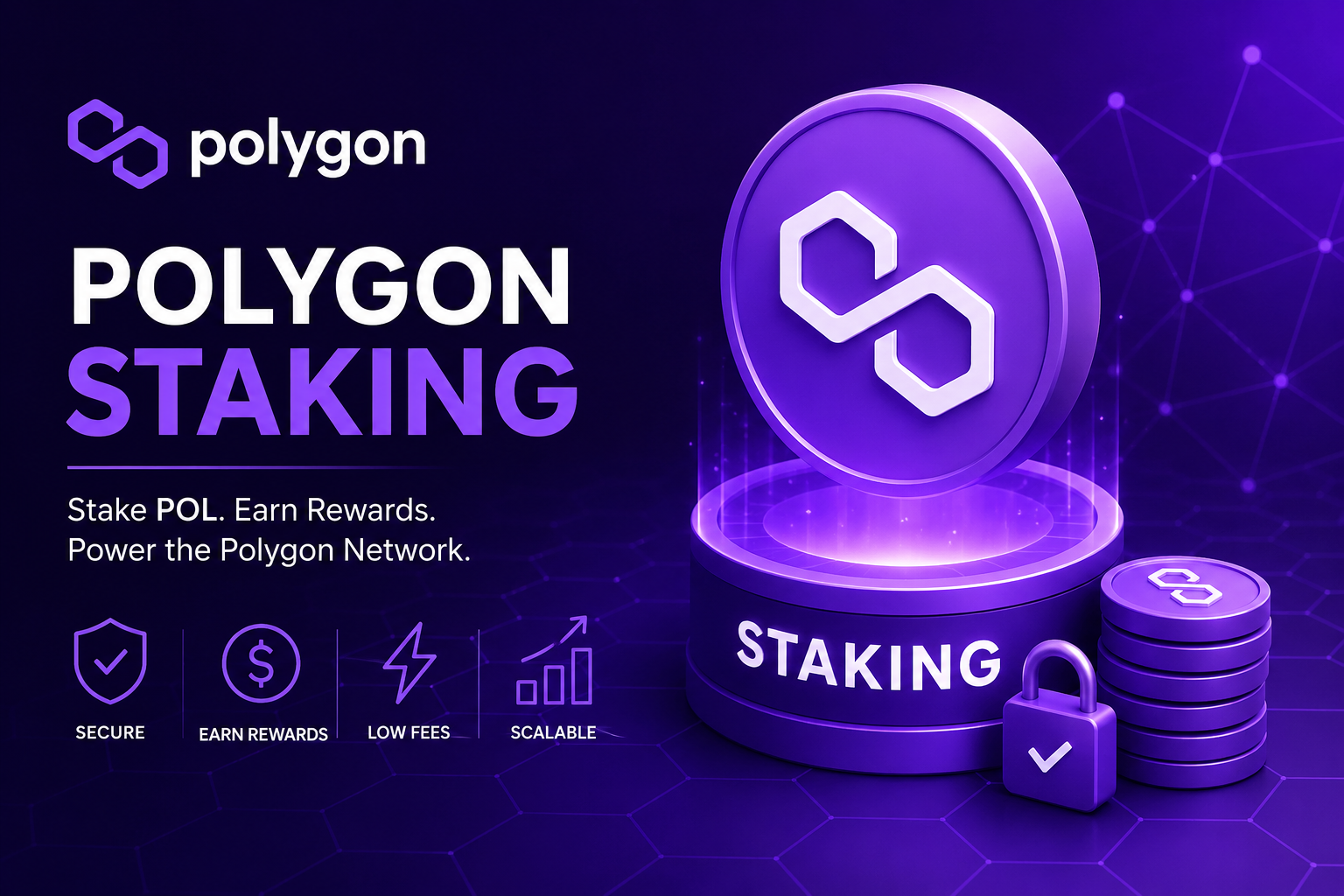
Polygon has become one of the most recognized blockchain ecosystems in the crypto industry. Known for its fast transaction speeds, low fees, and growing ecosystem of decentralized applications, Polygon continues to attract users, developers, and investors. Staking offers holders of Polygon’s native token, POL, an opportunity to earn rewards while helping secure the network.
Whether you are new to staking or looking to maximize your crypto portfolio, understanding how Polygon staking works can help you make informed decisions and potentially increase your earnings over time.
What Is Polygon Staking?
Polygon staking is the process of locking up POL tokens to help validate transactions and maintain the security of the Polygon network. In return for participating in the network’s consensus process, stakers receive rewards paid in POL.
Unlike Proof-of-Work blockchains that rely on mining equipment and large amounts of energy, Polygon operates using a Proof-of-Stake mechanism. This approach allows token holders to contribute to network security without needing expensive hardware.
Related: Polygon Powers New Institutional Debt Infrastructure With Regulated EUR 5M Issuance
When users stake their POL tokens, they can either run a validator node themselves or delegate their tokens to an existing validator. Most investors choose delegation because it is significantly easier and requires little technical knowledge.
The amount of rewards earned depends on several factors, including the amount staked, validator performance, network conditions, and the overall staking participation rate. Rewards are typically distributed periodically and can be compounded over time to increase returns.
One of the key advantages of staking Polygon is that it allows investors to remain involved in the network while continuing to hold their assets for the long term.
Why Investors Are Choosing Polygon Staking
The popularity of Polygon staking has grown alongside the network’s expansion. As more decentralized finance platforms, gaming projects, and Web3 applications launch on Polygon, demand for network security continues to increase.
For investors, staking provides several attractive benefits.
First, staking generates passive income. Instead of leaving tokens idle in a wallet, users can earn additional POL simply by participating in the network. This creates an opportunity to grow holdings without actively trading.
Second, staking supports the Polygon ecosystem. Validators and delegators play an important role in maintaining network security, validating transactions, and ensuring the blockchain remains decentralized.
Third, Polygon’s reputation as one of the leading Ethereum scaling solutions has given many investors confidence in its long-term prospects. The network processes transactions quickly while keeping costs low, making it appealing for developers and users alike.
Another reason many investors choose Polygon staking is accessibility. Several major exchanges and crypto wallets offer staking services, allowing users to start with relatively small amounts of POL. This lowers the barrier to entry and makes staking available to a broader audience.
While staking rewards are never guaranteed and market conditions can change, many long-term holders view staking as a practical way to earn additional tokens while remaining invested in the ecosystem.
How Polygon Staking Works
Understanding the staking process is relatively straightforward.
The first step is obtaining POL tokens through a cryptocurrency exchange or another supported platform. Once the tokens are in a compatible wallet, users can choose whether to become a validator or delegate their stake.
Validators operate network nodes that verify transactions and produce blocks. Running a validator requires technical expertise, reliable infrastructure, and ongoing maintenance. Because of these requirements, most users prefer delegation.
Delegation allows token holders to assign their staking power to an existing validator. The validator performs the technical work while delegators share in the rewards generated. Validators typically charge a commission fee that is deducted from staking rewards before distribution.
After selecting a validator, users lock their tokens into a staking contract. During this period, the tokens remain committed to the network and cannot be freely traded or transferred.
Rewards accumulate based on the validator’s performance and the amount of stake delegated. Many participants choose to restake their earnings, creating a compounding effect that can increase returns over time.
However, investors should carefully research validators before staking. Factors such as uptime, reliability, commission rates, and community reputation can all influence long-term rewards.
It is also important to understand any unbonding periods that may apply when unstaking tokens. During these periods, funds may remain locked before becoming available for withdrawal.
Risks and Future Outlook for Polygon Staking
Although Polygon staking offers attractive opportunities, it is not without risks.
Market volatility remains one of the biggest considerations. Even if staking rewards are earned consistently, the value of POL can rise or fall significantly depending on broader market conditions. Investors should remember that staking rewards do not eliminate price risk.
Validator performance is another important factor. Poorly performing validators may generate lower rewards, and in some blockchain networks, penalties can occur if validators fail to meet network requirements.
Liquidity is also a consideration. Staked tokens are often locked for a period of time, limiting immediate access to funds during market fluctuations.
Despite these risks, many analysts remain optimistic about Polygon’s long-term development. The network continues to expand its ecosystem, attract developers, and improve its infrastructure. As blockchain adoption grows, scalable networks like Polygon may play an increasingly important role in supporting decentralized applications and digital asset markets.
The transition to POL as the network’s core token has also introduced new opportunities for staking participation and ecosystem growth. As the Polygon ecosystem evolves, staking is expected to remain a central component of network security and user engagement.
For investors who believe in the future of blockchain technology and plan to hold their tokens over the long term, Polygon staking offers a way to earn rewards while actively contributing to the network. By understanding the mechanics, evaluating the risks, and choosing reputable validators, participants can position themselves to benefit from one of the crypto industry’s most widely used staking ecosystems.
About The Author