While Gold and Bitcoin Argue, AI Is Winning
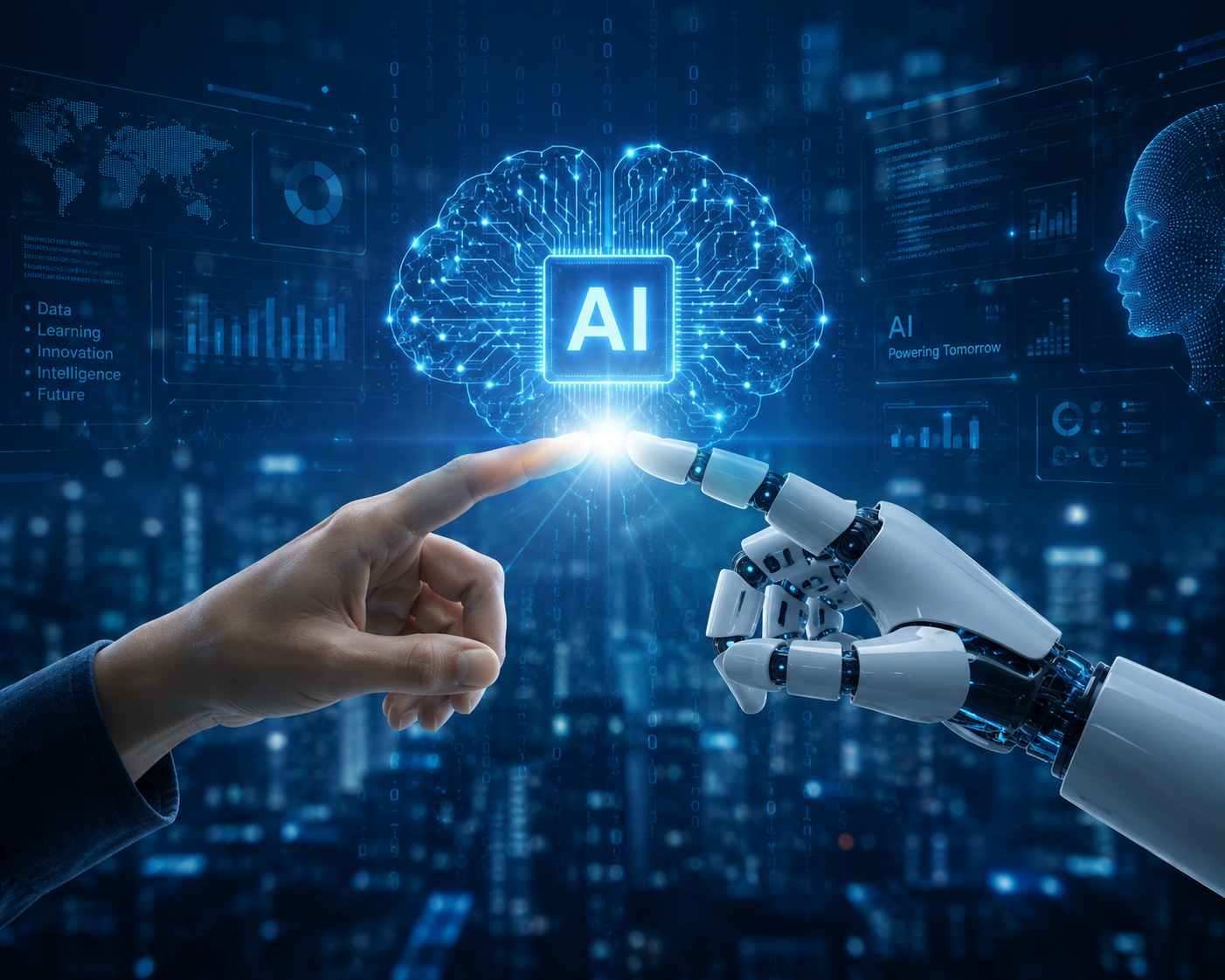
Gold wants to be the ultimate safe haven. Bitcoin wants to become digital gold. Meanwhile, artificial intelligence is attracting trillions of dollars in investment, reshaping industries and quietly becoming one of the biggest economic stories of the decade.
The debate over gold versus Bitcoin has dominated investment conversations for years. One side trusts an asset that has survived thousands of years of economic uncertainty. The other believes Bitcoin represents the future of money, free from central banks and traditional financial systems.
Both arguments have their merits. But while investors debate which asset deserves the title of ultimate store of value, another industry is attracting capital on an entirely different scale: artificial intelligence.
And the numbers are becoming difficult to ignore.
According to Gartner, worldwide AI spending is forecast to reach $2.7 trillion in 2026, representing a 49.5% increase from the previous year. This is not simply speculative money flowing into another fashionable technology. It includes investment in semiconductors, servers, data centres, software and AI-powered services. Gartner
AI is no longer just a technology sector. It is becoming an infrastructure race involving some of the world’s largest companies.
Gold and Bitcoin Are Fighting Over the Past
Gold and Bitcoin represent two different responses to the same problem: how to preserve wealth in a world where currencies, governments and financial systems can lose credibility.
Gold has the advantage of history. Central banks continue to hold it as a reserve asset, and investors often turn to it during periods of uncertainty.
Bitcoin offers a different proposition. Its fixed maximum supply of 21 million coins, decentralised network and independence from traditional financial institutions have made it attractive to investors looking for an alternative monetary system.
Related: Ashton Kutcher’s $435 Million Anthropic Bet Is Now Worth $7 Billion
But the performance debate has become uncomfortable for Bitcoin supporters.
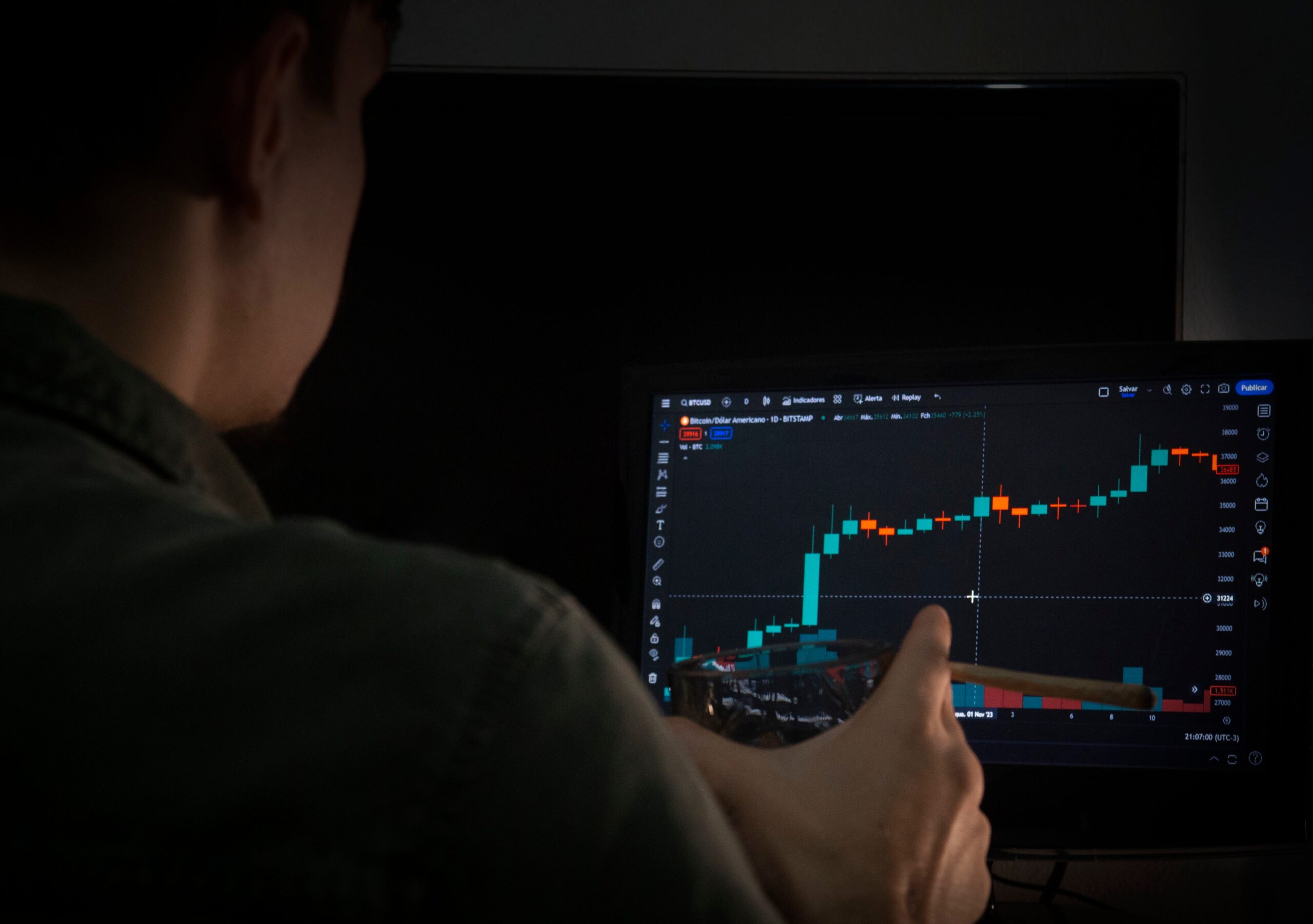
Data through November 19, 2026, shows gold down approximately 15.3% year-to-date, compared with a 27.6% decline for Bitcoin. Over the preceding 12 months, gold also outperformed Bitcoin, falling 9.9% against Bitcoin’s 29.2% decline. cryptosrank
That does not invalidate Bitcoin’s long-term investment thesis, nor does it guarantee gold will continue outperforming. It does, however, demonstrate how unpredictable the competition between the two assets can become.
And while investors argue about which one deserves a place in their portfolios, AI companies are building products, selling infrastructure and attracting enormous amounts of capital.
AI Is Attracting Money, Not Just Attention
The difference between the AI boom and the gold-versus-Bitcoin debate is that AI investment is increasingly connected to commercial activity.
Companies are spending billions to develop models, purchase computing infrastructure, build data centres and integrate artificial intelligence into existing products.
J.P. Morgan Global Research estimates that AI capital expenditure could reach approximately $900 billion in 2026, with global AI-related capital expenditure potentially reaching $5.5 trillion by 2030. JPMorgan Chase
The infrastructure spending is already substantial.
According to IDC, global spending on AI infrastructure reached $121.4 billion in the second quarter of 2026, an increase of 53% year-over-year. IDC also raised its full-year 2026 forecast to $521 billion. IDC
These investments are creating demand across several industries:
- Semiconductors: AI models require increasingly powerful processors and specialised chips.
- Data centres: Companies need enormous computing capacity to train and operate AI systems.
- Cloud computing: Businesses are purchasing AI infrastructure and computing services.
- Software: AI is being integrated into financial services, healthcare, cybersecurity, marketing and business operations.
- Energy: The expansion of data centres is increasing demand for electricity and supporting infrastructure.
This is where the AI story becomes particularly interesting. Its growth is not limited to a handful of technology companies. It is creating an entire supply chain of businesses competing to provide the hardware, software, energy and services required to support the industry.
The Biggest Opportunity May Not Be Chatbots
Much of the public conversation still revolves around AI chatbots and which company has developed the smartest model.
But the bigger economic opportunity could be in what happens when AI becomes embedded in everyday business operations.
Consider financial institutions using AI to detect suspicious transactions, manufacturers automating production processes, retailers predicting consumer demand and developers using AI agents to execute complex tasks.
The technology is moving from answering questions to performing work.
That transition could create entirely new business models, particularly as autonomous AI agents become more capable of interacting with software, financial systems and digital services.
For the cryptocurrency industry, this development deserves particular attention.
AI agents could eventually require digital wallets, programmable payments and the ability to transact independently across networks. Blockchain infrastructure could become useful in providing payment settlement, verifiable transactions and access to decentralised services.
However, this does not automatically mean that AI adoption will translate into demand for cryptocurrency tokens. Projects will still need to demonstrate real usage, sustainable economics and a reason for their tokens to exist.
That distinction will separate genuine opportunities from projects simply attaching AI branding to existing crypto products.
But Is the AI Boom Another Bubble?
There is an important question investors should not ignore: is AI generating enough economic value to justify the money being invested?
The scale of investment creates its own risks. Companies are committing enormous resources to infrastructure before the long-term profitability of many AI applications is fully established.
J.P. Morgan has highlighted potential bottlenecks, including GPU and memory supply, electricity availability, data-centre permitting and the growing use of debt to finance infrastructure expansion. JPMorgan Chase
There is also the possibility that AI infrastructure becomes overbuilt, competition drives down prices, or businesses discover that deploying AI is more expensive than expected.
In other words, AI may be transforming the economy without every AI company becoming a successful investment.
This is an important distinction. The technology can win while some investors lose money.
The same applies to cryptocurrency. Being part of a growing industry does not guarantee that a particular token will capture its economic value.
The Market May Be Looking at the Wrong Competition
Gold and Bitcoin are competing for a place in the future of money. AI is competing to change how the world works.
These are fundamentally different investment propositions.
Gold does not need to revolutionise an industry to maintain its relevance. Bitcoin does not need to replace every payment system to justify its existence. Both have investment theses that extend beyond short-term market performance.
AI, however, is being judged by its ability to deliver measurable productivity, reduce costs, generate revenue and create entirely new services.
That makes its current investment cycle particularly significant.
The next few years will reveal whether the hundreds of billions being poured into AI infrastructure translate into sustainable economic returns. If they do, AI could become one of the most consequential investment themes of this generation.
For cryptocurrency investors, the message is worth considering: the next major opportunity may not come from another argument about Bitcoin’s price or gold’s scarcity. It may come from understanding how AI, autonomous agents and blockchain technology eventually intersect.
Gold has history. Bitcoin has scarcity. AI has an expanding economic footprint.
While gold and Bitcoin argue over which one represents the future of money, AI is already competing to define the future of the global economy.
About The Author