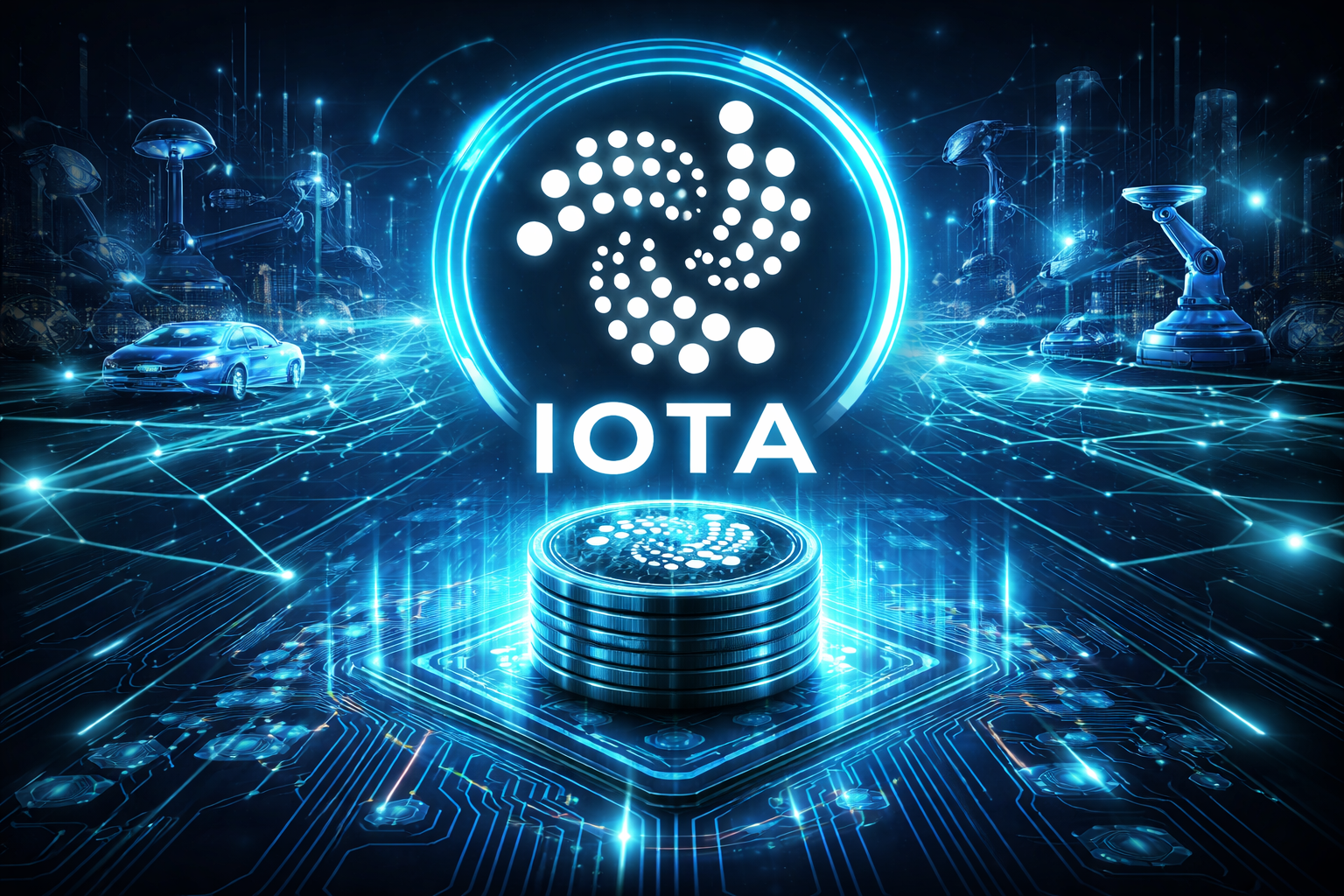
IOTA Targets a Major Trade Finance Problem: Verifying Export Documents Without Relying on Issuers
International trade can leave exporters waiting months before receiving payment, creating a financing challenge that is particularly difficult for smaller businesses. IOTA is highlighting how blockchain-based document verification could help address one of the problems behind that delay: the need for financial institutions to establish that trade documents are authentic and have not been altered.
According to the US International Trade Administration (ITA), open-account trade commonly allows buyers to pay 30, 60 or 90 days after goods are shipped and delivered. While these terms can help exporters remain competitive, they also transfer considerable financial pressure to the seller, who must cover production, shipping and operating costs before collecting payment.
The waiting period can begin long before the goods reach their destination. Exporters must first source materials, manufacture products, arrange transportation and complete the documentation required for international shipment. By the time payment becomes due, a business may have financed several months of activity without receiving revenue from the transaction.
Trade finance exists partly to bridge this gap. Export working capital loans, factoring, export credit insurance and letters of credit can help businesses access liquidity, reduce payment risks or receive money before an invoice reaches maturity. However, these arrangements depend heavily on documentation that lenders and financial institutions can trust.
Why Trade Finance Depends on Verifiable Documents
Banks and other funders need evidence that a transaction is legitimate before committing capital. Depending on the arrangement, this can include commercial invoices, bills of lading, certificates of origin, insurance documents, inspection records and proof of shipment. Each document supports a different part of the transaction and may need to be checked against information held by another institution.
Traditional verification can involve contacting issuing authorities, shipping companies, customs agencies and other parties. When records are distributed across different systems and jurisdictions, confirming their authenticity can take time. Repeated checks also introduce administrative costs and create opportunities for inconsistencies, document duplication or fraud.
IOTA’s proposed approach uses a public distributed ledger to provide an independently checkable record of documents. Rather than requiring a funder to return to the original issuer every time it needs to establish whether a document’s recorded history is genuine, the relevant cryptographic proof and transaction history can be checked against the ledger.
Related: IOTA Mainnet Crosses 1 Billion Transaction Blocks
This distinction matters because putting a document’s verification record on a blockchain does not necessarily mean publishing the entire document for everyone to read. Sensitive commercial information can remain in controlled storage, while cryptographic records provide evidence that a particular document existed and has not been changed since its verification. Access permissions and the identity of authorized participants remain important parts of the system.
A reliable verification process could make it easier for lenders to assess trade transactions and process financing requests. It could also reduce the administrative burden on exporters who repeatedly need to submit the same documents to different institutions. However, blockchain records do not automatically establish that the original information was truthful. Funders still need confidence in the issuing authority, the identity of the parties and the underlying transaction.
IOTA’s Wider Trade Infrastructure Ambitions
The latest message fits into IOTA’s broader work on digitizing international trade through the Trade Worldwide Information Network (TWIN). The platform is designed to connect trade participants and make digital trade documents and supply-chain information easier to exchange and verify across borders.
TWIN’s document extraction service converts trade documents into structured data aligned with UN/CEFACT standards. IOTA’s third-quarter 2026 progress update also reported improvements to shared consignment and document data access, including an approximately 70% reduction in latency between core platform releases. The team said it continued developing trade finance and payment capabilities that will leverage IOTA’s Layer 1 network.
Related: IOTA Releases Mainnet v1.35.2 With Protocol 39 Upgrade and Major Validator Security Improvements
The potential significance extends beyond faster paperwork. If financial institutions can rely on consistent, verifiable trade records, exporters could have an easier route to financing while goods are in transit or invoices remain unpaid. That could be particularly relevant to small and medium-sized businesses that struggle to secure affordable working capital.
For IOTA, the challenge is turning this technical capability into infrastructure that banks, exporters, customs authorities and logistics providers can use in real transactions. Integration with existing systems, data protection, legal recognition of digital documents and confidence in participating institutions will all influence adoption.
The underlying problem is straightforward: international trade moves goods across borders, but the money does not always move at the same speed. By making the records behind those transactions easier to verify, IOTA is positioning its ledger technology as part of the infrastructure that could help close that gap.
About The Author