
Bitcoin is flashing a rare cluster of capitulation signals, with 11 separate indicators aligning in a way not seen since Q4 2022, a period that marked the macro bottom following the FTX collapse.
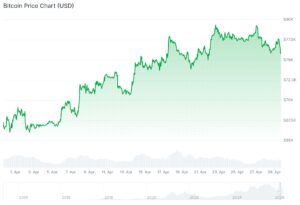
Bitcoin (BTC) chart
Historically, such confluence events are extremely rare, often occurring during periods of extreme fear and maximum seller exhaustion. Current market sentiment reflects this dynamic clearly, with participation metrics declining and retail interest subdued despite Bitcoin maintaining a multi-billion-dollar daily trading volume. This divergence—strong infrastructure activity paired with weak sentiment—has historically preceded major trend reversals, particularly when combined with derivatives market imbalances. The last two comparable setups occurred during the March 2020 COVID crash and the November 2022 FTX-driven capitulation, both of which marked generational buying opportunities.
Related: Czech National Bank Considers 1% Bitcoin Allocation
A key metric reinforcing this setup is the perpetual futures funding rate, currently sitting at approximately -5% annualized, meaning short positions are paying long positions to remain open. This inversion is statistically uncommon and typically indicates that bearish positioning is overcrowded, increasing the probability of a short squeeze. At the same time, the 3-month futures basis has compressed to around 2%–3%, its lowest level since late 2022, signaling a lack of speculative premium in the market. When both funding rates and basis compress simultaneously, it suggests that leverage has largely been flushed out, leaving the market structurally cleaner. In previous cycles, similar conditions led to double-digit percentage rallies within weeks, driven primarily by forced short liquidations rather than organic buying alone.
Derivatives Reset Signals Market Exhaustion
The current derivatives landscape suggests that most leveraged long positions have already been liquidated, reducing the risk of cascading downside volatility. With fewer forced sellers remaining, the market transitions into what is known as a spot-driven environment, where price movements are dictated more by real demand than by leverage unwinds. This shift is critical because it changes the underlying mechanics of price action—removing downward pressure while increasing the sensitivity to upward catalysts. Data shows that Bitcoin has attracted approximately $1.5 billion in ETF inflows since April 13, indicating that institutional capital continues to accumulate even as retail sentiment remains muted. This divergence between institutional flows and retail hesitation has historically marked early accumulation phases rather than late-cycle distribution.
Related: Can Bitcoin Break $80K? Key Macro Events This Week to Decide BTC Direction
Additionally, negative funding rates at this magnitude often act as a coiled spring, where any upward price movement can trigger cascading liquidations of short positions. Given the current imbalance, even a 5%–10% upward move could force a significant portion of shorts to close, accelerating momentum toward higher resistance levels. This dynamic creates an asymmetric setup where downside risk is reduced due to a lack of leverage, while upside potential is amplified by the presence of trapped short positions.
A Market Positioned for Reversal?
Taken together, the combination of 11 capitulation indicators, -5% funding rates, 2%–3% futures basis, and $1.5B in ETF inflows paints a picture of a market that has largely completed its deleveraging phase. While no signal guarantees an immediate reversal, historical precedent suggests that such conditions rarely persist for long without a directional move. The current structure mirrors previous cycle bottoms, where pessimism was high, positioning was skewed bearish, and liquidity conditions were tightening before a rapid expansion phase. If Bitcoin begins to trend upward from here, the probability of a short squeeze-driven rally increases significantly, potentially marking the early stages of a broader recovery.
About The Author