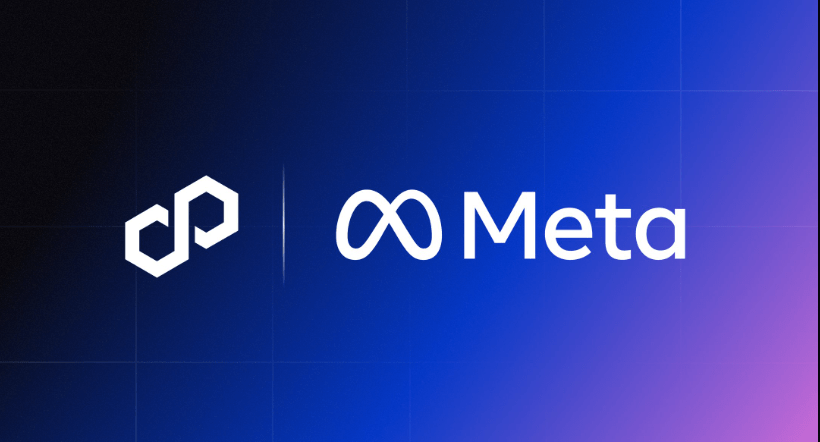
Meta Platforms is accelerating its push into blockchain-powered payments, announcing USDC-based creator payouts on both Polygon and Solana. The rollout is already live in Colombia and the Philippines, two regions with high demand for low-cost cross-border payments, and is expected to expand into 160+ global markets. This move introduces stablecoin settlement directly into one of the largest creator economies in the world, where millions of users rely on timely payouts for income.
BREAKING: @Meta adds support for USDC payments on Solana for creators in Colombia and the Philippines. pic.twitter.com/SNUMl5osdh
— Solana (@solana) April 29, 2026
By leveraging USD Coin, Meta enables near-instant settlement with significantly lower fees compared to traditional banking rails, which can take 2–5 business days and charge up to 5%–10% in fees in some corridors. With Meta’s ecosystem spanning billions of users across platforms like Instagram and Facebook, even a partial adoption of blockchain-based payouts could represent one of the largest real-world use cases for crypto payments to date.
Polygon and Solana bring distinct advantages to this rollout, both offering high throughput and low transaction costs that make micro-payments viable at scale. Polygon transactions typically cost fractions of a cent, while Solana is capable of processing tens of thousands of transactions per second with sub-second finality. These performance metrics are critical when dealing with creator payouts, where volume can scale into millions of transactions across different regions and currencies.
The future of marketplace commerce is on Polygon.@Meta launched stablecoin payouts for creators on the Polygon Chain.
Live in Colombia and the Philippines, with 160+ markets coming, users now get faster settlement with USDC while gaining access to dollar denominated assets. pic.twitter.com/hjodzNpuyU
— Polygon (@0xPolygon) April 29, 2026
The integration also aligns with a broader industry trend toward stablecoin adoption, with USDC alone maintaining a market capitalization in the tens of billions of dollars and being widely used for payments, trading, and decentralized finance. By embedding stablecoin infrastructure into its payout systems, Meta is effectively bridging Web2 creator platforms with Web3 financial rails.
Why Stablecoin Payouts Are a Game Changer for Creators
For creators in emerging markets like Colombia and the Philippines, access to stable, dollar-denominated income is a significant advantage. Local currencies in these regions can experience volatility, and traditional payout methods often involve intermediaries that introduce delays and additional costs. With USDC payouts, creators can receive funds within seconds to minutes, retain value in a USD-pegged asset, and optionally convert to local currency when needed.
This reduces reliance on traditional financial systems and provides greater financial flexibility, especially for freelancers and digital entrepreneurs operating globally. In regions where banking infrastructure may be limited, blockchain-based payouts can also improve accessibility, allowing users to participate in the digital economy with just a smartphone and a crypto wallet.
Additionally, the integration of stablecoins into mainstream platforms could drive broader adoption of digital assets beyond speculative use cases. When users interact with crypto through familiar platforms, the barrier to entry decreases significantly, potentially onboarding millions of new users into blockchain ecosystems.
If Meta successfully scales this initiative across 160+ markets, the transaction volume flowing through Polygon and Solana could increase substantially, reinforcing their positions as leading infrastructure layers for payments and decentralized applications. Even a modest adoption rate—such as 5%–10% of Meta’s creator base—could translate into billions of dollars in annual transaction volume processed on-chain.
Implications for Blockchain Adoption and Global Payments
This development signals a major shift in how large technology companies are approaching financial infrastructure. Rather than building closed systems, Meta is leveraging existing blockchain networks to handle settlement, effectively outsourcing a critical component of its payment stack to decentralized infrastructure.
This not only reduces operational complexity but also aligns with the growing demand for transparent, programmable, and borderless financial systems. The dual-chain approach—supporting both Polygon and Solana—also highlights the importance of interoperability and scalability, as different networks can optimize for different performance characteristics and user needs.
From a market perspective, integrations like this often act as validation for blockchain technology, particularly when backed by companies with global reach. As stablecoins continue to gain traction, their role in everyday transactions is becoming more defined, moving beyond trading into real-world applications like payroll, remittances, and commerce.
With billions of users, 160+ target markets, near-zero transaction fees, and instant settlement capabilities, this rollout could mark a turning point in the adoption of crypto payments. If successful, it may set a precedent for other tech giants to follow, further accelerating the convergence of traditional digital platforms and decentralized finance.