
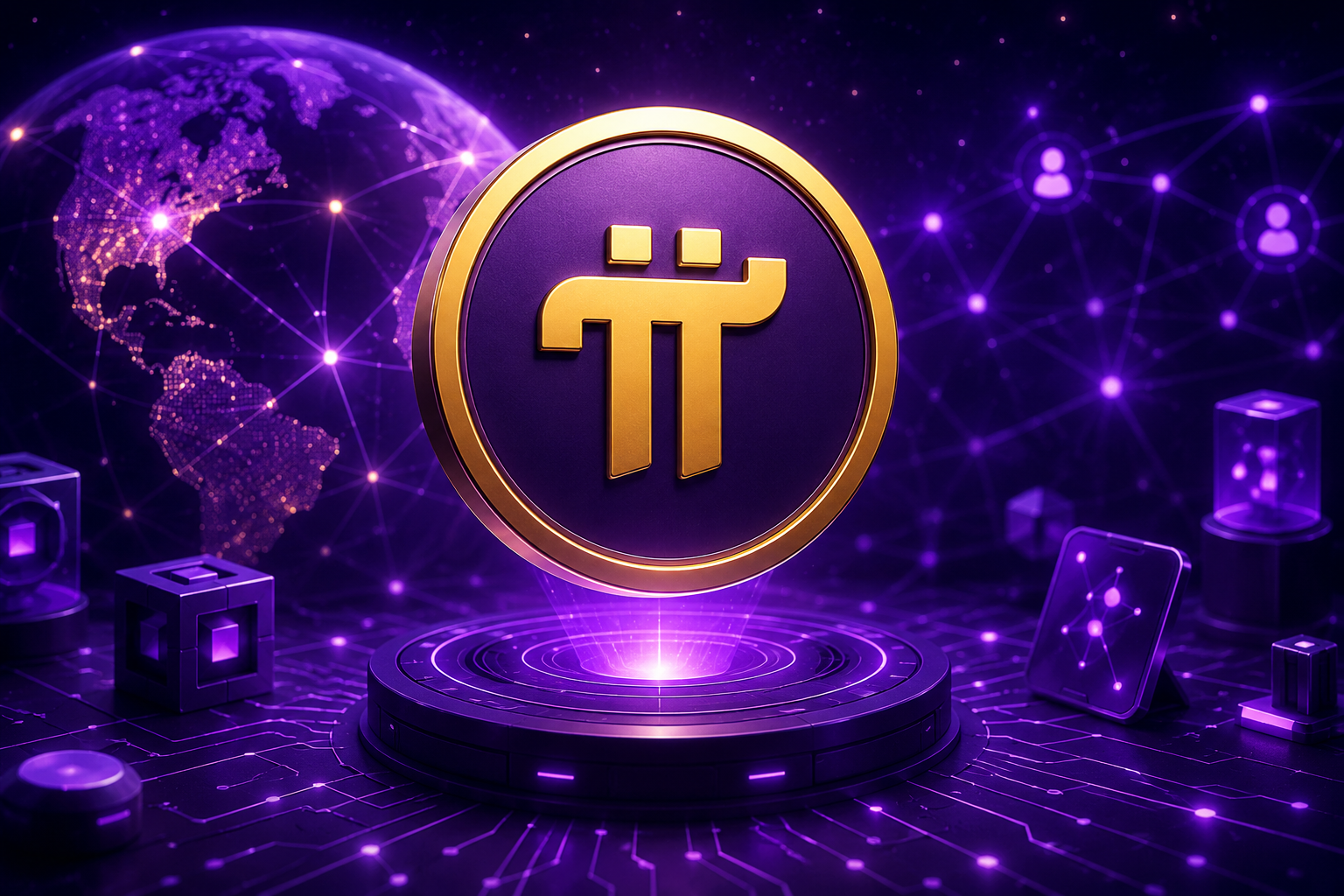
Pi Network Has Reached a Different Stage of Its Journey
Pi Network’s biggest challenge in 2026 is no longer convincing people to join its community. It is demonstrating that the community can support a functioning digital economy. After years of mobile mining, identity verification, and ecosystem development, Pioneers now need more than promises of future adoption. They need applications that solve practical problems, businesses that accept PI for meaningful transactions, and economic activity that extends beyond speculation.
The launch of Open Network on February 20, 2025, marked a major transition in Pi’s development. It enabled external connectivity and opened the door for the blockchain, its users, and its applications to interact with the wider crypto ecosystem. Pi subsequently expanded its developer initiatives, application-building tools, and ecosystem features. However, the existence of these capabilities does not automatically demonstrate that they have achieved widespread commercial adoption. The distinction between building infrastructure and generating sustained demand for a cryptocurrency remains central to Pi’s future. Source: Pi Network’s Open Network anniversary update.
For a community that has spent years accumulating PI through the mobile application, this distinction matters. Many Pioneers want to know whether their balances will eventually provide meaningful purchasing power and whether the ecosystem can create lasting economic opportunities. Technical releases are important, but their ultimate significance depends on what people can actually do with them.
Pi Network’s Technology Is Expanding, but Adoption Must Be Measured
Pi Network’s recent development efforts have extended beyond its original mobile-mining experience. Its ecosystem includes Pi Browser, developer tools, application-building capabilities, and infrastructure intended to make it easier to create services for Pioneers. In 2026, the project also introduced SoloHost, a framework for discovering and running self-hosted applications through Pi Desktop, alongside Pi Sign-In, which allows users to access supported external websites and applications using their Pi accounts.
These developments could expand the network’s usefulness beyond cryptocurrency transfers. SoloHost, for example, creates opportunities for developers to experiment with locally running applications and AI tools. Pi Sign-In could help participating services simplify authentication while drawing on Pi’s identity-verified user base. Nevertheless, the existence of these features is only the starting point. Their long-term value will depend on developer participation, practical use cases, reliability, user retention, and whether businesses find them useful enough to integrate into their operations. Source: Pi Network’s Pi2Day 2026 announcement.
The same principle applies to Pi’s application ecosystem. A growing list of apps can indicate developer interest, but app counts alone are not enough to establish adoption. More meaningful indicators include how many people use an application regularly, how frequently they return, whether they complete transactions, and whether the service can operate sustainably. Publicly verifiable, consistent data on these measures would help the community distinguish between experimental projects and applications with established demand.
This is where Pi’s next phase becomes particularly important. The network needs to show not simply that developers can build applications, but that those applications attract users for reasons beyond their association with Pi.
Can PI Become a Currency People Actually Use?
One of Pi Network’s original ambitions was to make cryptocurrency accessible to a broad population, including people without specialized mining equipment or extensive blockchain experience. Its mobile-first approach helped establish a large international community. Turning that distribution into a practical payment network, however, presents a different challenge.
For PI to become useful in everyday commerce, consumers need places to spend it, merchants need reasons to accept it, and both sides need confidence in the transaction process. Businesses must also consider pricing, volatility, liquidity, accounting, and the ability to convert receipts into the currencies they use to pay suppliers and employees. A merchant accepting PI for an occasional community transaction is not necessarily evidence of a sustainable payment economy.
The network therefore needs measurable examples of recurring commerce. These might include digital services, online subscriptions, software products, local businesses, and marketplaces where users purchase goods or services because they offer genuine value. Evidence of repeat transactions would be more informative than promotional announcements or isolated demonstrations of payment functionality.
Pi’s identity-verification system may also provide opportunities for applications that require greater confidence that accounts correspond to real people. Yet identity verification alone does not guarantee demand, and it introduces responsibilities involving privacy, security, and access to the network. The challenge is to turn these capabilities into useful services while maintaining a reliable and accessible user experience.
PI’s Market Value Depends on More Than Community Size
Pi Network’s community is one of its most recognizable characteristics, but the number of participants cannot independently determine the token’s market value. Cryptocurrency prices are influenced by factors including available supply, liquidity, trading activity, investor expectations, and the willingness of buyers to purchase tokens at prevailing prices.
This is particularly important for a project whose users accumulated balances over an extended period before external trading became available. As more eligible balances migrate to Mainnet, the relationship between circulating supply and demand becomes increasingly relevant. The market must absorb tokens offered for sale while new applications and economic activity generate reasons for other participants to acquire or retain PI.
Related: Pi Network Price Rises as V28 Testnet Activity Builds Toward Mainnet Upgrade
A credible assessment of Pi’s progress should therefore examine several indicators together: verified Mainnet migration figures, circulating supply estimates, exchange liquidity, active wallet activity, developer engagement, and evidence of recurring payments. Each measure has limitations, and none should be treated as a complete representation of adoption. However, considered collectively, they provide a more useful picture than community size or short-term price movements alone.
This also explains why ecosystem announcements should not automatically be interpreted as bullish price catalysts. A new feature can improve the network’s technical capabilities without immediately producing additional token demand. The commercial impact depends on whether people use the feature, whether that usage requires PI, and whether the resulting demand is significant relative to available supply.
What Pi Network Needs to Demonstrate Next
Pi Network’s development roadmap has created several avenues for expanding utility, but the next stage requires evidence of execution. Developers need accessible tools, dependable infrastructure, clear documentation, and a straightforward path from experimentation to deployment. Users need applications that offer tangible benefits, while businesses need reliable transactions and a clear economic reason to participate.
Transparency will also be important. Regular reporting on ecosystem activity, migration progress, application usage, and measurable network performance would help Pioneers evaluate progress against expectations. Not every application needs to become commercially successful, but the ecosystem needs enough useful services to encourage people to return and participate without relying entirely on the prospect of token-price appreciation.
The community also deserves a distinction between completed features, ongoing development, and long-term ambitions. Testnet functionality should not be confused with production-ready Mainnet services, and an announced integration should not be treated as proof of significant adoption. Clear communication around these differences would help users make better-informed decisions.
Related: Pi Network Updates KYC System to Help Hundreds of Thousands Move to Mainnet
Pi Network has moved beyond its original mobile-mining phase, and its Open Network launch established a foundation for wider participation. Its newer developer tools, identity features, and application initiatives offer additional possibilities. The central question, however, remains whether those possibilities can translate into sustainable economic activity.
For Pioneers, the most meaningful progress will not necessarily be another milestone announcement or a temporary market rally. It will be a growing number of people using Pi-powered services because those services are useful, businesses accepting PI because the economics make sense, and applications generating repeat activity that can be independently measured.
The verdict: Pi Network has expanded its technical capabilities, but the scale and sustainability of real-world adoption must be judged by evidence of actual usage. In 2026, the project’s challenge is to convert a large community and growing set of tools into an ecosystem where utility creates lasting demand rather than remaining primarily an expectation.
About The Author