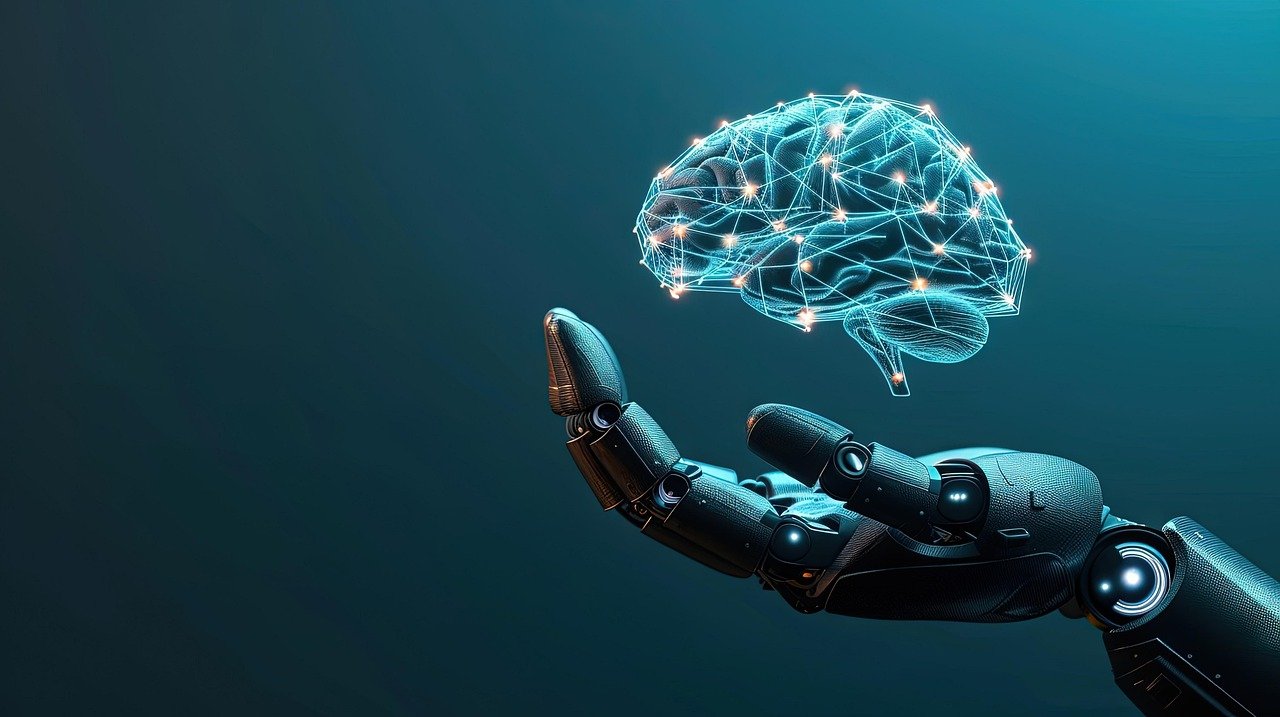
The United Nations is raising concerns about the growing use of artificial intelligence and neurotechnology, warning that advances in decoding brain activity could create serious human rights risks if the technology enters criminal investigations, courtrooms and prisons without strong safeguards. The central concern is whether information derived from a person’s brain could be collected or used without meaningful consent.
UN discussions on neurotechnology have highlighted the potential for brain-based tools to be used in lie detection, memory assessment and criminal risk profiling. Secretary-General António Guterres has repeatedly emphasized the need to address the human rights implications of emerging technologies, as researchers develop increasingly sophisticated methods of analyzing neural activity.
The debate comes as AI systems become better at interpreting patterns in brain scans. Although these technologies do not provide unrestricted access to a person’s thoughts, researchers have demonstrated that brain activity can reveal certain information about what an individual is seeing or processing. That progress is prompting renewed questions about mental privacy and the limits of state surveillance.
How AI Is Advancing Brain-Decoding Technology
One recent example comes from the Weizmann Institute of Science in Israel, where researchers developed Brain-IT, an AI model capable of reconstructing images a person viewed using functional magnetic resonance imaging, or fMRI. The system analyzes brain activity associated with visual perception and uses AI to generate an approximation of the viewed scene. The research was reported by the institute in September 2026.
According to the researchers, Brain-IT can adapt to a new participant using approximately one hour of brain-scanning data, substantially less than the extensive person-specific training required by some earlier approaches. Its development illustrates how shared patterns across human brains can help AI interpret visual information, although reconstruction is not equivalent to capturing a person’s complete internal experience.
The technology still has important limitations. It relies on specialized scanning equipment, and its output is a reconstruction based on measured brain activity rather than a verbatim transcript of thoughts. Results depend on the quality of the data and the model’s capabilities, meaning the system should not be described as a device that can freely read anyone’s mind.
Even with these limitations, the research has implications beyond medical science. If future systems can infer increasingly detailed information from neural signals, governments, employers or other organizations could face questions about when collecting such information is justified and whether individuals can refuse without penalty.
Human Rights, Consent and Potential Medical Benefits
The UN’s concerns are especially significant in criminal justice, where authorities may be tempted to use brain-based systems to assess whether suspects are lying, retrieve alleged memories or estimate the likelihood of reoffending. UN discussions have highlighted the lack of strong scientific evidence supporting many proposed criminal-justice applications and have urged caution over their use. <Cite refs={[“turn464502search4”]}/>
Using such tools in investigations could also challenge the right against self-incrimination and the right to a fair trial. Brain-derived signals may be ambiguous, and an AI-generated interpretation should not automatically be treated as proof of guilt. If courts or investigators rely on inaccurate or poorly validated results, individuals could face serious consequences without reliable evidence.
Another concern is the collection and storage of neural data. Brain activity can reveal sensitive information about a person’s responses and cognitive processes, making it different from many ordinary categories of personal data. Strong protections would need to address informed consent, limits on collection, data security, access controls and restrictions on secondary uses.
Supporters of neurotechnology point to its potential medical benefits. Brain-computer interfaces and related AI systems are being developed to help people with severe paralysis communicate, restore aspects of lost function and interact with digital devices. These applications could improve independence and quality of life, provided that patients’ privacy and control over their data are protected.
The challenge for regulators is to preserve these benefits without allowing medical or research capabilities to become tools for coercive surveillance. Rules may need to distinguish voluntary clinical treatment from compulsory use in criminal investigations, while establishing independent oversight and meaningful remedies when neural data is misused.
The wider question is whether existing privacy and human rights protections can keep pace with technologies that increasingly infer information from the human brain. The UN’s warnings do not mean governments can currently access every citizen’s private thoughts. They highlight the need to establish clear limits before more capable systems make neural information easier to collect, interpret and exploit.
About The Author