VeChain is expanding its vision beyond blockchain infrastructure and enterprise applications with a growing focus on the AI agent economy.
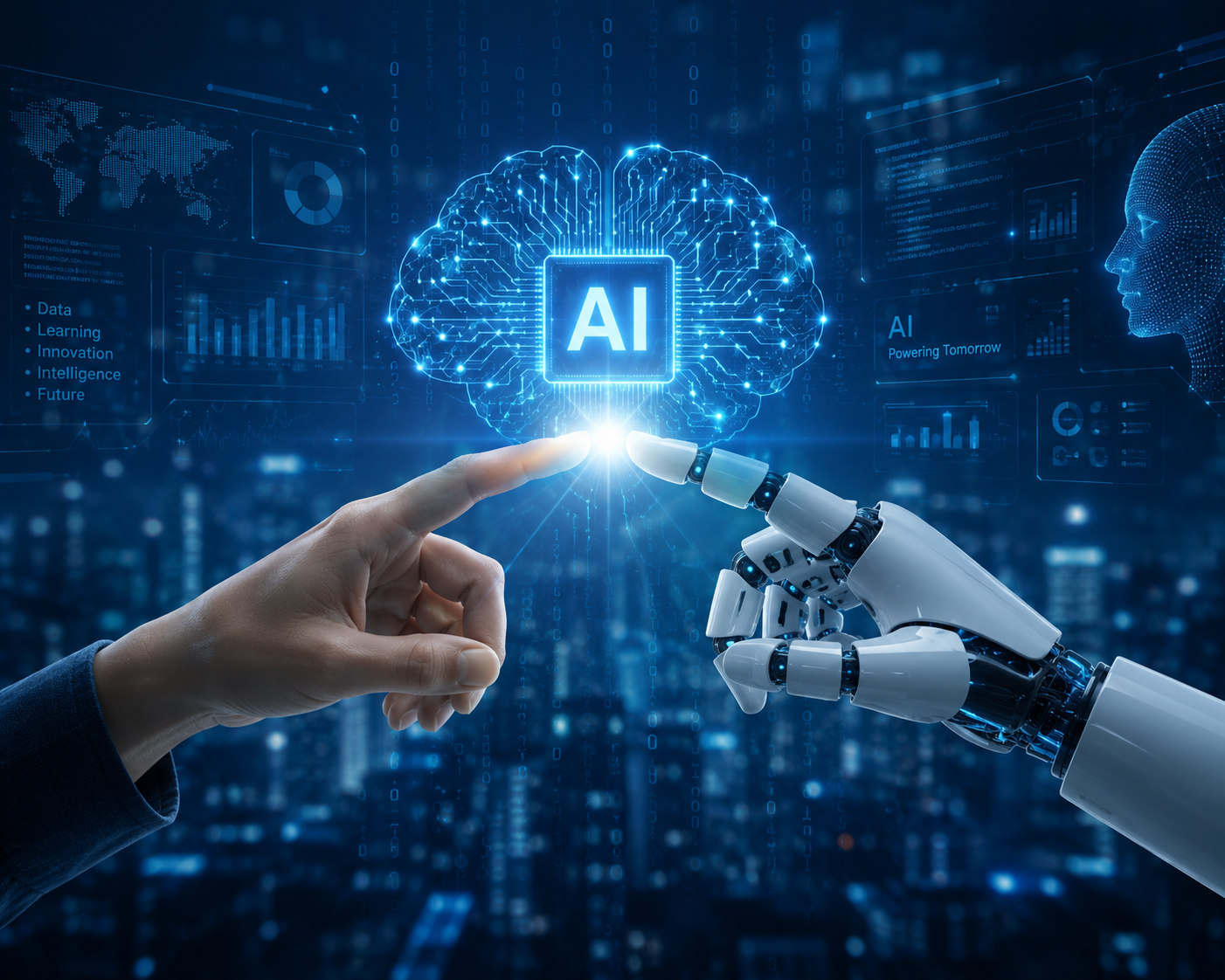
The VeChain ecosystem recently highlighted VeWorld AI, a platform built around the idea that an individual’s knowledge, skills, and experience can potentially be transformed into AI agents capable of interacting with and assisting users around the world.
The concept is relatively simple. Traditionally, a person’s expertise can only reach as many people as their available time allows. A teacher can teach one class at a time. A consultant can work with a limited number of clients. A specialist can only answer so many questions in a day.
AI agents could change that equation.
According to VeWorld AI, knowledge that once depended on “two hands and one voice” can potentially be transformed into an agent that continues operating even when its creator is offline. VeChain argues that blockchain can provide an essential layer of trust and transparency within this emerging digital economy.
The initiative runs within the VeChain ecosystem and adds another potential use case for $VET as the network explores the intersection of artificial intelligence, digital identity and blockchain infrastructure.
Turning Human Knowledge Into a Digital Agent
AI agents represent a shift from traditional software.
A conventional application generally performs specific functions based on direct user input. An AI agent, by comparison, can be designed to interact with users, process information, respond to questions and potentially perform tasks based on the knowledge and instructions provided by its creator.
This creates an interesting possibility for individuals with specialized knowledge.
A fitness professional could create an AI agent designed to answer questions based on their training methods. A financial educator could create an agent that explains concepts based on their research. A business consultant could potentially turn years of experience into a digital assistant capable of interacting with users around the clock.
The goal is not necessarily to replace the person behind the expertise.
Instead, the agent can become a scalable extension of that person’s knowledge.
VeWorld AI’s latest content focuses on this idea. Rather than limiting expertise to one-on-one conversations, meetings or traditional online content, AI agents could allow knowledge to become a persistent digital resource.
Someone builds the knowledge base once, trains or configures an agent around it, and the agent can continue interacting with users.
That model could create new opportunities for creators, professionals and businesses.
However, it also introduces an important question: How can users trust an AI agent and know where its knowledge or identity comes from?
That is where blockchain could play a role.
Why VeChain Believes Blockchain Is Essential for AI Agents
As AI becomes more autonomous, trust may become one of the industry’s biggest challenges.
An AI agent can provide information, make recommendations and potentially interact with other digital systems. But users may need a way to verify who created that agent, what permissions it has and whether its identity can be trusted.
Blockchain technology can potentially provide an infrastructure layer for this process.
VeChain’s argument is that blockchain is not simply an additional feature in the AI agent economy. Instead, it could become a bridge for trust, transparency and verifiable interactions.
For example, blockchain infrastructure could potentially be used to establish a verifiable identity for an AI agent.
Related: VeChain Interstellar Upgrade Goes Live September 16: What VIP-255 Means for VET
It could also create transparent records of certain interactions, permissions or transactions. This becomes increasingly relevant if AI agents eventually begin operating more independently and interacting with users, businesses or even other agents.
Imagine a future where thousands or millions of AI agents are providing services.
Some could be personal assistants. Others could represent businesses, creators, researchers or specialized professionals. Some may eventually be able to buy services, access digital resources or coordinate with other AI systems.
In such an environment, determining which agents are legitimate could become critical.
Blockchain networks can provide a shared infrastructure where identity and activity can potentially be verified without relying entirely on a centralized platform.
This aligns with VeChain’s broader focus on trust and verification.
The network has historically concentrated on creating transparent systems for businesses and real-world applications. Applying similar ideas to AI agents represents a natural expansion into another rapidly developing technology sector.
The AI Agent Economy Could Create New Utility for $VET
The connection between VeWorld AI and VeChain also raises questions about the role $VET could play as AI-related applications develop on the network.
Blockchain tokens derive long-term utility from the activity taking place on their underlying networks. If AI applications, agents and related services generate transactions or require blockchain-based verification, increased ecosystem activity could theoretically create additional demand for the underlying infrastructure.
For $VET holders, however, it is important to distinguish between a promising concept and measurable adoption.
The AI agent sector is becoming increasingly competitive, with technology companies, blockchain networks and startups all attempting to develop platforms for autonomous digital agents.
Related: Can VeChain (VET) Reach $1? The Market Cap, Adoption and Tokenomics Behind the Target
VeWorld AI will need to demonstrate that people are willing to create agents, that users find them useful and that the platform can provide meaningful advantages over traditional AI services.
The opportunity is nevertheless significant.
AI agents could eventually become a new category of digital labor. Rather than purchasing software licenses, users could interact with specialized agents that provide particular services.
A business might hire an AI marketing agent. A consumer might use an AI shopping agent. A company could deploy an agent based on the knowledge of its top engineers or customer support teams.
Blockchain infrastructure could potentially provide the economic and trust layers beneath these interactions.
That could include identity, ownership, payments, reputation and transparent records.
VeWorld AI Fits Into VeChain’s Broader Technology Strategy
VeChain’s interest in AI also comes as the blockchain network undergoes broader technological changes.
The VeChain ecosystem has been working toward greater interoperability and compatibility with the wider blockchain industry through its ongoing Renaissance roadmap.
The recently approved Interstellar upgrade, for example, is designed to bring VeChainThor closer to newer Ethereum Virtual Machine standards and expand the network’s technical capabilities.
This matters because future applications may not exist in isolation.
AI agents could potentially interact with decentralized finance, digital identity systems, enterprise data platforms and other blockchain networks. Greater interoperability could make it easier for applications built around VeChain to connect with the broader Web3 ecosystem.
VeWorld AI represents one possible application layer within this larger strategy.
VeChain has traditionally been associated with supply chains, sustainability and enterprise blockchain applications. AI introduces another direction where verifiable data and trusted digital interactions may become increasingly valuable.
The combination of AI and blockchain is still developing, and many projects are competing to define how the two technologies will work together.
Some projects are focused on decentralized AI models. Others are building marketplaces for AI services. Another emerging category focuses on autonomous agents capable of interacting and transacting within digital economies.
VeWorld AI appears to be targeting the latter opportunity by focusing on the ability of individuals to transform their knowledge into scalable digital agents.
The Challenge Will Be Moving From Concept to Adoption
The idea of turning human expertise into AI agents is compelling, but the long-term success of the model will depend on execution.
Creating an AI agent must be simple enough for non-technical users. The agent must also provide useful and reliable information.
Creators will need incentives to contribute their knowledge, while users will need reasons to choose these agents over alternatives offered by major AI platforms.
Trust will be another major factor.
As the number of AI agents increases, users may face an increasingly difficult task: identifying which agents are legitimate, who controls them and whether they can be trusted.
This is where blockchain-based verification could become a meaningful differentiator.
VeChain’s existing experience with transparency and data verification could provide a foundation for exploring these challenges.
Still, the market will ultimately determine whether blockchain becomes a core component of the AI agent economy or simply an optional technology layer.
For now, VeWorld AI represents an early example of how the VeChain ecosystem is looking beyond traditional blockchain use cases.
The bigger vision is an economy where knowledge itself can become a scalable digital resource.
Instead of limiting expertise to one person’s available time, AI agents could potentially allow that knowledge to operate continuously and reach users across the world.
VeChain believes blockchain can provide the trust infrastructure needed to support that future.
If that vision gains adoption, AI agents could become another important source of activity for the VeChain ecosystem and potentially create new long-term utility around $VET.
The technology is still emerging, and adoption remains the key question. But the direction is becoming increasingly clear: the next phase of the digital economy may not only connect people and applications.
It could also connect millions of autonomous AI agents—and establishing who those agents are, what they can do and whether they can be trusted may become one of blockchain’s most important roles.
About The Author