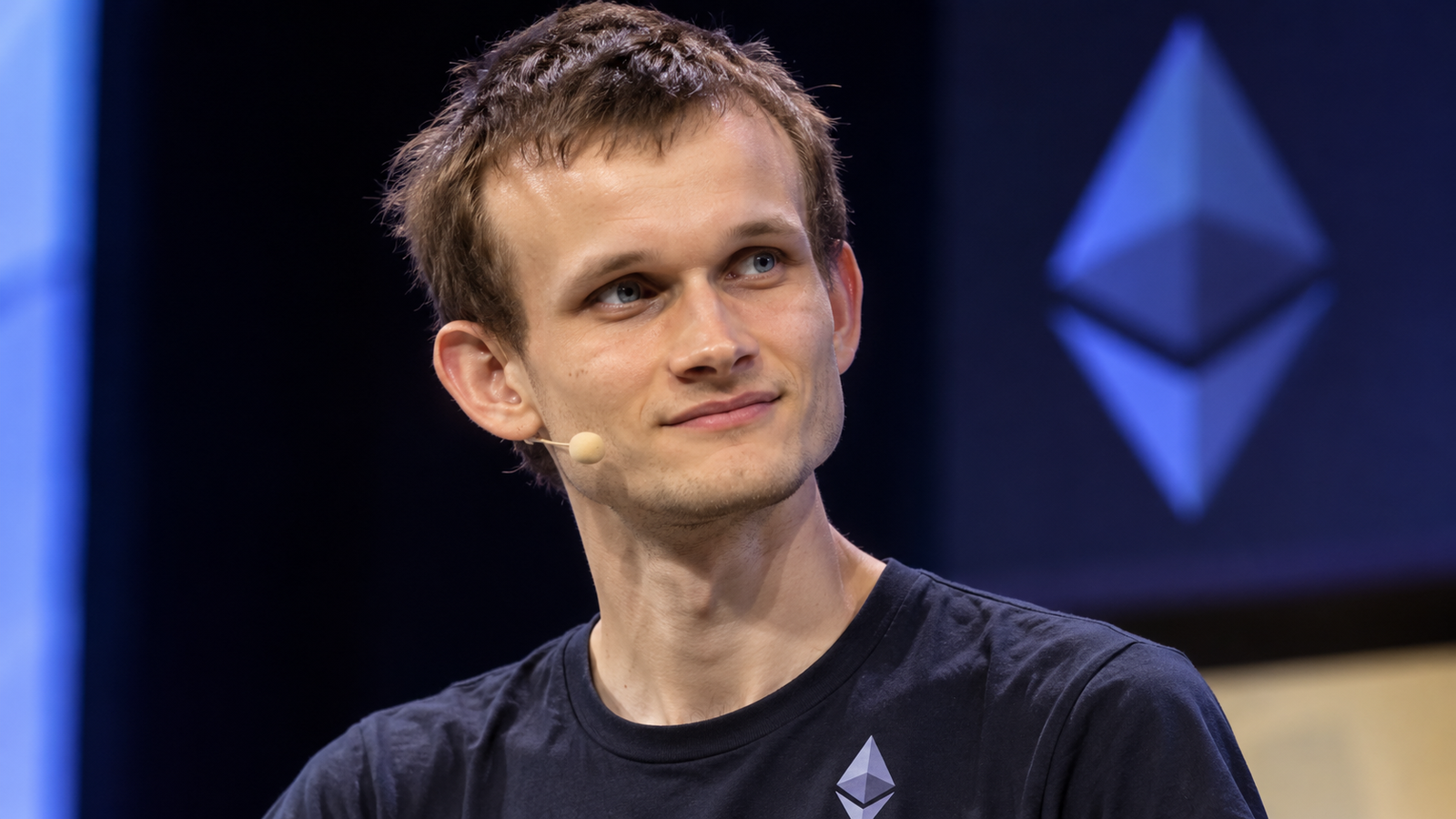
Few people have influenced the cryptocurrency industry as profoundly as Vitalik Buterin. Best known as the co-founder of Ethereum, Buterin helped move blockchain technology beyond digital money and into an ecosystem capable of supporting financial applications, digital ownership, decentralized organizations and programmable agreements. His journey began long before Ethereum became one of the world’s largest blockchain networks, when he was still a teenager exploring the possibilities of Bitcoin.
Born on January 31, 1994, in Kolomna, Russia, Buterin moved to Canada with his family when he was six years old. His father, Dmitry Buterin, was a computer scientist, and Vitalik developed an early interest in mathematics, programming and technology. His academic abilities became apparent during his school years, eventually leading him to pursue computer science studies at the University of Waterloo.
In 2011, at just 17, Buterin discovered Bitcoin after his father introduced him to the technology. Rather than viewing it simply as another form of digital currency, he became interested in the underlying system: a decentralized network that could transfer value without depending on traditional financial intermediaries. He began writing about Bitcoin, earning cryptocurrency for his contributions to online publications.
That interest quickly developed into a professional commitment. Buterin became involved with Bitcoin Weekly and later co-founded Bitcoin Magazine with Mihai Alisie. The publication became an important early source of cryptocurrency reporting and technical discussion, giving Buterin an opportunity to study the technology while communicating its potential to a growing community. His work as a writer helped him identify limitations in Bitcoin’s original design, particularly its restricted ability to support more complex applications.
The Ethereum Idea That Changed Blockchain
By 2013, Buterin was exploring a much broader idea: what if blockchain technology could support more than payments and digital currency? He proposed a network with a built-in programming environment that would allow developers to create applications and execute agreements directly on the blockchain. At 19, he wrote the Ethereum whitepaper, outlining a general-purpose platform powered by smart contracts.
The proposal introduced a different direction for blockchain development. Bitcoin had demonstrated how a decentralized network could maintain a digital monetary system, but Ethereum aimed to provide infrastructure for applications that could operate without relying on a single central authority. Developers would be able to create tokens, financial services, marketplaces and other systems using programmable contracts.
In 2014, Buterin received a $100,000 Thiel Fellowship, giving him financial support to leave university and concentrate on Ethereum’s development. The project attracted an international group of developers and entrepreneurs, including Gavin Wood, Joseph Lubin, Charles Hoskinson and Anthony Di Iorio. Ethereum’s public crowdsale raised approximately $18.4 million, providing early funding for development.
Ethereum officially launched on July 30, 2015. Its arrival marked a major expansion of what public blockchain networks could accomplish. Smart contracts allowed developers to build applications directly on Ethereum, creating the foundations for entire categories of blockchain-based services. Buterin’s original vision was no longer just a whitepaper; it had become a functioning network.
From DeFi and NFTs to Ethereum’s Proof-of-Stake Transition
The growth of Ethereum helped make decentralized finance, or DeFi, possible at scale. Developers built lending platforms, decentralized exchanges, stablecoin systems and other financial applications that could operate through smart contracts. The network also became a major foundation for non-fungible tokens, enabling digital assets to be issued, transferred and verified on public infrastructure. Decentralized autonomous organizations, or DAOs, introduced another use case by allowing communities to coordinate activities and manage shared resources through blockchain-based governance.
These developments were not the work of Buterin alone. Ethereum’s global developer community, independent projects and users played central roles in building the ecosystem. However, his early technical vision and continued involvement in the network’s research and development have made him one of its most influential figures.
One of Ethereum’s most significant milestones came in September 2022, when the network completed its transition from Proof of Work to Proof of Stake through an upgrade known as The Merge. The change replaced energy-intensive mining with a validator system in which participants stake ETH to help secure the network. It reduced Ethereum’s energy consumption by more than 99%, although it did not immediately solve every challenge involving transaction fees, scalability or decentralization.
Buterin’s influence has continued beyond Ethereum’s initial creation. He regularly contributes ideas on cryptography, network scalability, security, governance and the long-term role of decentralized technology. His work has increasingly focused on making blockchain systems more useful, resilient and accessible rather than simply expanding cryptocurrency markets.
From discovering Bitcoin at 17 to proposing Ethereum at 19, Buterin’s career illustrates how a technical idea can develop into infrastructure used by millions of people. Ethereum has grown far beyond its original design, supporting an extensive ecosystem of applications and digital assets. Its future will depend on thousands of contributors, but the vision that helped start it remains closely associated with Vitalik Buterin.
About The Author