
Zcash Price Prediction: Can ZEC Reach $10,000 After Breaking $1,100?
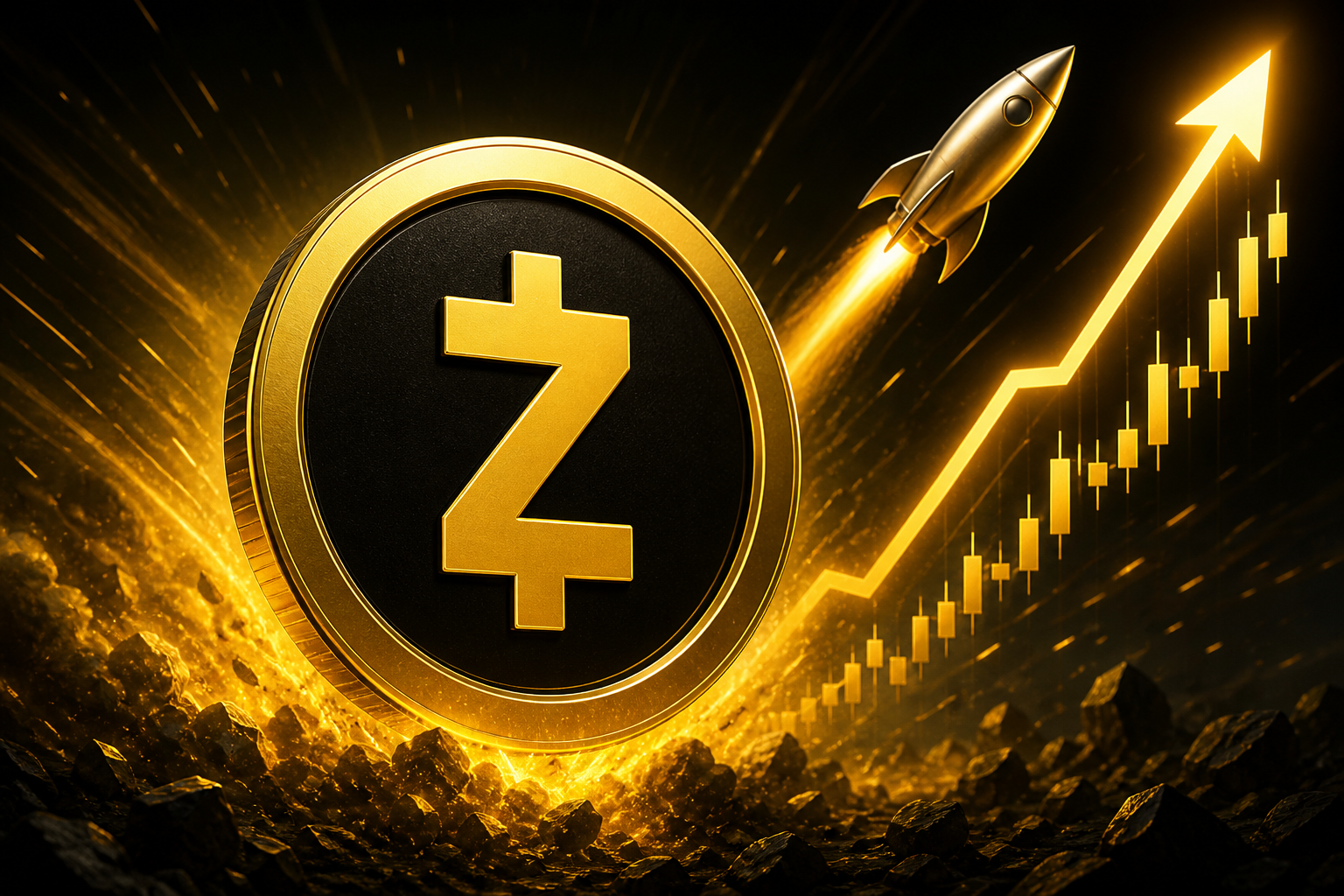
Zcash has entered a new phase of its market cycle after breaking above $1,100, extending one of the strongest rallies among established cryptocurrencies in 2026. The move has pushed ZEC into the top 10 cryptocurrencies by market capitalization, with its market value approaching $17 billion during the latest surge. CoinDesk reported that ZEC briefly traded above $1,020 on September 4 before the latest advance continued.
The rally has revived an ambitious comparison with Bitcoin’s 2017 performance. Bitcoin moved from roughly $1,000 to nearly $20,000 during that year’s historic bull market, while Zcash has now crossed the $1,000 threshold with a similar 21 million maximum supply. The comparison is compelling, but supply alone does not mean ZEC will replicate Bitcoin’s percentage gains.
The bigger question is whether Zcash can benefit from a structural shift toward privacy-focused digital assets. Unlike Bitcoin, Zcash offers shielded transactions using zero-knowledge cryptography, allowing transaction information to be protected while retaining the ability to selectively disclose information. That distinction is central to the current bullish thesis.
Why the Zcash Bull Case Is Getting Stronger
The institutional access argument has also changed considerably. Grayscale’s Zcash ETF began trading on NYSE Arca on August 25 under the ticker ZCSH, providing investors with an exchange-traded vehicle designed to provide exposure to ZEC without directly holding the cryptocurrency. The SEC filing confirms that the fund holds ZEC and tracks its value, giving the asset a new route into traditional investment accounts.
That matters because Bitcoin’s early bull market developed before today’s institutional crypto infrastructure existed. Zcash is entering its current repricing with an established exchange ecosystem, regulated investment products and substantially deeper digital-asset infrastructure. The comparison therefore is not simply about repeating Bitcoin’s past performance; it is about whether ZEC can attract capital faster because the market infrastructure already exists.
Related: Zcash Price Prediction: Can ZEC Keep Rising After Breaking $1,000?
Privacy could become another important part of the investment narrative. Public blockchains make transaction histories broadly visible, creating potential concerns for companies, funds and individuals that do not want competitors or other observers tracking their financial activity. Zcash’s shielded transaction system directly addresses that problem at the protocol level.
The AI economy could further strengthen the argument. Autonomous software agents are expected to conduct increasingly complex transactions, from machine-to-machine payments to automated commerce. If that activity takes place on transparent ledgers, transaction flows could reveal commercially sensitive information, although whether Zcash becomes a major settlement layer for AI agents remains an open question.
There is also a major difference between saying Zcash is technically interesting and saying it is destined to become a superior version of Bitcoin. The latter is an investment opinion, not an established fact. Bitcoin has the stronger network effect, liquidity, institutional adoption and brand recognition, while Zcash’s potential advantage is its native privacy architecture.
Could ZEC Really Reach $10,000 or $20,000?
At $1,100, a move to $10,000 would require ZEC to rise roughly 9.1 times. A move to $20,000 would require approximately 18.2 times appreciation. With roughly 17 million ZEC currently in circulation, those prices would imply market capitalizations of around $170 billion and $340 billion respectively, before accounting for future changes in circulating supply.
Those numbers show why the targets should be treated as extreme bull-market scenarios rather than base-case forecasts. A $10,000 ZEC price would place Zcash among the world’s largest crypto assets by a considerable margin, while $20,000 would require a dramatic reallocation of capital toward privacy, scarcity and Zcash specifically.
The market has already demonstrated that investors are willing to reprice ZEC aggressively. CoinDesk reported that Zcash gained about 94% over the month and more than 2,300% over the previous year as it surged above $1,000. The move was also accompanied by substantial leveraged liquidations, showing that derivatives positioning contributed to the speed of the breakout.
Related: Zcash ETF Launches as ZCSH Starts Trading: What It Means for ZEC
That leverage is an important risk. A vertical rally can create a feedback loop in which rising prices force short sellers to cover, pushing prices higher and attracting additional buyers. The same mechanism can operate in reverse if momentum breaks, meaning ZEC investors should expect substantially higher volatility after such a rapid advance.
For bulls, the immediate objective is not $20,000. It is whether ZEC can establish the $1,000-$1,100 region as support after breaking through it. If that happens, the market could begin testing $1,250, $1,500 and eventually $2,000 before the much larger $5,000 and $10,000 scenarios become relevant.
Zcash has already completed the hardest psychological step: convincing the market that a four-digit ZEC price is possible again. Whether it can become a $10,000 cryptocurrency will depend on sustained institutional demand, privacy adoption, network development and the broader crypto cycle. The $20,000 argument is even more demanding, but the current rally has changed the conversation from whether ZEC can recover to how large its next valuation could become.
About The Author